


Simply put, a ballad poem is a type of narrative poetry that tells a story through verse, moving through a sequence of events and introducing characters and moments of tension along the way. In many respects, it reads sort of like a compact story, yet its rhythm and the way it's structured keep it rooted firmly within the world of poetry. Centuries ago, before books were widely available, ballads were sung by performers in villages and towns all over the country as a means of sharing tales of romance, conflict, adventure, and tragedy. Today, many of our chart-topping songs, particularly love songs, draw inspiration from the storytelling aspects of these early ballads.
A ballad poem is a narrative verse traditionally set to music. It tells a story through poetry and is commonly written in four-line stanzas. Classic ballads follow a steady rhythm and use simple rhyme schemes, which historically made them easier to sing and remember when passed down.


Structure of a Ballad
This type of poetry has a long history, and the musical version is said to have started as a folk song. This continues today in popular music, and many love songs we know today are considered ballads.

A typical ballad consists of stanzas that contain a quatrain or four poetic lines. The meter or rhythm of each line is usually iambic, which means it has one unstressed syllable followed by a stressed syllable. In ballads, there are usually eight or six syllables in a line.
Like any poem, not all ballads strictly stick to these rules, but even if they don’t, nearly all ballads are narrative, telling a story. Like a song, ballad poems have a musical feel thanks to their ABAB rhyme pattern. Limericks are an excellent place to start if you're new to rhyme patterns.
Characteristics of a Ballad
Again, not all ballads are created equal, but they generally have the same characteristics:
- Every ballad is a narrative—a short story in verse. The poet completes the story in only a few stanzas. John Keats’s ballad La Belle Dame sans Merci is an excellent example.
- Ballads have a universal appeal. They are usually based on universally understood subjects, no matter where you’re from. For example, John Keats’s ballad La Belle Dame sans Merci touches on the subject of women, convincing the readers that most women are double-crossing evil beings, which is far from the kind of subject matter you'd get in a haiku poem that typically covers nature.
- Instead of flowery, extravagant language, ballads use common everyday words – adding to their universal appeal.
- Unlike other kinds of poems, ballads have an abrupt opening. The poem starts abruptly without providing any details about the subject matter.
- Dialogue is also an indispensable feature of a ballad. The story is mainly told through dialog. John Keats’s ballad, La Belle Dame sans Merci, is a complete dialogue between the speaker and the knight.
- Another remarkable characteristic of a ballad is the use of a ballad stanza. Every ballad is written in a ballad stanza, which consists of four lines with an abab rhyme scheme. The first and third lines have four accented syllables, while the second and fourth lines have three accented syllables.
- The use of supernatural elements is a key feature of a ballad. Coleridge and John Keats’ ballads are good examples of this.
- Ballads tend to be quite simple and are easy to read and understand.
Consider enrolling in poetry classes to dive deep into the art of poetic expression. These flexible classes allow you to learn from anywhere and at your own pace, allowing you to explore various poetic forms and techniques.
Ballads often address universally relatable themes using simple, everyday language, making them easy to understand.
Types of Ballad
Although ballads share many structural similarities, they're not all written exactly the same way. Since their inception, three main forms of ballads have emerged: traditional ballads, literary ballads, and modern ballads. But how exactly do they differ from each other?
Traditional (Folk) Ballads
Traditional ballads or folk ballads refer to the earliest form of the genre. In most cases, the original writers were lost to history due to the poems being circulated far and wide by different people before being written down.
Over time, many different versions of these ballads emerged, largely because they were passed down through generations by memory and song1. As singers repeated the verses, small details were often altered, forgotten, or replaced - leading to slight variations in the story.
Some of the earliest traditional epic poems and ballads were performed by minstrels during the 14th century and recounted the exploits of Robin Hood - the legendary outlaw said to steal from the rich and give to the poor.
Examples
- Sir Patrick Spens - A Scottish ballad about a respected sailor ordered by the king to undertake a dangerous winter voyage. The journey ends in tragedy when the ship is lost at sea
- Barbara Allen - One of the most widely known folk ballads in English tradition. It tells of a young man who dies after being rejected by Barbara Allen, who later regrets her actions
Folk (or traditional ballad) is a ballad with no written form. It is verbal poetry passed down generations through word of mouth. Variations on them are common, but they're not like free verse poetry.
Throughout the ages, it picked up the traits of the time and underwent considerable changes. The traditional or folk ballad has no individual author; it was the product of many poets.
Literary Ballads
Literary ballads appeared later when poets began intentionally writing poems in the style of traditional ballads of old. Unlike folk ballads, these works have known authors as they were created for a reading audience rather than being passed down through performance or word of mouth.
While the authors of these poems set out to mimic folk ballads, they also had greater freedom to refine the language and develop scenes more carefully, often adding richer detail, atmosphere, and overall emotional depth to their verses.
Many poets who wrote literary ballads also experimented with other poetic forms as well. For example, Romantic writers like John Keats and William Wordsworth also wrote sonnet poems.
Examples
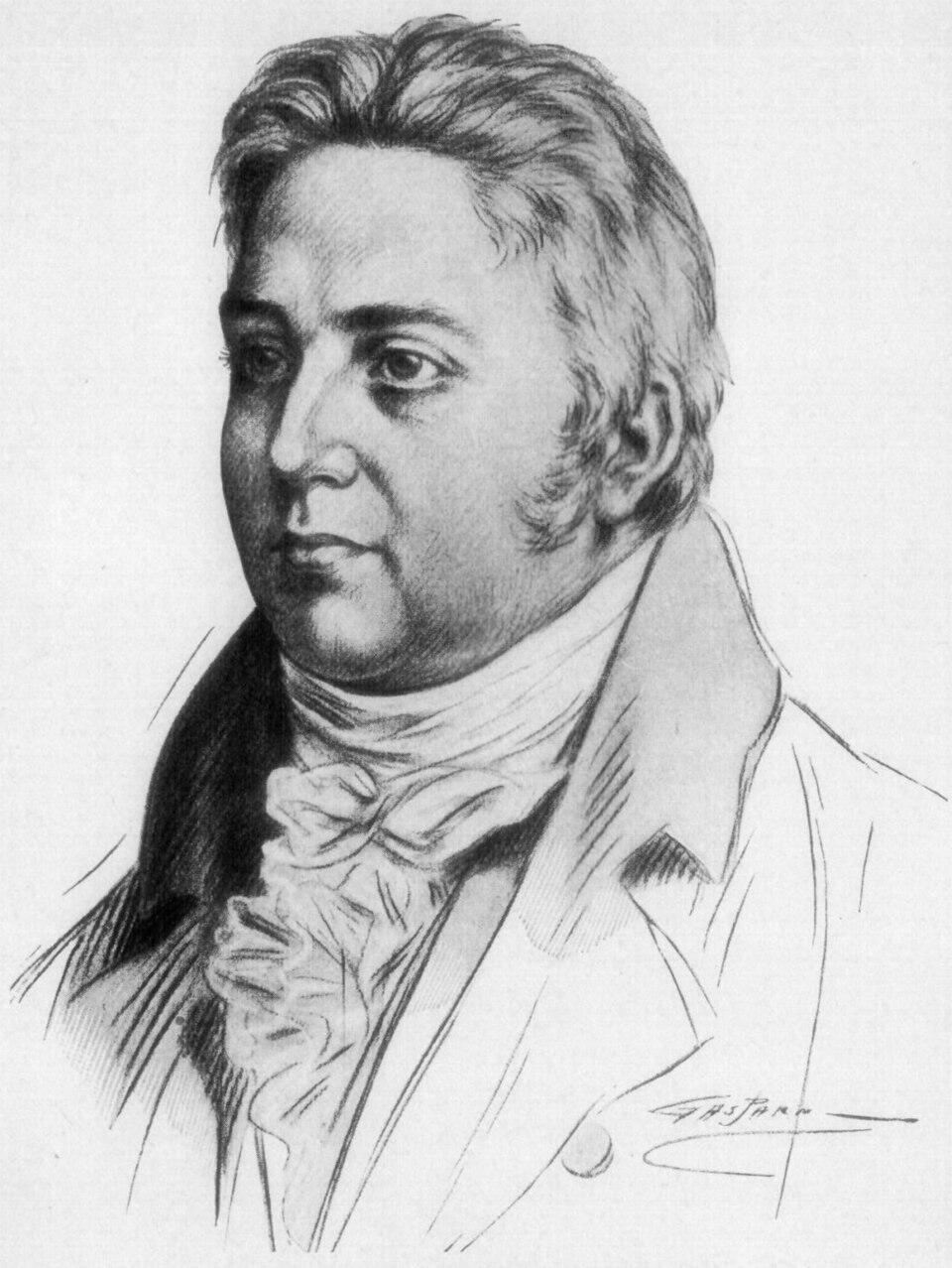
- The Rime of the Ancient Mariner (by Samuel Taylor Coleridge) - This Romantic poem follows a sailor who brings a curse upon his ship after killing an albatross. The mariner later recounts the strange and haunting events that follow.
- La Belle Dame sans Merci (by John Keats) - Keats ballad describes a knight who meets a mysterious and enchanting woman. After falling under her spell, he is left abandoned and weakened
Folk Ballads: Passed down orally with no single author.
Literary Ballads: Written by identifiable poets and preserved in text.
Modern Ballads: Modern ballad that take inspiration from the classics, but do not always follow the stanza patters or rhyme scheme.
Here’s a look at John Keats’s ballad La Belle Dame sans Merci:
O what can ail thee, knight-at-arms,
Alone and palely loitering?
The sedge has withered from the lake,
And no birds sing!
O what can ail thee, knight-at-arms,
So haggard and so woe-begone?
The squirrel’s granary is full,
And the harvest’s done.
I see a lily on thy brow,
With anguish moist and fever-dew,
And on thy cheeks a fading rose
Fast withereth too.
I met a lady in the meads,
Full beautiful, a fairy's child;
Her hair was long, her foot was light,
And her eyes were wild.
I made a garland for her head,
And bracelets too, and fragrant zone;
She looked at me as she did love,
And made sweet moan.
I set her on my pacing steed,
And nothing else saw all day long,
For sidelong would she bend, and sing
A faery's song.
She found me roots of relish sweet,
And honey wild, and manna-dew,
And sure in language strange she said—
'I love thee true'.
She took me to her Elfin grot,
And there she wept and sighed full sore,
And there I shut her wild, wild eyes
With kisses four.
And there she lullèd me asleep,
And there I dreamed—Ah! woe betide!—
The latest dream I ever dreamt
On the cold hill side.
I saw pale kings and princes too,
Pale warriors, death-pale were they all;
They cried—'La Belle Dame sans Merci
Hath thee in thrall!'
I saw their starved lips in the gloam,
With horrid warning gapèd wide,
And I awoke and found me here,
On the cold hill's side.
And this is why I sojourn here,
Alone and palely loitering,
Though the sedge is withered from the lake,
And no birds sing.
lines!
Modern Ballad
Lastly, we have the modern ballad. Essentially, these are (the clue is the name) more modern versions of ballads that take inspiration from classic ballads but do not always follow the same strict stanza patterns or rhyme scheme.
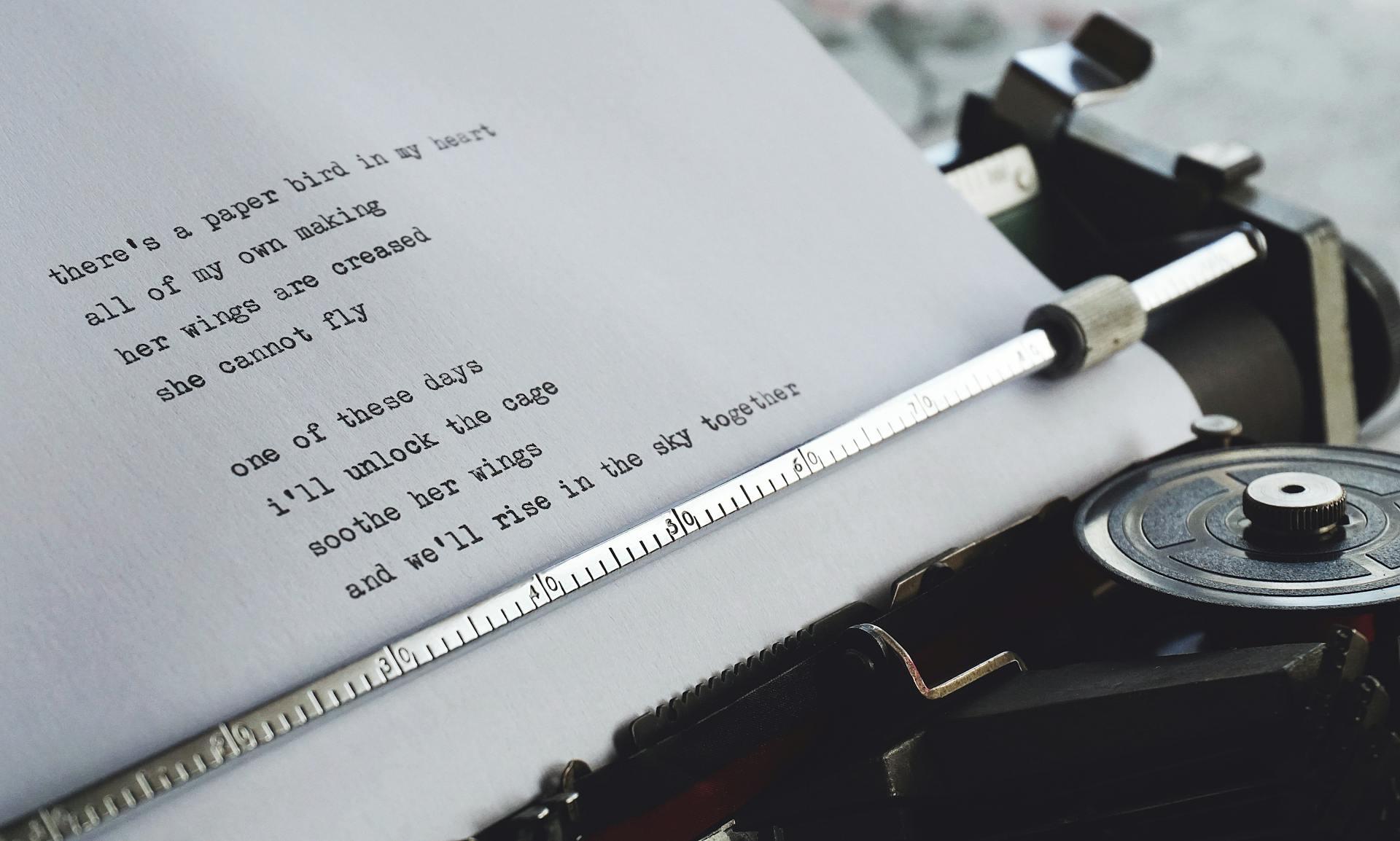
During the twentieth and twenty-first centuries, many poets adopted this ballad style to write about modern events and social issues. Its simple narrative style was suited to presenting serious or emotional subjects in a way readers could easily follow.
Today, poetry is often performed as much as it is read. Events like slam poetry and free verse shows bring spoken rhythm and storytelling to the forefront, something ballads have relied on for centuries.
Example
- The Ballad of Birmingham (by Dudley Randall): A modern ballad written in response to the 1963 Birmingham church bombing during the American Civil Rights Movement. The poem follows a young girl and her mother on the day of the tragedy.
- Hurricane (by Bob Dylan): This narrative song tells the story of boxer Rubin “Hurricane” Carter, who was wrongly imprisoned. The lyrics recount the events surrounding the case and criticize the justice system.
Writing a Ballad
We think you know enough now to write a ballad, but we'd recommend practicing a lot before moving on to longer and more complex types of poetry, like epic poems.

If you're interested in writing your own ballad, the process is fortunately pretty simple. Check out this short guide we've put together to get a better idea of how you can pen your own masterpiece ballad.
Not all forms of poetry focus on dramatic storytelling. Some styles, like limericks, are known for their playful rhythm and humorous tone.
- Most often, ballads are love stories, but you can make your ballad about any event. It can be about you, someone you know, a relationship, or an experience. It can be good, bad, tragic, or magical!
- Ballads are a way for you to share any experience. When picking your story, make sure that it has a distinct introduction, a plot with a problem, and a resolution to the problem. Remember, you don’t have long to tell your story, so make sure you can tell it in a short poem.
- The first line of a ballad is the most important because it introduces the reader to the story. Remember earlier when we said ballads often have an abrupt opening? Try to do the same with yours. Reel the reader in from the very beginning. Maybe you can begin with a question or directly address the reader using “you” to immerse them into your story instantly.
- For this type of poem, you can pick your rhyme scheme. Most commonly, though, there are four groups or stanzas of three lines with an AAB rhyme scheme where the first two lines rhyme and the third line is different.
- Ballads are unique as poems because they have choruses, much like their musical equivalents. Typically, the third line of each stanza is the chorus, so make sure that this line is relevant throughout the entire story because this chorus will be repeated many times in the poem. Your poem’s rhyme scheme will most likely look like AAB CCB DDB EEB, with the same line at the end of each stanza.
- Since ballads tell stories while using rhyme and repetition naturally, they are perfectly adapted for turning into songs. Maybe you can try adding music to your new poem or simply giving the poem to someone you love. If you enjoy the performance aspect of ballads, you may also be interested in slam poetry.
Ballads often use a repeated line or chorus in each stanza, mirroring the structure of a song.
Ballads are a great way to flex your storytelling skills and test your rhyming skills. If you need some help with writing, whether for an exam, a college dissertation, or even if you just want to write as a hobby, Superprof tutors can help.
You’ll find many online poetry classes on the Superprof website that can adapt to your needs. They are all experienced, knowledgeable teachers and can help you reach your goals. The fantastic point of poetry is that there are many different ways to express your ideas once you have tried ballad poems.
References
- What is a ballad guide for KS3 English students - BBC Bitesize. (2023, October 18). BBC Bitesize. https://www.bbc.co.uk/bitesize/articles/zdxwjsg#zgj496f
- Connections: Poetry: Forms: the Ballad. (n.d.). https://eriksimpson.sites.grinnell.edu/Connections/Poetry/Forms/ballad1.html
Summarize with AI:
Did you like this article? Leave a rating!


 Loading...
Help me turn a poem into a rap
Hello Sean, you can connect with one of our dedicated tutors who can help you turn your poem into a rap :).