Welcome to our Solved Area Problems section. Here we present detailed solutions to problems related to calculating areas in common geometric figures. We will explore the use of formulas and specific methods to determine areas of triangles, squares, circles, and other figures.
Each solved problem will include a step-by-step description of the strategy used, from identifying data to applying the corresponding formula. These practical examples will help you develop solid skills in calculating areas and understand the importance of these measurements in real-world contexts.
Join us on this educational journey, where you will consolidate your knowledge in calculating areas and gain confidence to successfully tackle geometric problems.
Find the diagonal, perimeter, and area of the square:
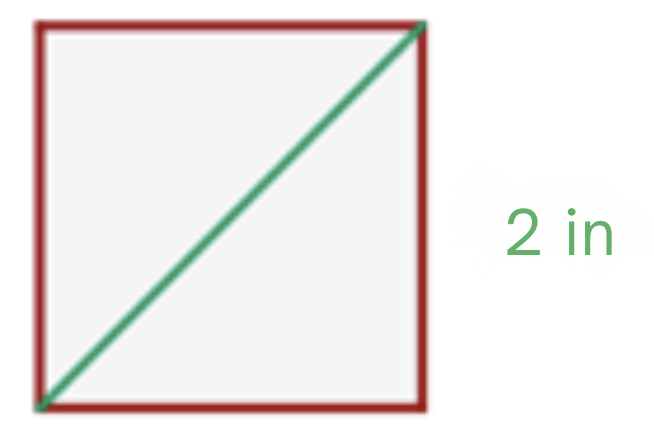
1. We calculate the diagonal using the Pythagorean theorem:

2. We calculate the perimeter:

3. We calculate the area:

Find the diagonal, perimeter, and area of the rectangle:
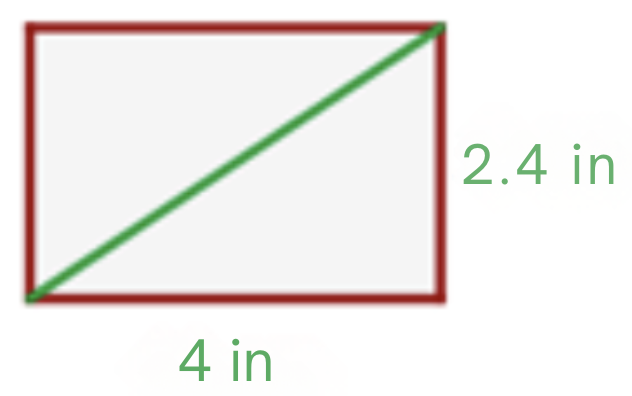
1. We calculate the diagonal using the Pythagorean theorem:

2. We calculate the perimeter:

3. We calculate the area:

Find the perimeter and area of the right trapezoid:
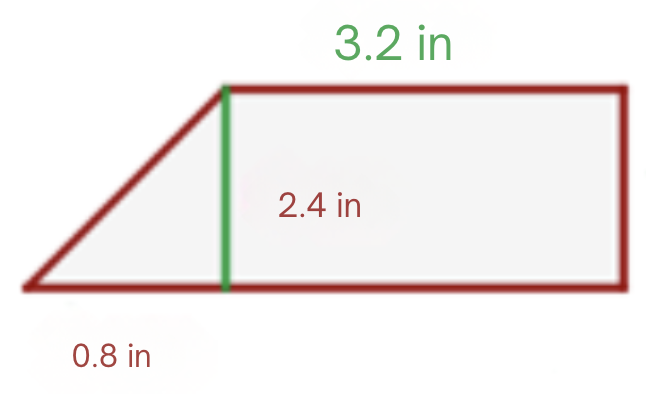
1. We calculate the missing side of the triangular figure using the Pythagorean theorem:

2. We calculate the perimeter by adding the sides of the figure:

3. We calculate the area:

Find the perimeter and area of the isosceles trapezoid:
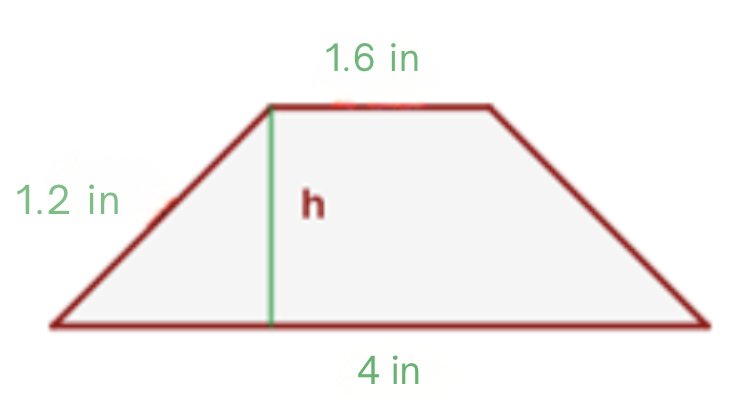
1. We calculate the height of the figure using the Pythagorean theorem:

2. We calculate the perimeter by adding the sides of the figure:

3. We calculate the area:

Find the perimeter and area of the equilateral triangle:
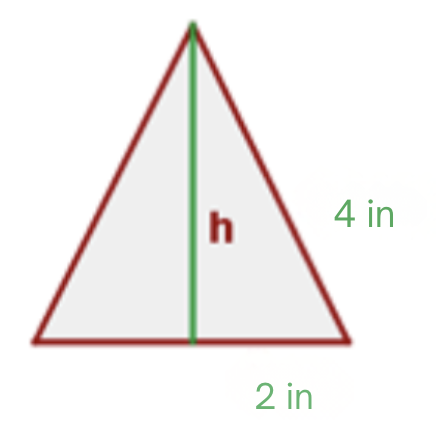
1. We calculate the height of the figure using the Pythagorean theorem:

2. We calculate the perimeter of the figure:

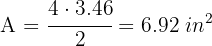
3. We calculate the area:
Find the perimeter and area of the regular pentagon:
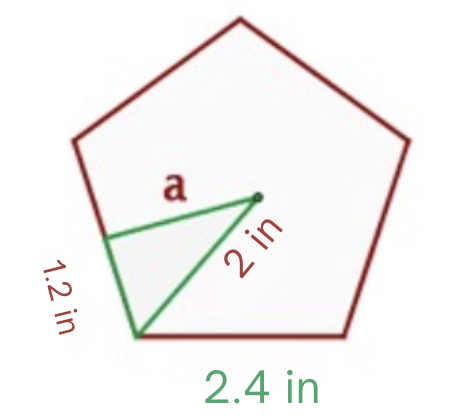
1. We calculate the value of the apothem using the Pythagorean theorem:

2. We calculate the perimeter of the figure:

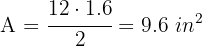
3. We calculate the area:
Find the area of a hexagon inscribed in a circle with a radius of  in.
in.
1. We represent the figure with the given data, observing that when drawing segments from the center to the vertices, equilateral triangles are obtained, so the side of the hexagon is in.
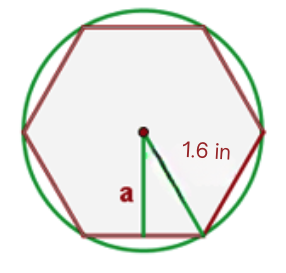
2. We calculate the value of the apothem using the Pythagorean theorem:

3. We calculate the perimeter of the hexagon:

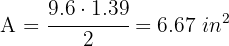
4. We calculate the area of the hexagon:
Find the area of a square inscribed in a circle with a radius of  in.
in.
1. We represent the figure with the given data, observing that when drawing segments from the center to two consecutive vertices, a right triangle is obtained.
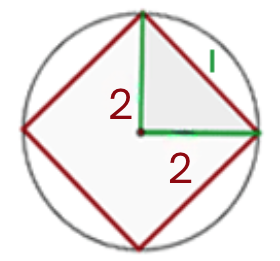
2. We calculate the value of the side using the Pythagorean theorem:

3. We calculate the area of the square:

Calculate the area of an equilateral triangle inscribed in a circle with a radius of  in.
in.
1. We represent the figure with the given data.
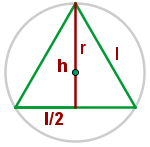
2. The center of the circle is the centroid. Therefore:

3. We calculate the side of the triangle using the Pythagorean theorem:
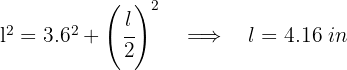
4. We calculate the area of the triangle:

Determine the area of a square inscribed in a circle with a circumference of  ft.
ft.
1. We represent the figure with the given data, observing that when drawing segments from the center to two consecutive vertices, a right triangle is obtained with legs equal to the radius of the circle.
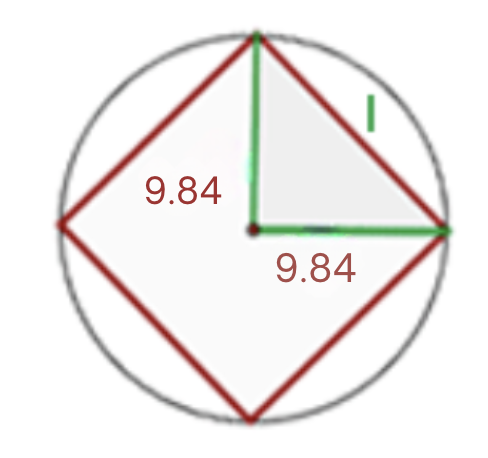
2. We calculate the radius from the circumference:

3. We find the side of the square using the Pythagorean theorem:

4. We calculate the area of the square:

In a square with a side of  ft, a circle is inscribed, and in this circle a square, and in this another circle. Find the area between the last square and the last circle.
1. We represent the figure with the given data.
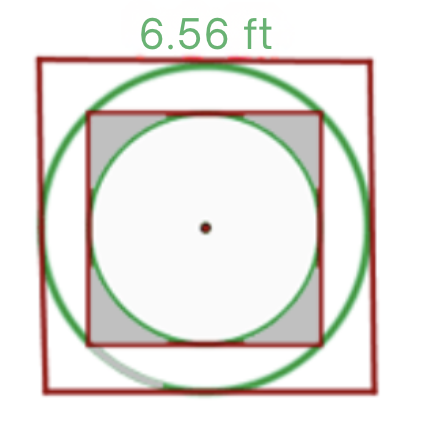
2. The radius of the first inscribed circle is equal to half the side of the square, that is  . The diagonal of the second square is equal to the diameter of the first circle, that is,
  . We calculate the side of the second square using the Pythagorean theorem:

3. We find the area of the second square:

4. The radius of the second circle is equal to half the side of the second square. We calculate the area of the second circle:
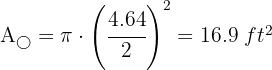
5. The requested area is:

The perimeter of an isosceles trapezoid is  ft, the bases measure
  and
and  ft respectively. Calculate the non-parallel sides and the area.
1. We represent the figure with the given data.
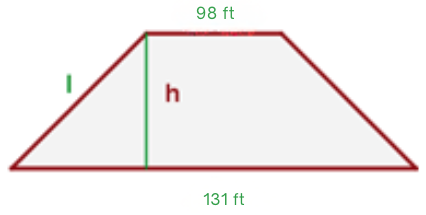
2. We calculate the non-parallel sides from the perimeter:

3. We find the height using the Pythagorean theorem:

4. The requested area is:

If the non-parallel sides of an isosceles trapezoid were extended, an equilateral triangle with a side of in would be formed. Knowing that the trapezoid has half the height of the triangle, calculate the area of the trapezoid.
1. From the given data we have that the larger base is  and the smaller base is half of the larger base, that is,
  .
.
2. We calculate the height of the triangle using the Pythagorean theorem:

3. We find the height of the trapezoid, which is half the height of the triangle:
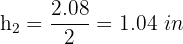
4. The requested area is:

The area of a square is  . Calculate the area of the regular hexagon that has the same perimeter.
1. We calculate the value of the side of the square from its area:

2. We calculate the perimeter of the square:

3. The perimeter of the hexagon is  , so the side of the hexagon is
  .
.
4. We represent the figure of the hexagon with the obtained data and calculate its apothem:
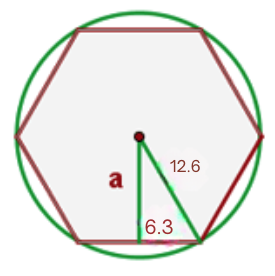

5. We calculate the area of the hexagon:

In a circle with a radius equal to  ft, a square is inscribed and on its sides, facing outward, equilateral triangles are constructed. Find the area of the star thus formed.
1. We represent the figure with the given data.
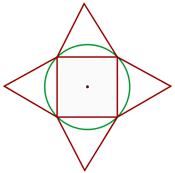
2. We calculate the side of the square; for this we note that its diagonal is equal to the diameter of the circle:

3. We find the height of an equilateral triangle using the Pythagorean theorem:

4. The area of one triangle is:

5. The area of the square is:

6. The area of the star is:

A regular hexagon with a side of in has a circle inscribed in it and another circumscribed around it. Find the area of the circular ring thus formed.
1. We represent the figure with the given data.
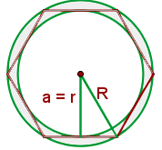
2. The radius of the circumscribed circle is equal to the side of the hexagon, that is  . The radius of the inscribed circle is equal to the apothem, which we calculate using the Pythagorean theorem:

3. The area of the ring is equal to the difference in areas of the circles:

In a circle, a chord of  in is at a distance of
  in from the center. Calculate the area of the circle.
1. We represent the figure with the given data.
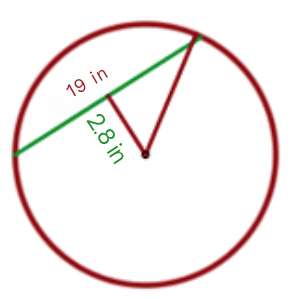
2. The radius of the circle is obtained using the Pythagorean theorem:

3. The area of the circle is:

The legs of a right triangle inscribed in a circle measure  in and
  in respectively. Calculate the circumference length and the area of the circle.
1. We represent the figure with the given data.
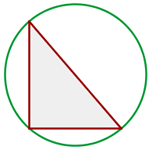
2. The hypotenuse of the triangle is equal to the diameter of the circle; we calculate it using the Pythagorean theorem:

3. The circumference length is:

4. The area of the circle is:

Calculate the area of the circular ring determined by the circles inscribed and circumscribed around a square with a diagonal of  ft.
ft.
1. We represent the figure with the given data.
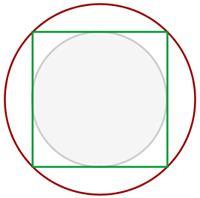
2. The radius of the circumscribed circle is equal to half the diagonal of the square, that is  . The radius of the inscribed circle is equal to half the side of the square, which we calculate using the Pythagorean theorem:

3. The area of the ring is equal to the difference in areas of the circles:

On a circle with a radius of in, a central angle of  is drawn. Find the area of the circular segment between the chord that joins the ends of the two radii and its corresponding arc.
1. We represent the figure with the given data.
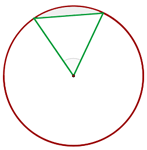
2. We calculate the area of the sector:

3. The triangle formed is equilateral, and we calculate its height using the Pythagorean theorem:

4. We calculate the area of the triangle:

5. The requested area is equal to the difference in areas:

Given an equilateral triangle with a side of  ft, find the area of one of the sectors determined by the circumscribed circle and by the radii passing through the vertices.
1. We represent the figure with the given data.
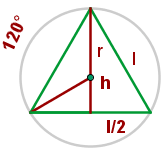
2. We calculate the height of the equilateral triangle using the Pythagorean theorem:

3. The center of the circle is the centroid. Therefore:
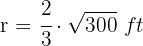
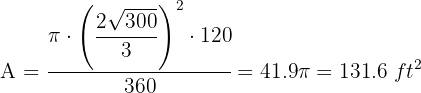
4. We calculate the area of the  sector:
Find the area of a convex quadrilateral  with perimeter
  and circumscribed circle
  with radius
  .
.
1. Let's represent the data in an image:
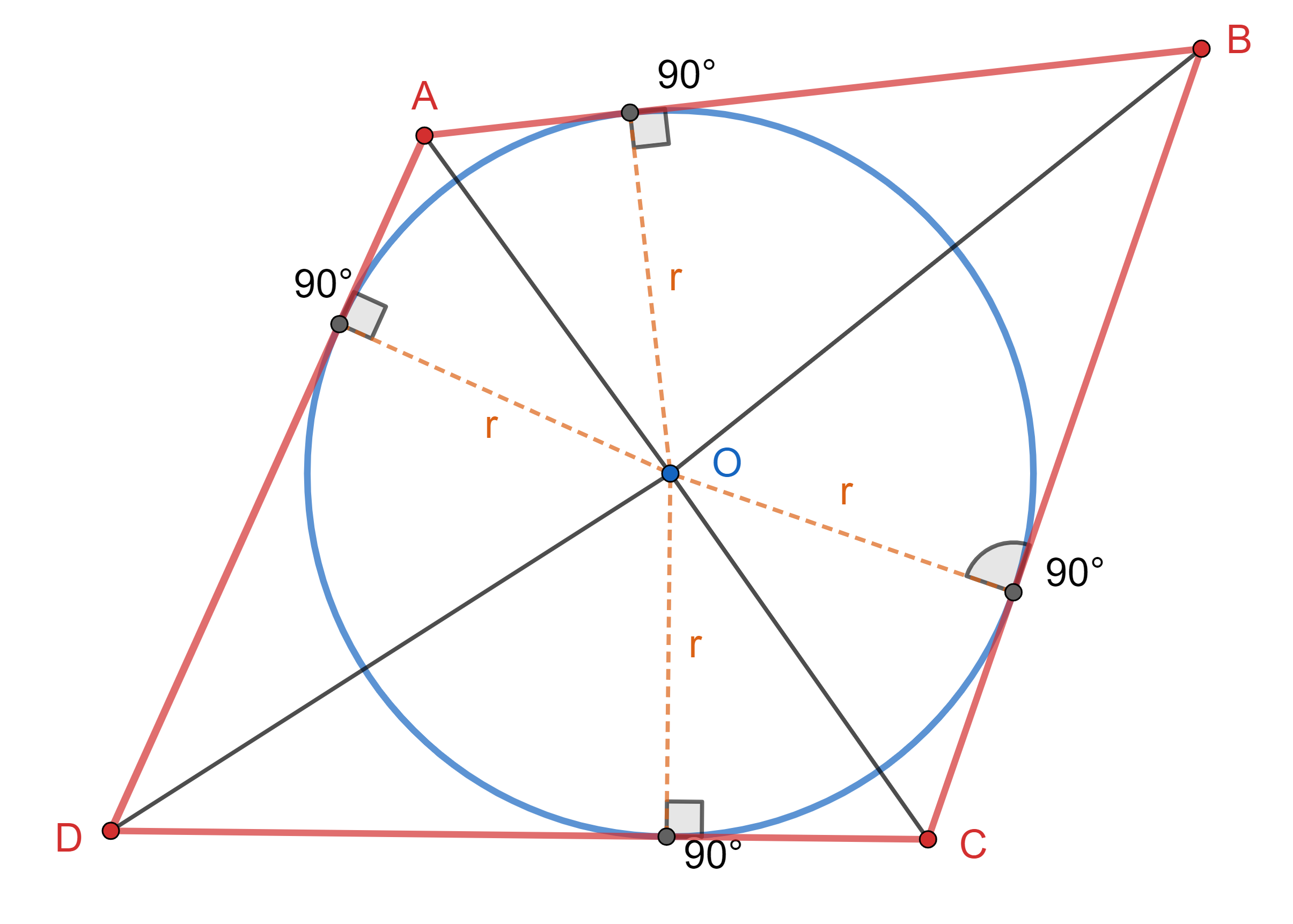
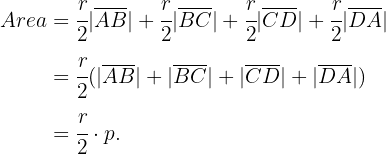
2. Now, note that the area of the quadrilateral can be separated into 4 triangles with a common vertex at the center of the circle. Each of these triangles has an area equal to one-half of its height (in this case the radius) times its base (in this case corresponding to the sides of the quadrilateral). Then, we have:
Solve the following problems:
1. Find the area of a convex quadrilateral with perimeter  and circumscribed circle with radius
  .
.
2. Find the area of a convex quadrilateral with perimeter  and circumscribed circle with radius
  .
.
1. Using problem 22, we note that the area is calculated using  , where is the perimeter, and is the radius of the circle. Then,
  .
.
2. Directly using the formula, we obtain  .
.
Find the area of a convex quadrilateral with sides  ,
,  ,
,  , and
, and  .
.
1. Let's represent the data in an image:
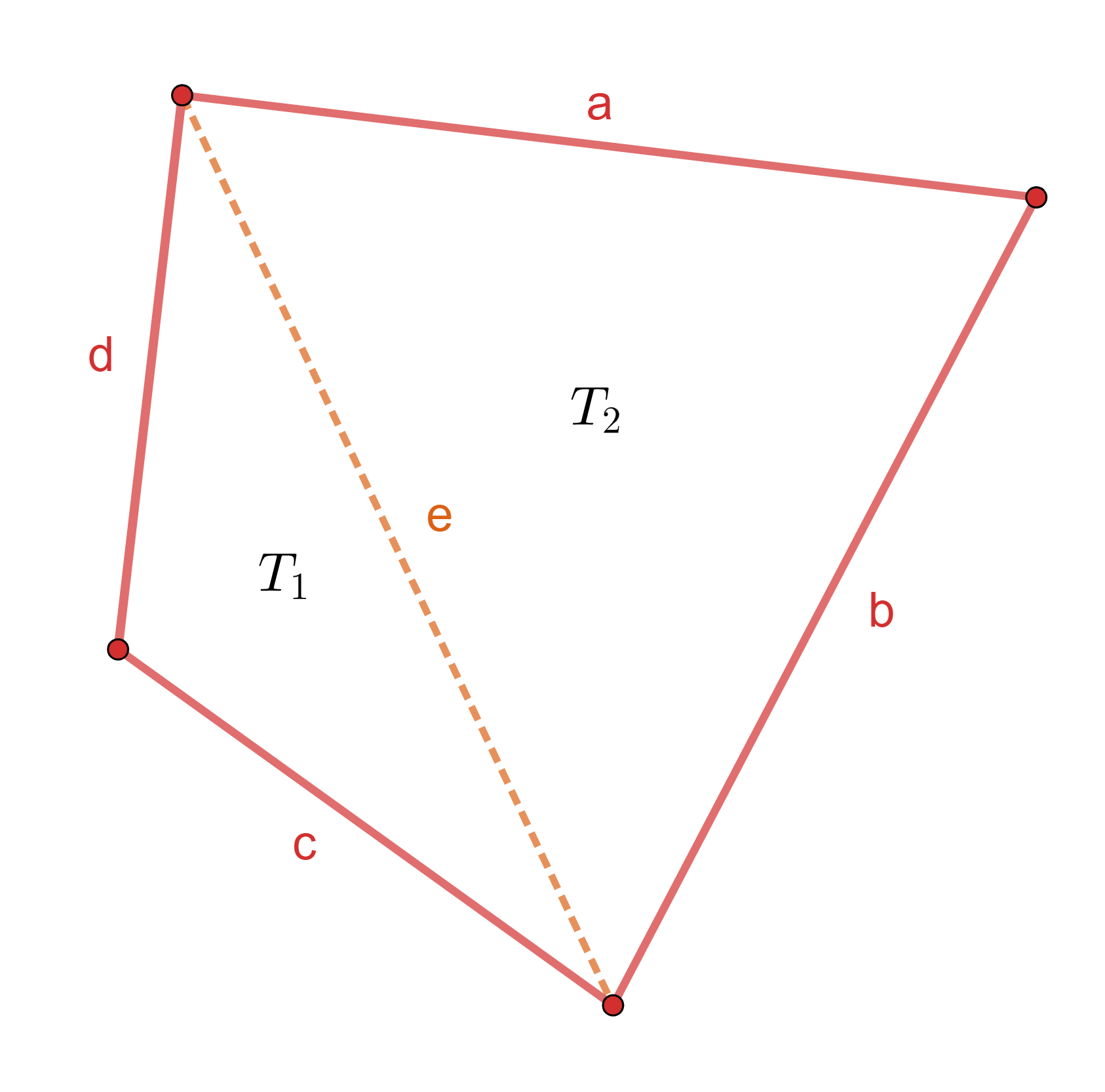
2. Now, note that the total area can be separated into 2 triangles  and
and  . For each of them, we can use Heron's formula. The semiperimeter of each is:

Then, their areas are:

and therefore their sum gives us the area of the quadrilateral:

Find the area of a Triquetra:
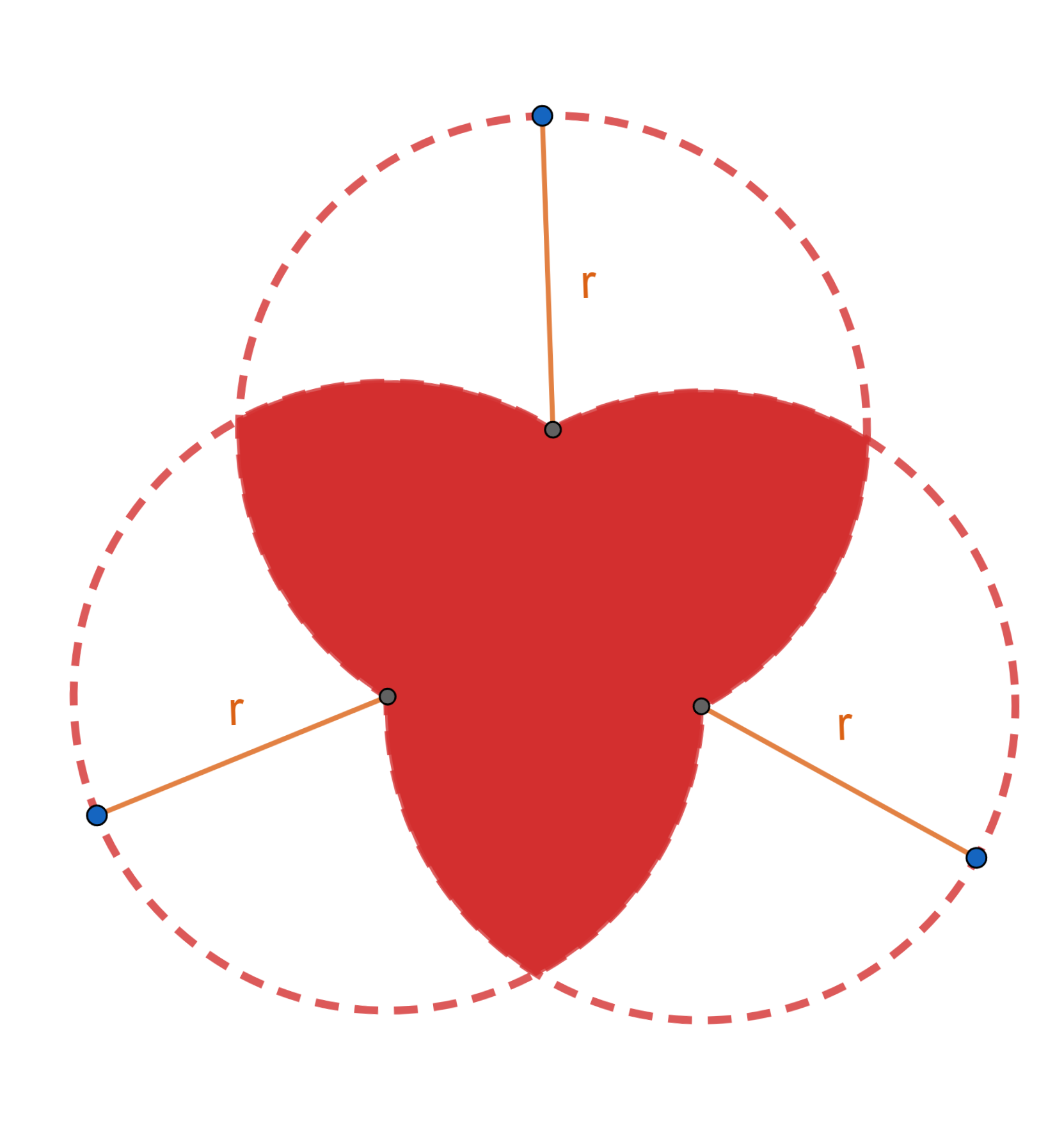
1. Let's draw more lines to simplify the area:
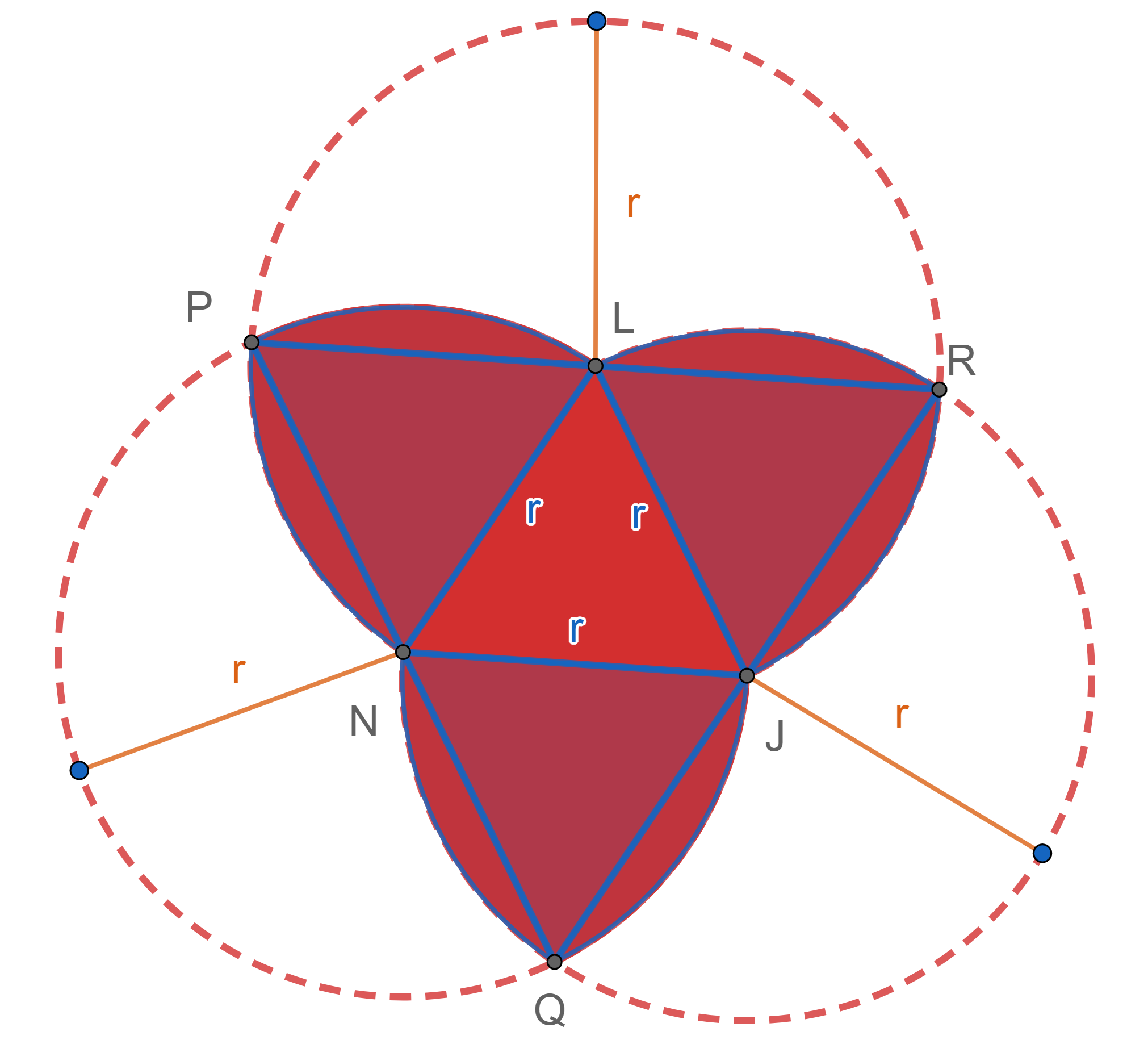
2. Note that we can separate the region into 2 types of parts: an equilateral triangle with side equal to the diameter of a circle, that is,  , and six circular sectors. The area of the triangle is:
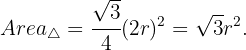
Now, the circular sectors have an area that depends on the angle. In this case, the angles are all equal and correspond to that of an equilateral triangle, which is  radians. Then, the area of each of them is:

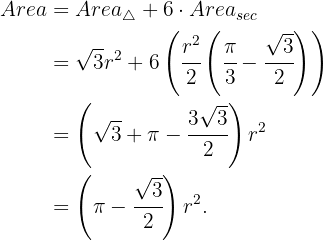
Then, we multiply this by 6 to obtain the total of all 6 sectors, and finally we add the area of the triangle to obtain the total area of the triquetra:
Summarize with AI:
Did you like this article? Rate it!

 Loading...