Method for Converting Decimals to Fractions
To convert decimals into fractions, you need to know 3 important things:
- When the decimal is not repeating, we divide by 1, 10, 100, ..., as appropriate
- When decimals are repeating, we divide by 9, 99, 999, ..., as appropriate
- When there are decimals where only one part is repeating, we use 9, 90, 900, ..., as the denominator, as appropriate
We will use these 3 numbers as examples:

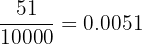
The first case is quite straightforward. It's a number with 4 decimal places and none of them is repeating. To convert it to a fraction, we simply write 51 as the numerator and in the denominator we place a 1 with four zeros, since there are 4 decimal places. This gives us:
In the second case, we have a number with 3 decimal places and all 3 digits are repeating. Then, we take 51 as the numerator and place three nines as the denominator, since there are 3 repeating digits. This gives us:

In the third case, we have a number with three decimals, but only one is repeating. So we take 51 as the numerator and subtract 5 from it, since the 5 in the decimals is not repeating. As the denominator, we place the number 9 with two zeros.
Remember that we use 9 because there is one repeating digit and we add two zeros because there are 2 non-repeating decimal places. This gives us:

Afterward, if possible, we simplify the fractions.
Convert the Following Decimals

It's a number with 4 decimal places and none of them is repeating. To convert it to a fraction, we write 19 as the numerator and in the denominator we place a 1 with four zeros, since there are 4 decimal places. This gives us:
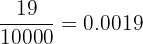

In the numerator we write the number without the decimal point and in the denominator 3 nines because there are 3 repeating digits:
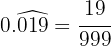

In the numerator we write the number without the decimal point and in the denominator there are two nines and two zeros because we have one digit in the period and there are two decimal places:
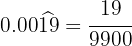

In the numerator we write the number without the decimal point and in the denominator there are two nines and one zero because we have two digits in the period and there is one decimal place:
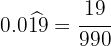

In the numerator we write the number without the decimal point and in the denominator there are four nines:
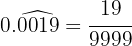
Perform the Following Operations with Powers
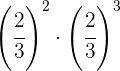
To multiply powers with the same base, we add the exponents:
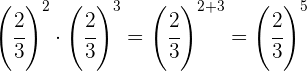
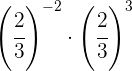
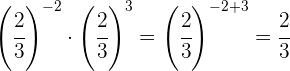
To remove the negative sign from the exponent, we write the inverse fraction.

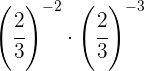
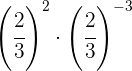
We remove the negative sign from the exponent by taking the inverse fraction.

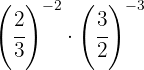
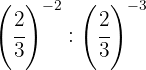
Since they don't have the same base, we take the inverse fraction of the second power because its exponent was negative.

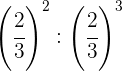
To divide powers with the same base, we subtract the exponents:

We take the inverse fraction, so we change the sign of the exponent.
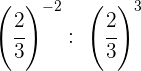
We change the sign of the exponent by taking the inverse fraction.

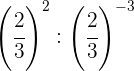


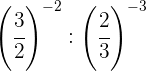
We take the inverse fraction of the first power to change the sign of the exponent.


To raise a power to another power, we multiply the exponents:
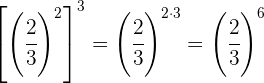
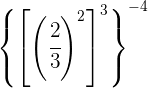
We take the inverse fraction to change the sign of the exponent.

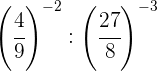

We decompose the numbers into factors. Within each parenthesis we divide powers with the same exponent, so we divide the bases and keep the same exponent.

We take the inverse fraction of the first power to change the sign of the exponent and do the same with the result.
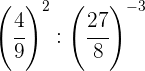

We decompose the numbers into factors. Within each parenthesis we divide powers with the same exponent, so we divide the bases and keep the same exponent.

We take the inverse fraction of the first power to change the sign of the exponent and do the same with the result.
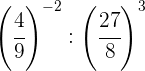

We decompose the numbers into factors. Within each parenthesis we divide powers with the same exponent, so we divide the bases and keep the same exponent.

We take the inverse fraction of the first power to change the sign of the exponent and do the same with the result.
Perform the Following Operations
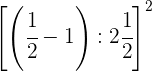
We convert the mixed number  to a fraction.
We keep the same denominator (2) and the numerator is the sum of the multiplication of the whole number (2) by the denominator (2) plus the numerator of the mixed number (1).

We reduce the fractions to a common denominator.
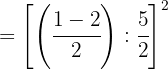
We perform the operations in the numerators.
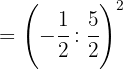
We divide.
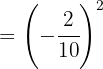
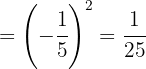
We simplify and perform the power.
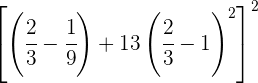
We reduce the fractions to a common denominator.
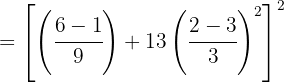
We perform the operations in the numerators.
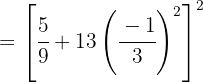
We perform the power.
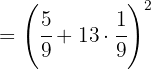
We multiply.
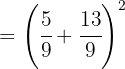
We add and perform the power.
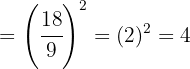

We convert the mixed number to a fraction.
We keep the same denominator (2) and the numerator is the sum of the multiplication of the whole number (2) by the denominator (2) plus the numerator of the mixed number (1).
We reduce the fractions in each parenthesis to a common denominator.

We perform the operations in the numerators.
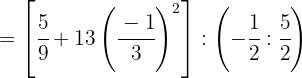
We perform the power.
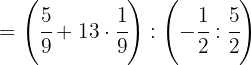
We multiply in the first parenthesis and divide in the second.
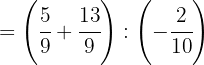
We add in the first parenthesis and simplify in the second.

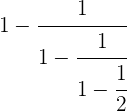
First, we perform the last part of the denominator.

We take the reciprocal.
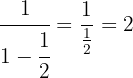
We perform the subtraction.
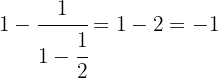
We take the reciprocal.
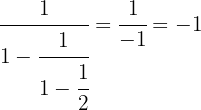
We perform the subtraction.
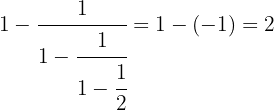
Performing the steps consecutively, we have:

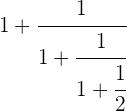
First, we perform the last part of the denominator.

We take the reciprocal.
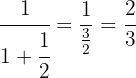
We perform the addition.
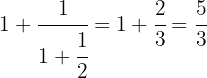
We take the reciprocal.
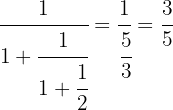
We perform the addition.
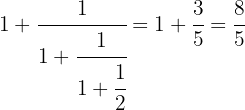
Performing the steps consecutively, we have:

Calculate What Fraction of the Unit Represents
The half of a half

The half of a third

The third of a half

The half of a fourth

The half of a fourth of a third
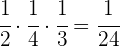
Applications
Elena goes shopping with $180. She spends 3/5 of that amount. How much does she have left?
To find 3/5 of 180, we multiply by 3 and divide the result by 5.
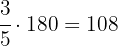 $
She will be left with the original amount (180) minus the 3/5 spent (108).
 $
Two automobiles A and B travel the same route of 572 miles. Automobile A has traveled 5/11 of the route when B has traveled 6/13 of it. Which one is ahead? How many miles has each one traveled?
We are going to compare the distances traveled by A and B. To do this, we put the fractions in a common denominator. The one with the larger numerator will have traveled farther.

We simplify the fractions and observe that B is ahead.


A few years ago, Pedro was 24 years old, which represents 2/3 of his current age. How old is Pedro?
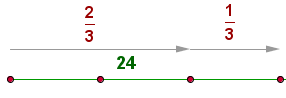
24 equals two parts of his age, so we calculate how much one part is worth (24÷2) and multiply the result by the total number of parts (3).
 years
In local elections held in a town, 3/11 of the votes went to party A, 3/10 to party B, 5/14 to C, and the rest to party D. The total number of votes was 15,400. Calculate:
1. The number of votes obtained by each party.
2. The number of abstentions, knowing that the number of voters represents 5/8 of the electoral census.
We calculate the votes for each of the parties.
 votes
 votes
 votes
D will have the total number of votes minus the number of votes obtained by the other parties.
The total voters is 8/8, that is, 1.


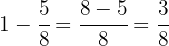

The line is divided into 8 equal parts. To know the quantity that each part represents, we note that the first 5 parts (those of the voters) total 15,400, so one part equals 15,400 divided by 5, which is 3,080. The other three parts (those of the abstentions) are obtained by multiplying 3 by 3,080.

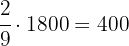
A father distributes $1,800 among his children. He gives the oldest 4/9 of that amount, the middle child 1/3, and the youngest the rest. How much did each one receive? What fraction of the money did the third child receive?



Summarize with AI:
Did you like this article? Rate it!

 Loading...