Systems of Equations with Unique Solution
Solve the following systems of equations using the graphical method.

Step 1: We obtain two points for each line, considering the intersection with the axes. For the first line:

For the first line, the intersection points with the axes are 
For the second line:

Note: We use the intersection with the axes as the points to construct the line, but you can choose any two values of  and obtain the corresponding values of
 . Using a ruler, you trace the line passing through both points, and the result is the same as shown.
Step 2: We represent the intersection points with the axes on the Cartesian plane and, with a ruler, draw both lines and locate the intersection point.

Step 3: The solution to the system of equations is where both lines intersect:  . Note that when substituting this solution into both equations, the equality is not satisfied exactly:

However, they are quite close. This is the limitation of the graphical method. To obtain exact solutions, we use analytical methods such as substitution, elimination, or equalization. Using analytical methods, the exact result is 

Step 1: We obtain two points for each line. For the first line:

For the first line, the intersection points are 
For the second line:

Step 2: We represent the points on the Cartesian plane and draw both lines, locating their intersection.

Step 3: The solution is  . When we substitute this solution into both equations, the equality is satisfied exactly:

Therefore, the solution obtained is exact.

Step 1: For the first line, using  and
 :

Points for the first line: 
For the second line:

Step 2: Plot both lines on the coordinate plane.

Step 3: The solution to the system of equations is where both lines intersect, that is,  . Note that when substituting our solution into both equations, the equality is satisfied:


To graph a line, you only need two points and then draw the line containing them.
Step 1: We obtain two points for each line, considering the values  in both lines. For the first line:

For the first line, the points obtained are 
For the second line, the points obtained are:

Step 2: We represent the points of the lines on the Cartesian plane, with the aid of a ruler we draw both lines and locate the intersection point of both lines.

Step 3: The solution to the system of equations is where both lines intersect, that is,  . Note that when substituting our solution into both equations, the equality is satisfied.

To graph a line, you only need two points and then draw the line containing them.
Step 1: We obtain two points for each line, considering the values  in the first line:

For the first line, the points obtained are 
For the second line we consider the values  , the points obtained are:

Step 2: We represent the points of the lines on the Cartesian plane, with the aid of a ruler we draw both lines and locate the intersection point of both lines.

Step 3: The solution to the system of equations is where both lines intersect, that is,  . Note that when substituting our solution into both equations, the equality is satisfied.

To graph a line, you only need two points and then draw the line containing them.
Step 1: We obtain two points for each line, considering the values  in both lines. For the first line:

For the first line, the points obtained are 
For the second line, the points obtained are:

Step 2: We represent the points of the lines on the Cartesian plane, with the aid of a ruler we draw both lines and locate the intersection point of both lines.

Step 3: The solution to the system of equations is where both lines intersect, that is,  . Note that when substituting our solution into both equations, the equality is satisfied.

To graph a line, you only need two points and then draw the line containing them.
Step 1: We obtain two points for each line, considering the values in both lines. For the first line:
For the first line, the points obtained are
For the second line, the points obtained are:

Step 2: We represent the points of the lines on the Cartesian plane, with the aid of a ruler we draw both lines and locate the intersection point of both lines.

Step 3: The solution to the system of equations is where both lines intersect, that is, . Note that when substituting our solution into both equations, the equality is satisfied.

To graph a line, you only need two points and then draw the line containing them.
Step 1: We obtain two points for each line, considering the values in both lines. For the first line:

For the first line, the points obtained are 
For the second line, the points obtained are:
Step 2: We represent the points of the lines on the Cartesian plane, with the aid of a ruler we draw both lines and locate the intersection point of both lines.

Step 3: The solution to the system of equations is where both lines intersect, that is,  . Note that when substituting our solution into both equations, the equality is satisfied.

To graph a line, you only need two points and then draw the line containing them.
Step 1: We obtain two points for each line, considering the values in both lines. For the first line:

For the first line, the points obtained are 
For the second line, the points obtained are:

Step 2: We represent the points of the lines on the Cartesian plane, with the aid of a ruler we draw both lines and locate the intersection point of both lines.

Step 3: The solution to the system of equations is where both lines intersect, that is,  . Note that when substituting our solution into both equations, the equality is satisfied.
Systems of Equations with No Solution
Solve the following systems of equations using the graphical method.
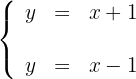
To graph a line, you only need two points and then draw the line containing them.
Step 1: We obtain two points for each line. We can find the intersections with the axes or assign arbitrary values to to obtain values of . In this case we are going to consider the values  for the first line:

For the first line, the points obtained are 
For the second line, considering the values , the points obtained are:
Step 2: We represent the points of the lines on the Cartesian plane, with the aid of a ruler we draw both lines and locate the intersection point of both lines.

Step 3: There is no solution to the system of equations, since both lines are parallel to each other and there is no point of intersection between them as can be observed in the graph. From the analytical point of view, both lines have the same slope  .
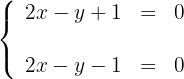
To graph a line, you only need two points and then draw the line containing them.
Step 1: We obtain two points for each line. We can find the intersections with the axes or assign arbitrary values to to obtain values of . In this case we are going to consider the values  for the first line:

For the first line, the points obtained are 
For the second line, considering the values , the points obtained are:

Step 2: We represent the points of the lines on the Cartesian plane, with the aid of a ruler we draw both lines and locate the intersection point of both lines.

Step 3: There is no solution to the system of equations, since both lines are parallel to each other and there is no point of intersection between them as can be observed in the graph. From the analytical point of view, both lines have the same slope  .
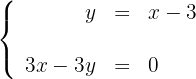
To graph a line, you only need two points and then draw the line containing them.
Step 1: We obtain two points for each line. We can find the intersections with the axes or assign arbitrary values to to obtain values of . In this case we are going to consider the values for the first line:

For the first line, the points obtained are 
For the second line, considering the values , the points obtained are:

Step 2: We represent the points of the lines on the Cartesian plane, with the aid of a ruler we draw both lines and locate the intersection point of both lines.

Step 3: There is no solution to the system of equations, since both lines are parallel to each other and there is no point of intersection between them as can be observed in the graph. From the analytical point of view, both lines have the same slope .
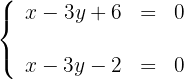
To graph a line, you only need two points and then draw the line containing them.
Step 1: We obtain two points for each line, considering the values  in the first line:

For the first line, the points obtained are 
For the second line, considering the values , the points obtained are:

Step 2: We represent the points of the lines on the Cartesian plane, with the aid of a ruler we draw both lines and locate the intersection point of both lines.
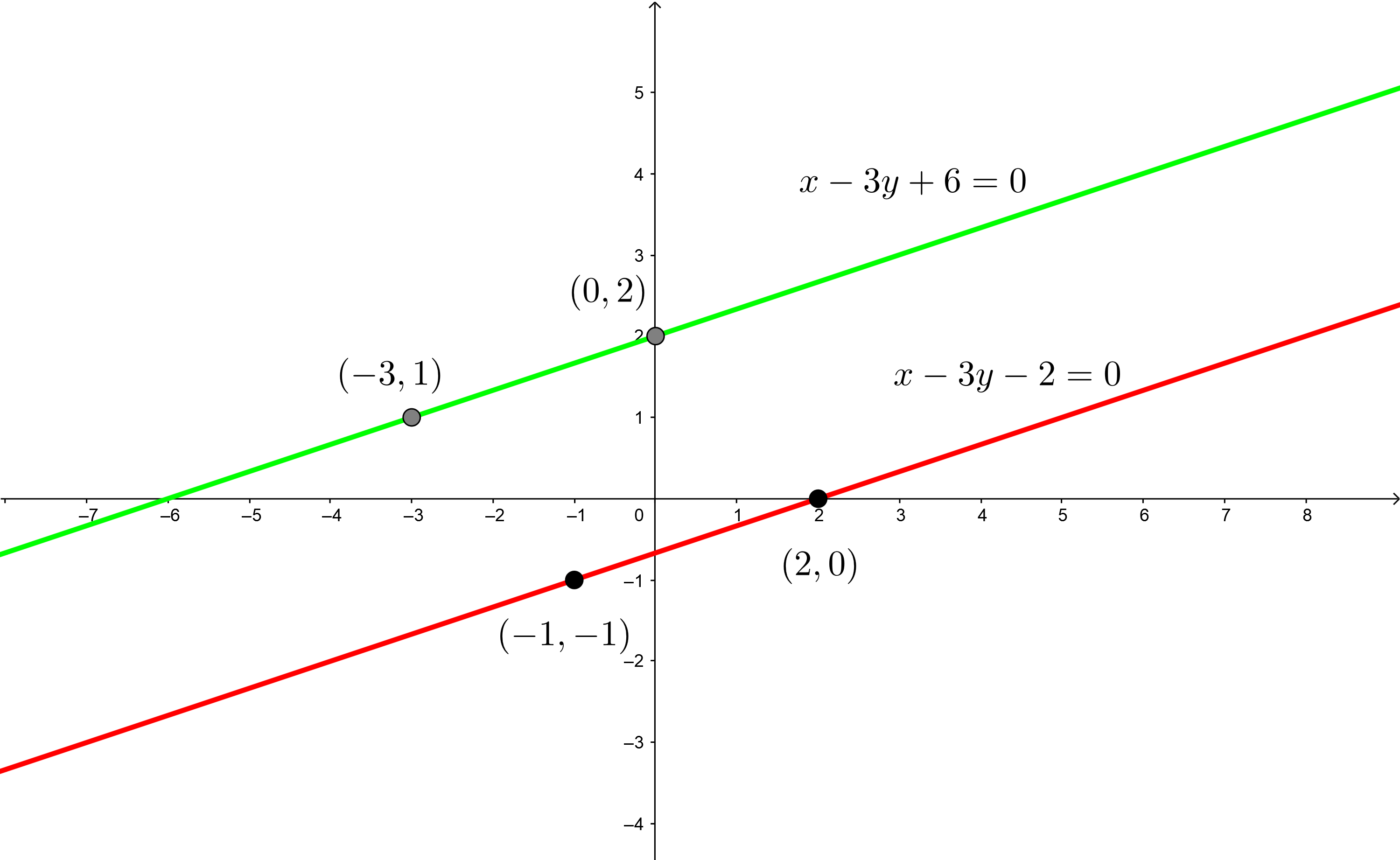
Step 3: There is no solution to the system of equations, since both lines are parallel to each other and there is no point of intersection as can be observed in the graph. From the analytical point of view, both lines have the same slope  .
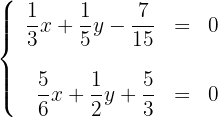
To graph a line, you only need two points and then draw the line containing them.
Step 1: We obtain two points for each line. We can find the intersections with the axes or assign arbitrary values to to obtain values of . In this case we are going to consider the values for the first line:

For the first line, the points obtained are 
For the second line, considering the values  , the points obtained are:

Step 2: We represent the points of the lines on the Cartesian plane, with the aid of a ruler we draw both lines and locate the intersection point of both lines.
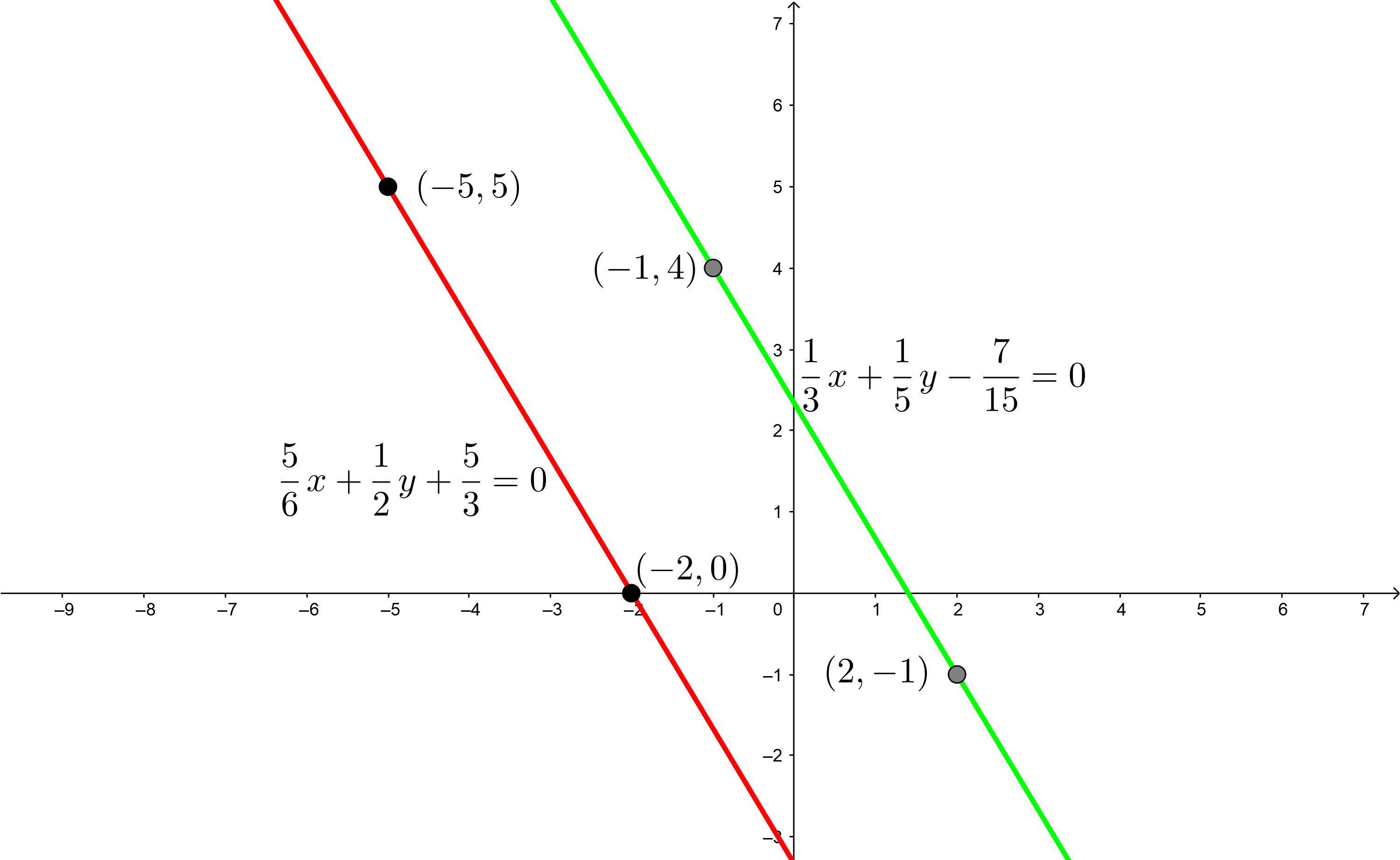
Step 3: There is no solution to the system of equations, since both lines are parallel to each other and there is no point of intersection between them as can be observed in the graph. From the analytical point of view, both lines have the same slope  .
Systems of Equations with Infinite Solutions
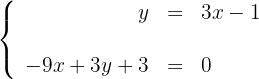
Solve the following systems of equations using the graphical method.
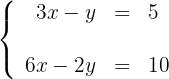
To graph a line, you only need two points and then draw the line containing them.
Step 1: We obtain two points for each line. We can find the intersections with the axes or assign arbitrary values to to obtain values of . In this case we are going to consider the values for the first line:

For the first line, the points obtained are 
For the second line, considering the values , the points obtained are:

Step 2: We represent the points of the lines on the Cartesian plane, with the aid of a ruler we draw both lines and locate the intersection point of both lines.

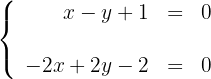
Step 3: There are infinite solutions, since the two lines are equal and intersect at all of their points.
To graph a line, you only need two points and then draw the line containing them.
Step 1: We obtain two points for each line. We can find the intersections with the axes or assign arbitrary values to to obtain values of . In this case we are going to consider the values for the first line:

For the first line, the points obtained are 
For the second line, considering the values , the points obtained are:

Step 2: We represent the points of the lines on the Cartesian plane, with the aid of a ruler we draw both lines and locate the intersection point of both lines.

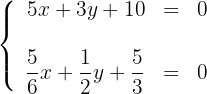
Step 3: There are infinite solutions, since the two lines are equal and intersect at all of their points.
To graph a line, you only need two points and then draw the line containing them.
Step 1: We obtain two points for each line. We can find the intersections with the axes or assign arbitrary values to to obtain values of . In this case we are going to consider the values for the first line:

For the first line, the points obtained are 
For the second line, considering the values , the points obtained are:

Step 2: We represent the points of the lines on the Cartesian plane, with the aid of a ruler we draw both lines and locate the intersection point of both lines.

Step 3: There are infinite solutions, since the two lines are equal and intersect at all of their points.
To graph a line, you only need two points and then draw the line containing them.
Step 1: We obtain two points for each line. We can find the intersections with the axes or assign arbitrary values to to obtain values of . In this case we are going to consider the values for the first line:

For the first line, the points obtained are 
For the second line, considering the values , the points obtained are:
Step 2: We represent the points of the lines on the Cartesian plane, with the aid of a ruler we draw both lines and locate the intersection point of both lines.
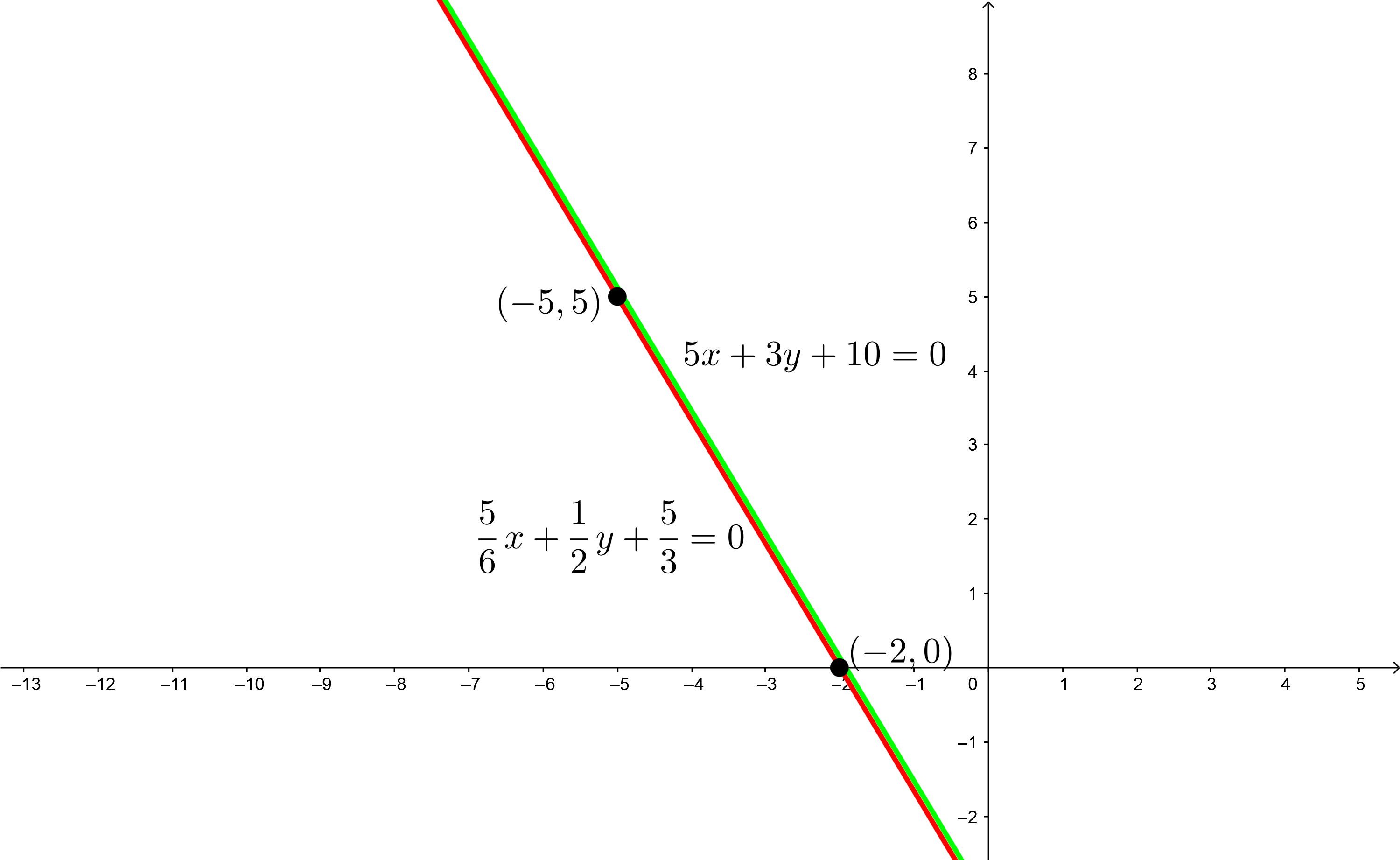
Step 3: There are infinite solutions, since the two lines are equal and intersect at all of their points.
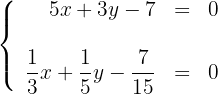
To graph a line, you only need two points and then draw the line containing them.
Step 1: We obtain two points for each line. We can find the intersections with the axes or assign arbitrary values to to obtain values of . In this case we are going to consider the values for the first line:

For the first line, the points obtained are
For the second line, considering the values , the points obtained are:

Step 2: We represent the points of the lines on the Cartesian plane, with the aid of a ruler we draw both lines and locate the intersection point of both lines.
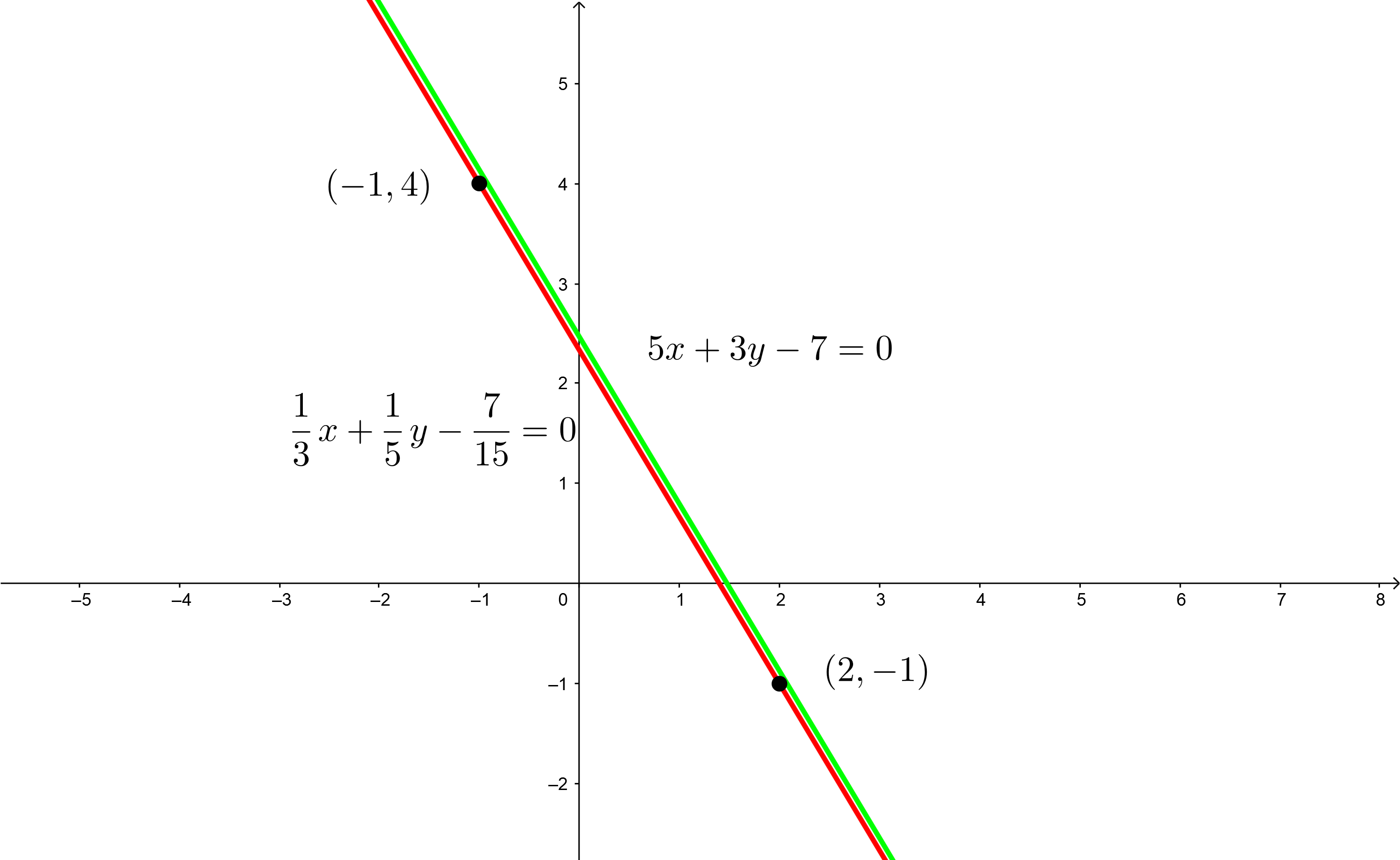
Step 3: There are infinite solutions, since the two lines are equal and intersect at all of their points.
Summarize with AI:
Did you like this article? Rate it!

 Loading...