
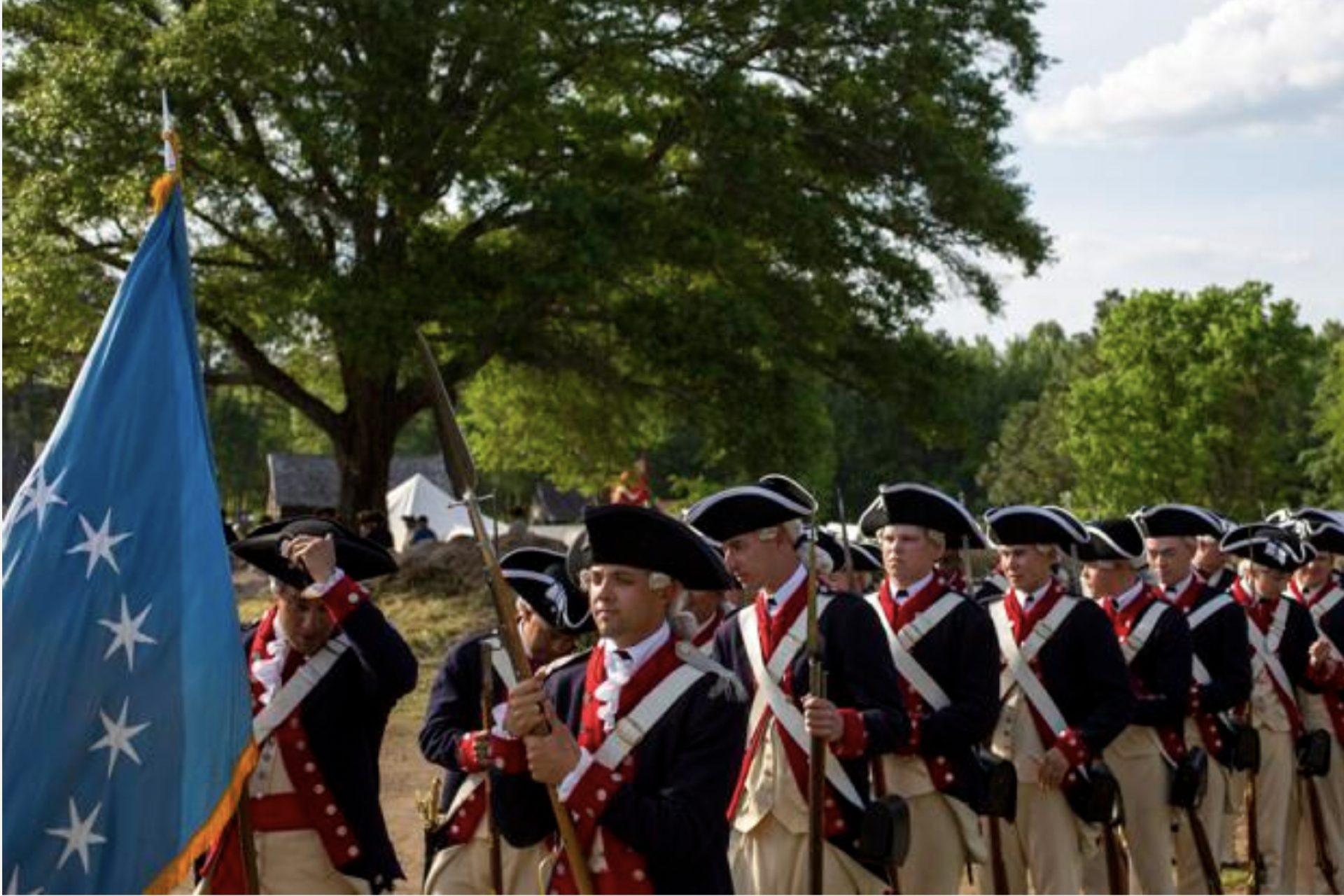

The Revolutionary War was a long conflict with many battles. While every battle ultimately determined America's fate, we can point to certain battles as having a significant impact on the shape of the war. Here, we've picked some of the key battles.
Key Takeaways
- The Revolutionary War included far more battles and skirmishes than any short article can cover.
- The first fighting broke out in Massachusetts in April 1775.
- Some battles mattered because of their military result, while others mattered because of their political impact.
- The Battle of Brooklyn was the largest battle of the Revolutionary War.
- Saratoga helped bring France into the war as an American ally.
- Yorktown effectively ended major fighting, but local conflict continued afterward.





Major Battles of the Revolutionary War
While the Revolutionary War is more than just major battles, you could think of them as some of the more important parts. Certain battles involved sieges involving thousands of soldiers, while others focused on local control, supply routes, or militia activity. It's important to remember that we're just looking at a few select battles here, rather than the whole war (which would never fairly fit into an article like this).¹
The Revolutionary War included more than a handful of famous clashes. Mount Vernon notes that there were over 230 skirmishes and battles during the American Revolution, which is why this article focuses on selected major battles rather than every military action.
The war lasted several years. It started with fighting in Massachusetts in 1775, but continued with campaigns in New York, New Jersey, Virginia, and other colonies. Again, we can't cover everything, but here are a few of the key battles and moments. We'll explore some of them in more depth later. We've included major moments from the opening clashes through later actions after Yorktown, when the political settlement had not yet been finalized.¹⁰
April 19, 1775
Battle of Lexington and Concord
The first military clashes of the Revolutionary War turned colonial resistance into open conflict.
June 17, 1775
Battle of Bunker Hill
A costly British victory that showed American forces could stand against a major British assault.
August 27, 1776
Battle of Brooklyn
The largest battle of the Revolutionary War, also known as the Battle of Long Island.
September 19 and October 7, 1777
Battle of Saratoga
A major American victory that helped bring France into the war as an ally.
July 16, 1779
Battle of Stony Point
A successful American night assault that boosted Continental Army morale.
September 28 to October 19, 1781
Battle of Yorktown
The decisive siege where American and French forces trapped Cornwallis and effectively ended major fighting.
December 27, 1782
Battle of Cedar Bridge
A late-war skirmish often treated as one of the final land engagements of the Revolutionary War.
The forces involved in the war evolved as the conflict did. The earlier battles often involved colonial militia and British regulars. Later campaigns included the Continental Army, Loyalist units, and French support on the American side. Key battles weren't always of the same scale, but Brooklyn, in particular, shows how large these battles could become when major armies met in the field.²
forces engaged.
| Battle | Date | Location | American side | British side | Result | Known for |
|---|---|---|---|---|---|---|
| Battle of Lexington and Concord | April 19, 1775 | Lexington and Concord, Massachusetts | Massachusetts militia | British regulars from Boston | American strategic victory | First military clashes of the Revolutionary War |
| Battle of Bunker Hill | June 17, 1775 | Charlestown, Massachusetts | Colonial forces | British Army | British tactical victory | Heavy British losses and early American resistance |
| Battle of Saratoga | September 19 and October 7, 1777 | Saratoga County, New York | Continental Army | British Army under John Burgoyne | American victory | Turning point that helped bring France into the war |
| Battle of Stony Point | July 16, 1779 | Stony Point, New York | Continental Army under Anthony Wayne | British garrison | American victory | Successful night assault on a fortified British position |
| Battle of Yorktown | September 28 to October 19, 1781 | Yorktown, Virginia | American and French forces | British Army under Charles Cornwallis | American and French victory | Decisive siege that effectively ended major fighting |
| Battle of Cedar Bridge | December 27, 1782 | Near Cedar Creek, New Jersey | Burlington County militia | Loyalist Pine Robbers | Loyalist victory | One of the final land engagements of the Revolutionary War |
Battle of Lexington and Concord (April 19, 1775)
The Battles of Lexington and Concord began when British regulars marched out of Boston toward colonial military stores in Massachusetts. Lexington was a brief confrontation, but Concord and the British retreat back to Boston was a fine example of how quickly local resistance could organize into military action. Historians often point to these as a key turning point, when the Revolutionary War moved from protest and political argument, much like the relatively peaceful Boston Tea Party, into open fighting that we'd classify as a battle.⁴
Battle of Bunker Hill (June 17, 1775)
Bunker Hill was during the early siege of Boston. British forces tried to break the colonial hold on the high ground around the city. The British won the position at a cost. The Americans took the moral victory, having stood their ground against professional soldiers, despite their lack of training and resources.³
Battle of Saratoga (September 19 and October 7, 1777)
Saratoga was fought in two main stages. The British General John Burgoyne pushed south through New York while American forces resisted the advance. After the second battle in October, Burgoyne surrendered. This was an important victory for the cause and helped change how European powers viewed the American Revolution.⁵
The American victory at Saratoga mattered because it changed the international shape of the war. After the British defeat, France became a formal ally of the Americans, providing military, naval, and diplomatic support that Britain could not ignore.
Battle of Stony Point (July 16, 1779)
Stony Point was an American attack on a British-held position on the Hudson River. General Anthony Wayen's troops captured the fort in a night assault. This was good for morale, given that the war had dragged on. The victory didn't end the war, but it was a boost that showed American forces could still take the initiative and enjoy decisive victories.⁶
Battle of Yorktown (September 28 to October 19, 1781)
The Battle of Yorktown was a key point in the American war effort. Washington's army and several of the nation's Founding Fathers, French ground forces, and French naval power all worked together to achieve victory. The British General Charles Cornwallis was trapped in Virginia and had no clear way to receive support. While his surrender didn't immediately bring peace, it made it far harder to justify the continued large-scale British campaigning in America.⁷
Yorktown did not officially end the Revolutionary War, but it effectively brought an end to major fighting. American and French forces trapped Cornwallis in Virginia, and his surrender made it much harder for Britain to continue the war in the same way.
Battle of Cedar Bridge (December 27, 1782)
Cedar Bridge is a key example of a battle after Yorktown. The skirmish involved the Burlington County militia and the Loyalist Pine Robbers in New Jersey. This battle was fought more than a year after the surrender of Cornwallis in Virginia. While historians don't like to call it the “last battle”, Cedar Bridge shows that local violence and unresolved loyalties continued late into the war.⁹
How Many Battles Were in the Revolutionary War?
Counting "battles" can get tricky. When is a siege a battle? Is militia activity a battle? Here, we've looked to historians for the number of skirmishes and battles, which puts a figure over 200 across nearly a decade of war.⁸
skirmishes and battles, far more than we could include in this article.
Why These Revolutionary War Battles Mattered
We chose these battles because they provided clear shifts in the conflict. Some focus on the beginning of the war, while others highlight key developments and military outcomes. They're the major battles of the revolutionary war, and there was no way we could have put together an article of over 200 battles! While the Declaration of Independence outlined the desire for independence, it wasn't granted to the United States. If the results of some of these battles had been different, the United States of America wouldn't exist as we know it today.
Marked the first military clashes of the Revolutionary War. The fighting in Massachusetts turned political resistance into open conflict.
Showed that colonial forces could stand against the British Army. Although Britain won the battle, the heavy losses made the victory costly.
Changed the course of the war. The American victory helped convince France to formally support the United States.
Showed the growing skill of the Continental Army. Anthony Wayne's night assault proved American forces could capture a fortified British position.
Was the decisive siege of the war. Cornwallis's surrender effectively ended major fighting between Britain and the American forces.
Shows that fighting continued after Yorktown. This late-war skirmish is often treated as one of the final land engagements of the Revolutionary War.
References
- American Battlefield Trust. “American Revolution Timeline.” American Battlefield Trust, https://www.battlefields.org/learn/articles/american-revolution-timeline. Accessed 1 May 2026.
- American Battlefield Trust. “Brooklyn: Long Island.” American Battlefield Trust, https://www.battlefields.org/learn/revolutionary-war/battles/brooklyn. Accessed 1 May 2026.
- American Battlefield Trust. “Bunker Hill.” American Battlefield Trust, https://www.battlefields.org/learn/revolutionary-war/battles/bunker-hill. Accessed 1 May 2026.
- American Battlefield Trust. “Lexington and Concord.” American Battlefield Trust, https://www.battlefields.org/learn/revolutionary-war/battles/lexington-and-concord. Accessed 1 May 2026.
- American Battlefield Trust. “Saratoga.” American Battlefield Trust, https://www.battlefields.org/learn/revolutionary-war/battles/saratoga. Accessed 1 May 2026.
- American Battlefield Trust. “Stony Point.” American Battlefield Trust, https://www.battlefields.org/learn/revolutionary-war/battles/stony-point. Accessed 1 May 2026.
- American Battlefield Trust. “Yorktown.” American Battlefield Trust, https://www.battlefields.org/learn/revolutionary-war/battles/yorktown. Accessed 1 May 2026.
- George Washington’s Mount Vernon. “Revolutionary War Battles.” George Washington’s Mount Vernon, https://www.mountvernon.org/george-washington/the-revolutionary-war/washingtons-revolutionary-war-battles. Accessed 1 May 2026.
- Monmouth County Historical Association. Adelberg, Michael. “Pine Robbers Defeat Militia at Cedar Creek.” Monmouth County Historical Association, https://www.monmouthhistory.org/250/pine-robbers-defeat-militia-at-cedar-creek. Accessed 1 May 2026.
- National Park Service. “Timeline of the Revolution.” American Revolution, https://www.nps.gov/subjects/americanrevolution/timeline.htm. Accessed 1 May 2026.
Summarize with AI:
Did you like this article? Leave a rating!


 Loading...
