
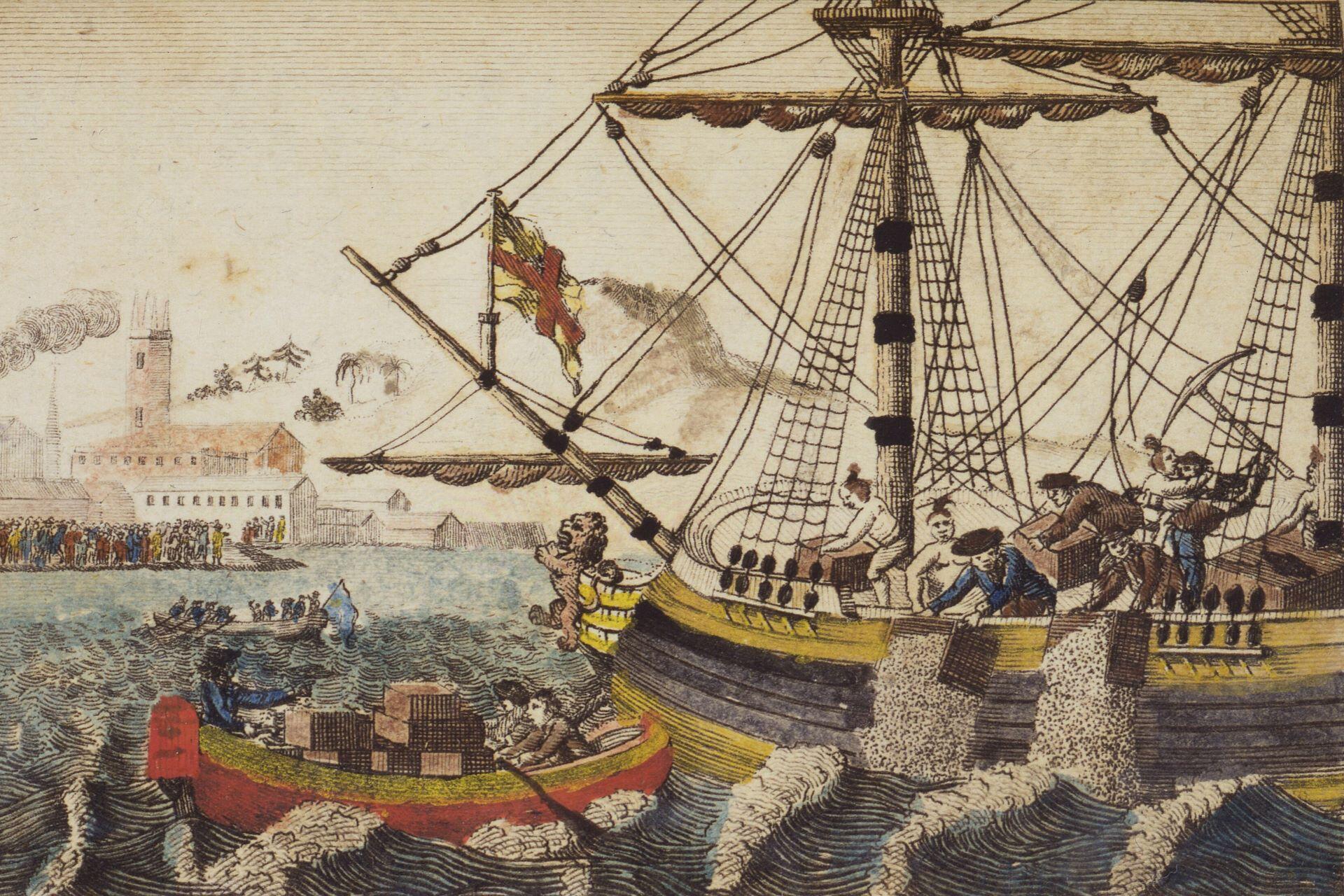

The Boston Tea Party was an event on December 16, 1773, where colonists destroyed British tea in Boston Harbor. The event was one of the key turning points in the conflict between Britain and the American colonies, and a key step on the path to revolution.
Key Takeaways
- The Boston Tea Party took place on December 16, 1773, in Boston Harbor.⁶
- The protest was linked to the Tea Act of 1773 and the wider dispute over taxation without representation.¹
- Protesters targeted British East India Company tea carried on the Dartmouth, Eleanor, and Beaver.⁸
- About 340 chests of tea were destroyed during the protest.²
- Britain responded with punitive measures, including the Boston Port Act.³
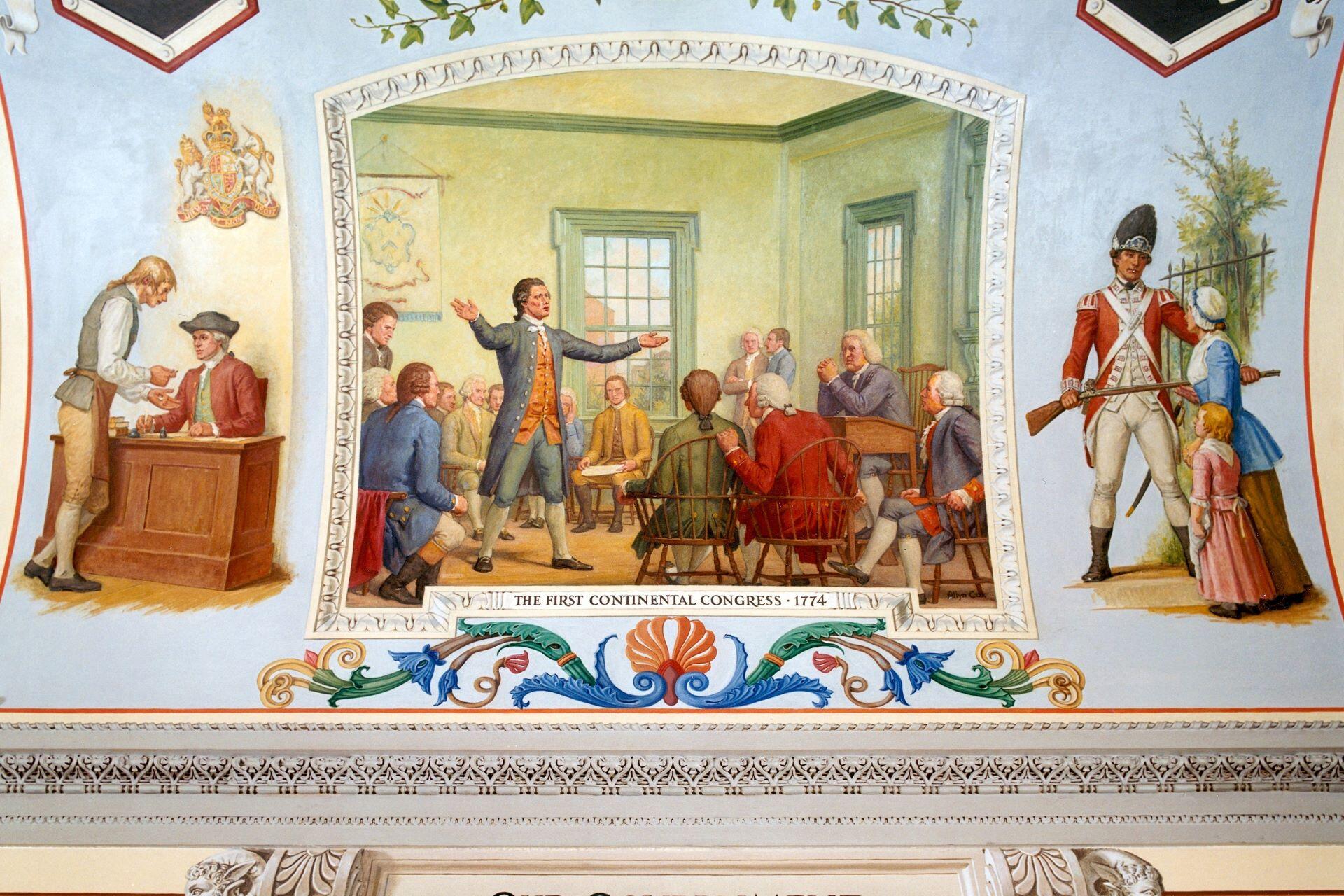
- The crisis helped push the colonies toward coordinated resistance and the First Continental Congress.³





The Date and Context of the Boston Tea Party
The Boston Tea Party was one of the key events during a period of growing conflict between Britain and the American colonies that would set the country on its path to revolution. By the time it occurred in 1773, there were disputes over Parliament's authority, colonial trade, and earlier taxes, with Boston one of the main centers of resistance. The British East India Company tea forced the issue, with a long-running political argument requiring immediate action. Accept the tea along with the tax, or choose public resistance?⁸
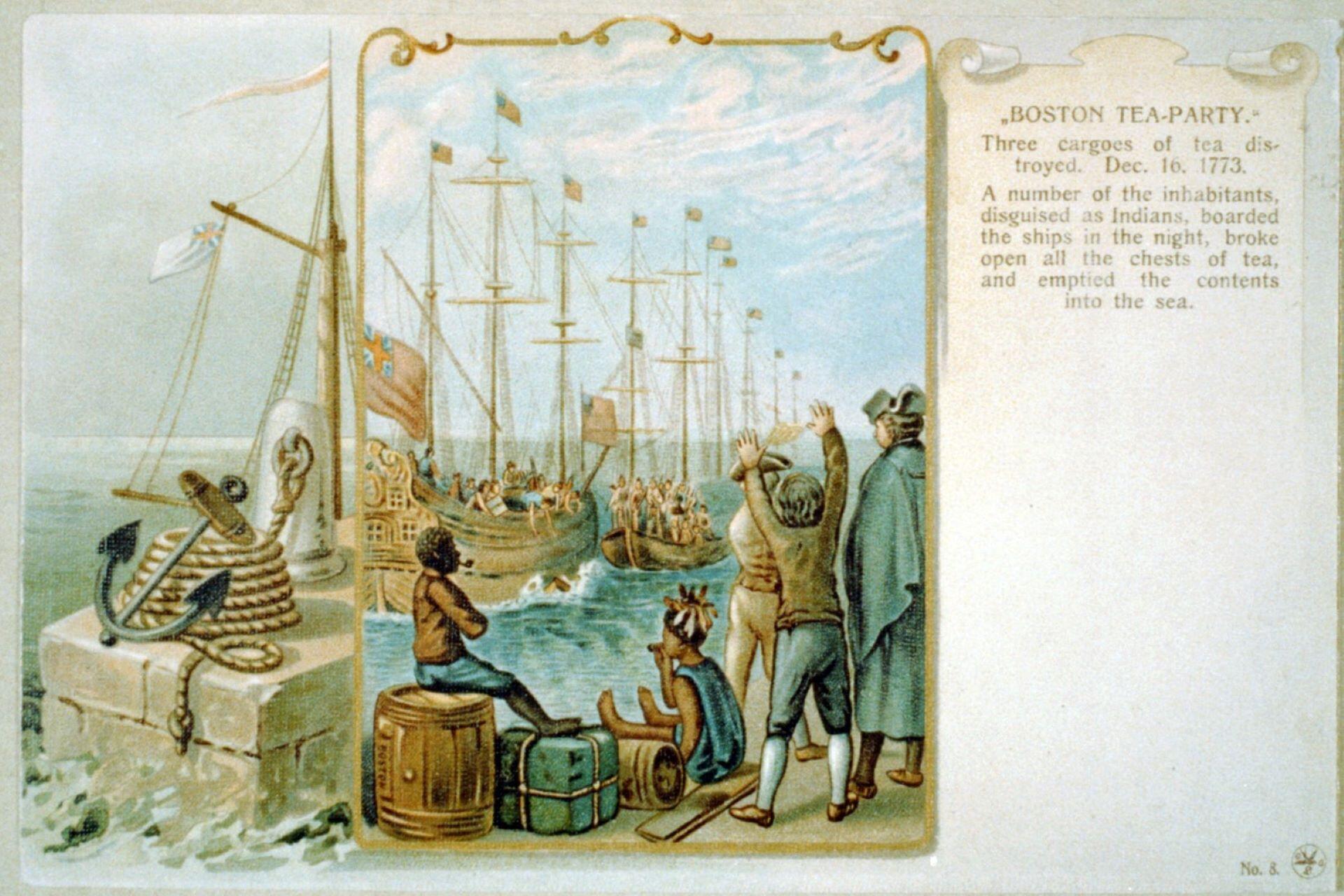
The Boston Tea Party took place on the night of December 16, 1773, in Boston Harbor. Colonists boarded tea ships and destroyed about 340 chests of British East India Company tea in protest against the Tea Act and taxation without representation. The event became one of the clearest steps on the road to the American Revolution.⁶
Causes of the Boston Tea Party
The oversimplified reason given for the Boston Tea Party was taxation without representation. However, there were more reasons than that. There was a deeper dispute over who could make decisions for the colonies. Was British policy protecting imperial control while diminishing colonial rights?²
The Tea Act of 1773
Taxation Without Representation
| Detail | Answer |
|---|---|
| Date | December 16, 1773 |
| Location | Boston Harbor, Massachusetts |
| Main cause | Protest against the Tea Act and taxation without representation |
| Ships involved | Dartmouth, Eleanor, and Beaver |
| Tea destroyed | About 340 chests |
| Key meeting place | Old South Meeting House |
| British response | Coercive Acts, including the Boston Port Act |
| Historical importance | Helped push the colonies toward organized resistance and revolution |
What Happened at the Boston Tea Party
The Boston Tea Party was the result of a public standoff that had been building up over the course of weeks. The colonists in Boston Harbor were debating whether to unload the cargo, send it back, or leave it untouched. The decision was made, and the protest carefully targeted the tea. Britain saw this as a major challenge to Parliament's authority.⁵ British observers quickly understood the destruction of the tea as more than a local dispute, with contemporary reports treating it as a serious challenge to imperial authority.¹⁰
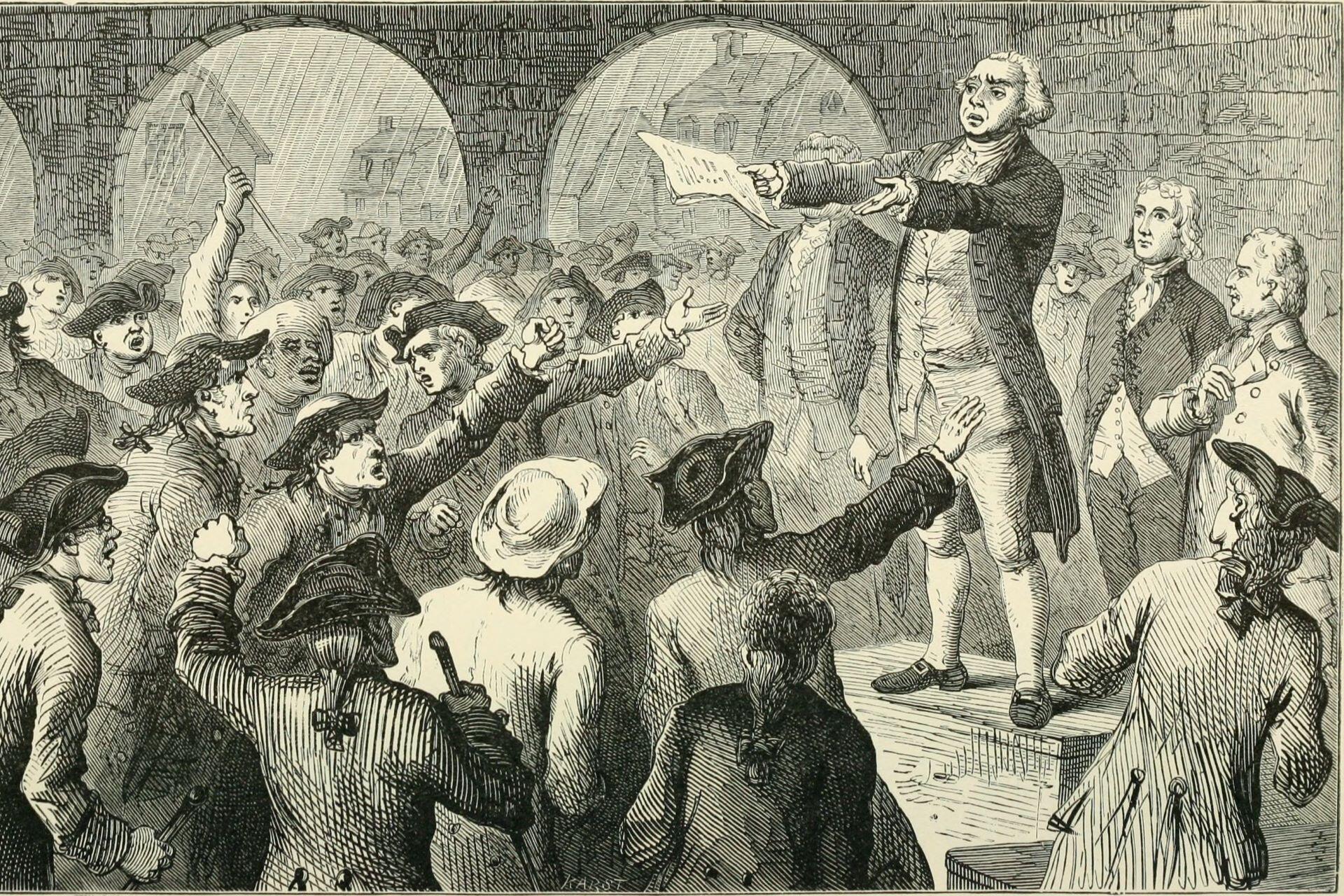
The Protest at Old South Meeting House
The Destruction of the Tea in Boston Harbor
Before nine O Clock in ye eveng, every Chest, from on board the 3 vessells, was knocked to pieces and Flung over ye sides.
John Andrews, eyewitness letter, December 18, 1773
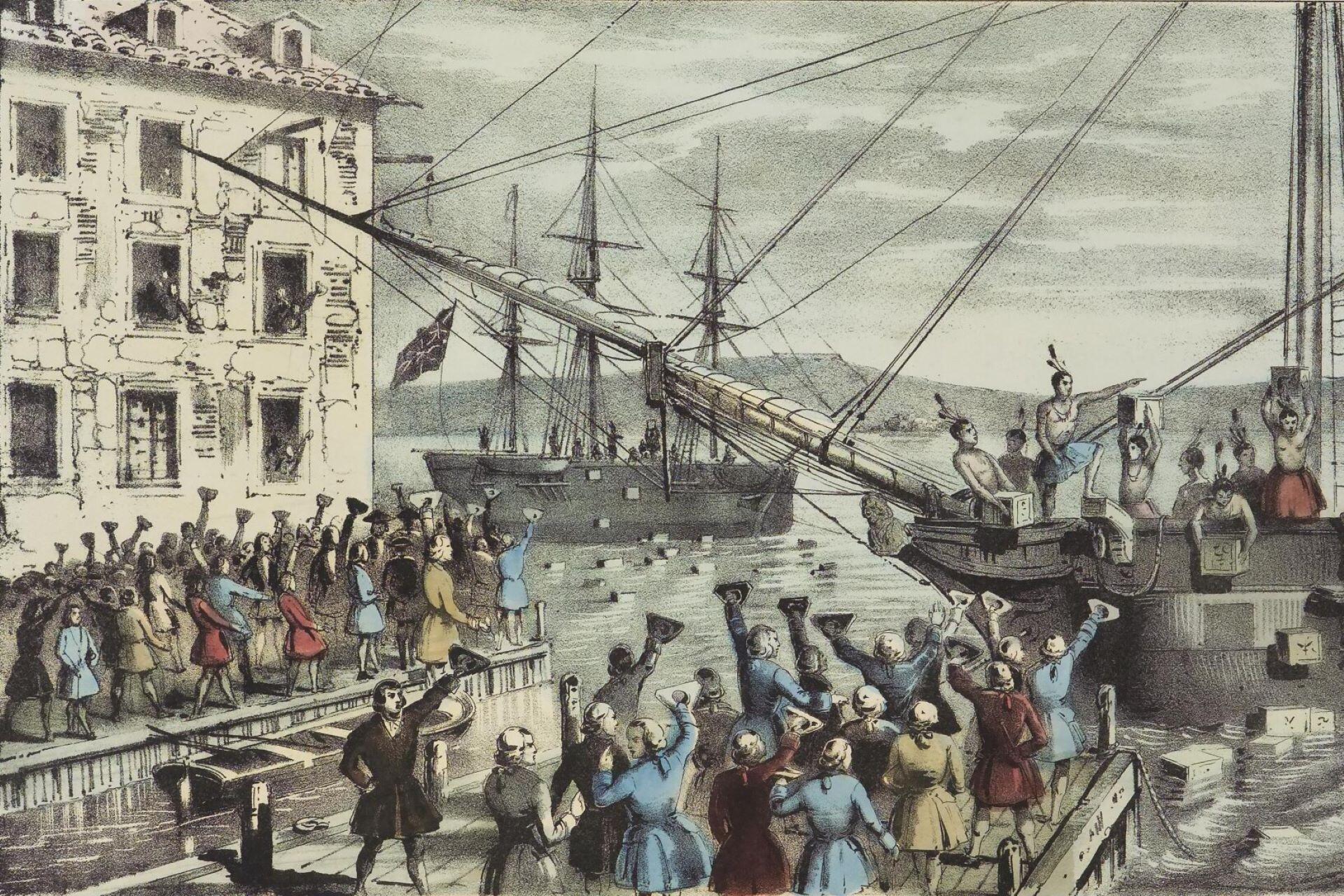
chests of British East India Company tea during the Boston Tea Party.
The British Response and the Coercive Acts
Britain's response didn't immediately lead to independence, but it made the relationship untenable. Since British authority could be used to punish an entire colony, there was a sense that they had to break free. The same feeling was shared by other colonies, and this growing divide would lead to the famed Declaration of Independence.
The Significance of the Boston Tea Party
The Boston Tea Party's consequences extended beyond several hundred chests of ruined tea. The British response made it clear to colonists who had had any doubt about how Imperial powers intended to deal with the colonies. It wasn't about taxes or shipments anymore; it was about colonial self-government. The resistance in Boston became a broader colonial issue, with leaders from other colonies drawn in to organize a shared response.³
From Colonial Protest to Revolution
The Boston Tea Party wasn't the start of the Revolutionary War, but it did bring everyone closer to armed conflict. Tensions continued to rise until the first battles of the Revolutionary War broke out in 1775. After all, once organized resistance seemed possible, war almost seemed inevitable.
The Road to the First Continental Congress
The First Continental Congress featured many of the political figures who would shape the United States both before and after the Revolution. They were central in the debates over independence, government, and colonial rights. These Founding Fathers shaped the nation in many key ways.
Boston Tea Party 1773 Timeline
So how did the events at the Boston Tea Party unfold? It wasn't just a case of angry colonists throwing tea into the ocean on a given day. There's a clear context and cause-and-effect we need to consider, including the British response after the event.³
1767
The Townshend Acts increase colonial anger
Parliament passed the Townshend Acts, which placed duties on imported goods and deepened colonial resentment over taxation without direct representation.³
March 5, 1770
The Boston Massacre raises tensions
British soldiers killed five colonists in Boston, making the city a major center of resistance to British authority.⁸
May 10, 1773
The Tea Act becomes law
The Tea Act gave the British East India Company an advantage in selling tea to the colonies, which many colonists saw as another attempt to enforce Parliament's right to tax them.¹
November 1773
Tea ships arrive in Boston Harbor
The Dartmouth arrived in Boston with British East India Company tea, followed by the Eleanor and the Beaver.⁸
December 16, 1773
Protesters gather at Old South Meeting House
Thousands of people gathered at Old South Meeting House before a group of protesters moved toward the harbor.⁹
December 16, 1773
Tea is destroyed in Boston Harbor
Protesters boarded the ships and destroyed about 340 chests of tea, turning a dispute over taxation into a defining act of colonial resistance.²
1774
Britain responds with the Coercive Acts
Parliament punished Massachusetts with measures, including the Boston Port Act, which closed the port until the destroyed tea was paid for.³
References
- American Battlefield Trust. “Tea Act.” American Battlefield Trust, https://www.battlefields.org/learn/primary-sources/tea-act. Accessed 1 May 2026.
- American Battlefield Trust. “The Boston Tea Party.” American Battlefield Trust, 3 Apr. 2023, https://www.battlefields.org/learn/articles/boston-tea-party. Accessed 1 May 2026.
- Library of Congress. “The Colonies Move Toward Open Rebellion, 1773 to 1774.” U.S. History Primary Source Timeline: The American Revolution, 1763–1783, Library of Congress, https://www.loc.gov/classroom-materials/united-states-history-primary-source-timeline/american-revolution-1763-1783/colonies-rebellion-1773-1774/. Accessed 1 May 2026.
- Massachusetts Historical Society. “A Vivid Eyewitness Account of the Boston Tea Party.” Object of the Month, Massachusetts Historical Society, 18 Dec. 2023, https://www.masshist.org/object-of-the-month/objects/december-2023. Accessed 1 May 2026.
- Massachusetts Historical Society. “Coming of the American Revolution: Boston Tea Party.” Massachusetts Historical Society, https://www.masshist.org/revolution/teaparty.php. Accessed 1 May 2026.
- National Archives Museum. “250th Anniversary of the Boston Tea Party.” National Archives Museum, 14 Dec. 2023, https://visit.archives.gov/whats-on/explore-exhibits/250th-anniversary-boston-tea-party. Accessed 1 May 2026.
- National Park Service. “Boston Tea Party at 250.” National Park Service, 7 Mar. 2025, https://www.nps.gov/articles/000/boston-tea-party-250.htm. Accessed 1 May 2026.
- National Park Service. “Boston Tea Party Timeline.” National Park Service, 20 Dec. 2023, https://www.nps.gov/articles/000/boston-tea-party-in-real-time.htm. Accessed 1 May 2026.
- Revolutionary Spaces. “Old South Meeting House.” Revolutionary Spaces, https://revolutionaryspaces.org/discover/old-south-meeting-house/. Accessed 1 May 2026.
- The National Archives. “Boston Tea Party: How Was the 1773 Boston Tea Party Significant for the American Revolution?” The National Archives, https://cdn.nationalarchives.gov.uk/documents/education/boston-tea-party.pdf. Accessed 1 May 2026.
Summarize with AI:
Did you like this article? Leave a rating!

 Loading...
