
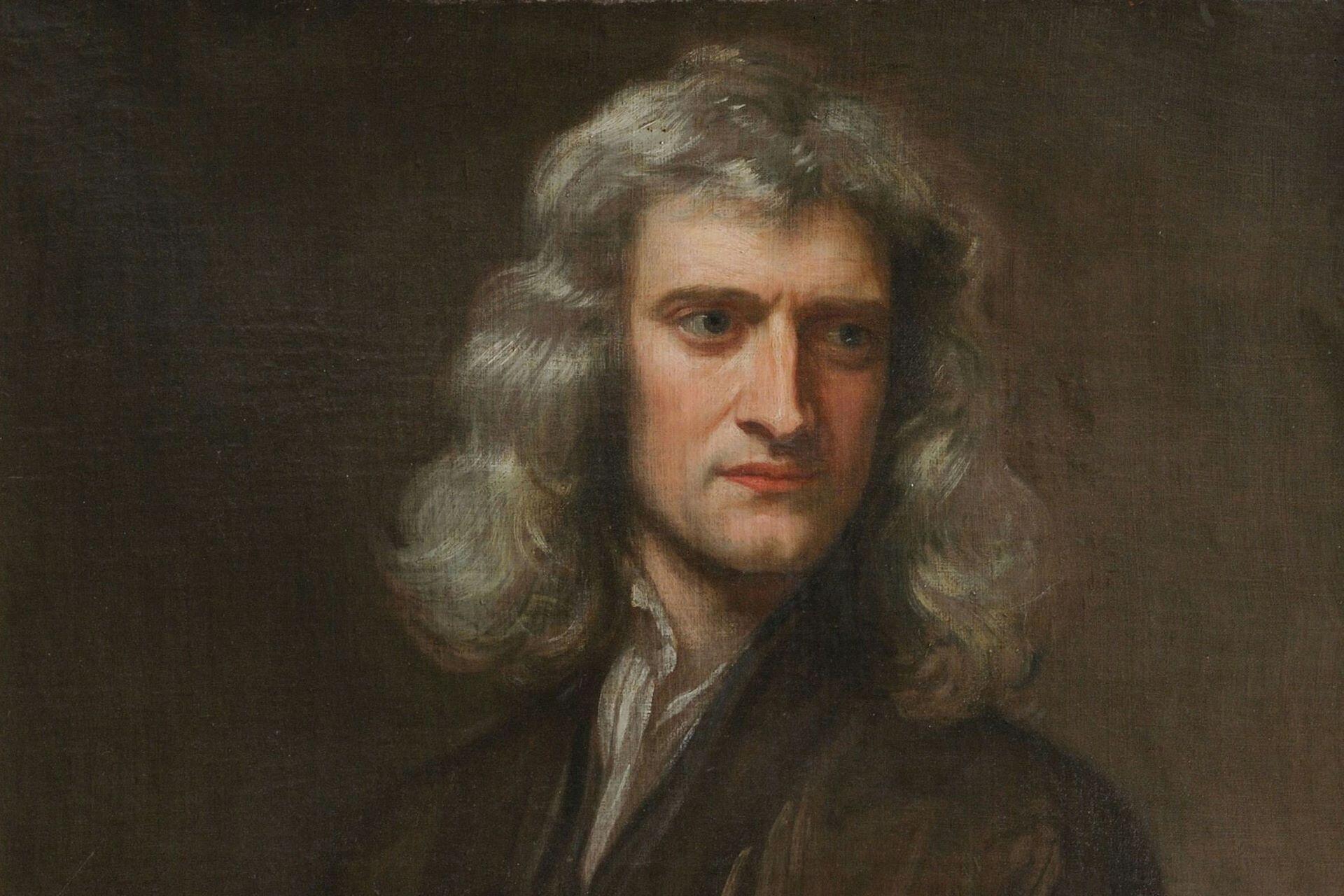

If I have seen further it is by standing on the shoulders of giants.
Isaac Newton
Sir Isaac Newton is one of science and mathematics's most influential figures.¹ His discoveries fundamentally changed how we understand the physical world. His research resulted in the laws of motion and universal gravitation, the development of calculus, and breakthroughs in light and optics.² His achievements shaped modern scientific thought, and he's still a central figure in math and physics today.
Key Takeaways
- Sir Isaac Newton was one of the most influential scientists in the history of mathematics and physics.
- He developed the laws of motion and the law of universal gravitation, which explain how objects move and interact.
- Newton independently developed calculus, a mathematical method used to study change, motion, and complex calculations.
- His experiments with prisms showed that white light is made of different colors, laying the foundation for modern optics.
- Newton invented the reflecting telescope, improving the way astronomers observe distant objects.
- His book Philosophiæ Naturalis Principia Mathematica established the mathematical foundations of classical mechanics.
- Newton’s discoveries continue to influence modern science, engineering, astronomy, and mathematics.


The Early Life of Sir Isaac Newton
When discussing the greatest mathematicians ever, it is difficult not to mention Sir Isaac Newton. An English physicist, philosopher, astronomer, and mathematician, Newton was born in 1642 in Woolsthorpe, Lincolnshire. His father died before he was born, and when Newton was three years old, his mother remarried.³ As a result, Newton spent much of his childhood living with his maternal grandmother.

In 1661, Newton entered Trinity College at the University of Cambridge. To pay for his education, he performed domestic duties at the university while studying subjects such as arithmetic, geometry, the trigonometry made famous by the mathematician Pythagoras, astronomy, and optics. During his time at Cambridge, the mathematician Isaac Barrow recognized Newton’s exceptional talent and became an important mentor. Newton graduated in 1665, marking the beginning of a career that would transform mathematics and science.
1642
Isaac Newton is born in Woolsthorpe, Lincolnshire, England.
1661
Newton enters Trinity College, Cambridge, where he studies mathematics and natural philosophy.
1665–1666
During the Great Plague, Newton leaves Cambridge and develops early ideas about calculus, gravity, and optics.
1668
Newton builds the first successful reflecting telescope.
1687
Newton publishes Philosophiæ Naturalis Principia Mathematica, introducing the laws of motion and universal gravitation.
1704
Newton publishes Opticks, presenting his research on light and color.
1705
Queen Anne knights Newton, making him Sir Isaac Newton.
1727
Newton dies in London and is buried in Westminster Abbey.
Newton's Scientific Contributions
Just like the French mathematician René Descartes, Sir Isaac Newton made some important discoveries in math and science. His research explained how objects move, how gravity governs the universe, and how light behaves as it passes through different materials. His work in physics, math, and optics was groundbreaking.
Laws of Motion and Universal Gravitation
Isaac Newton is best known for his work on gravity and motion.⁴ According to popular legend, Newton began thinking about gravity after observing an apple fall from a tree. While the story is largely symbolic, it can give us food for thought about why objects fall toward the Earth and how celestial bodies move in space.
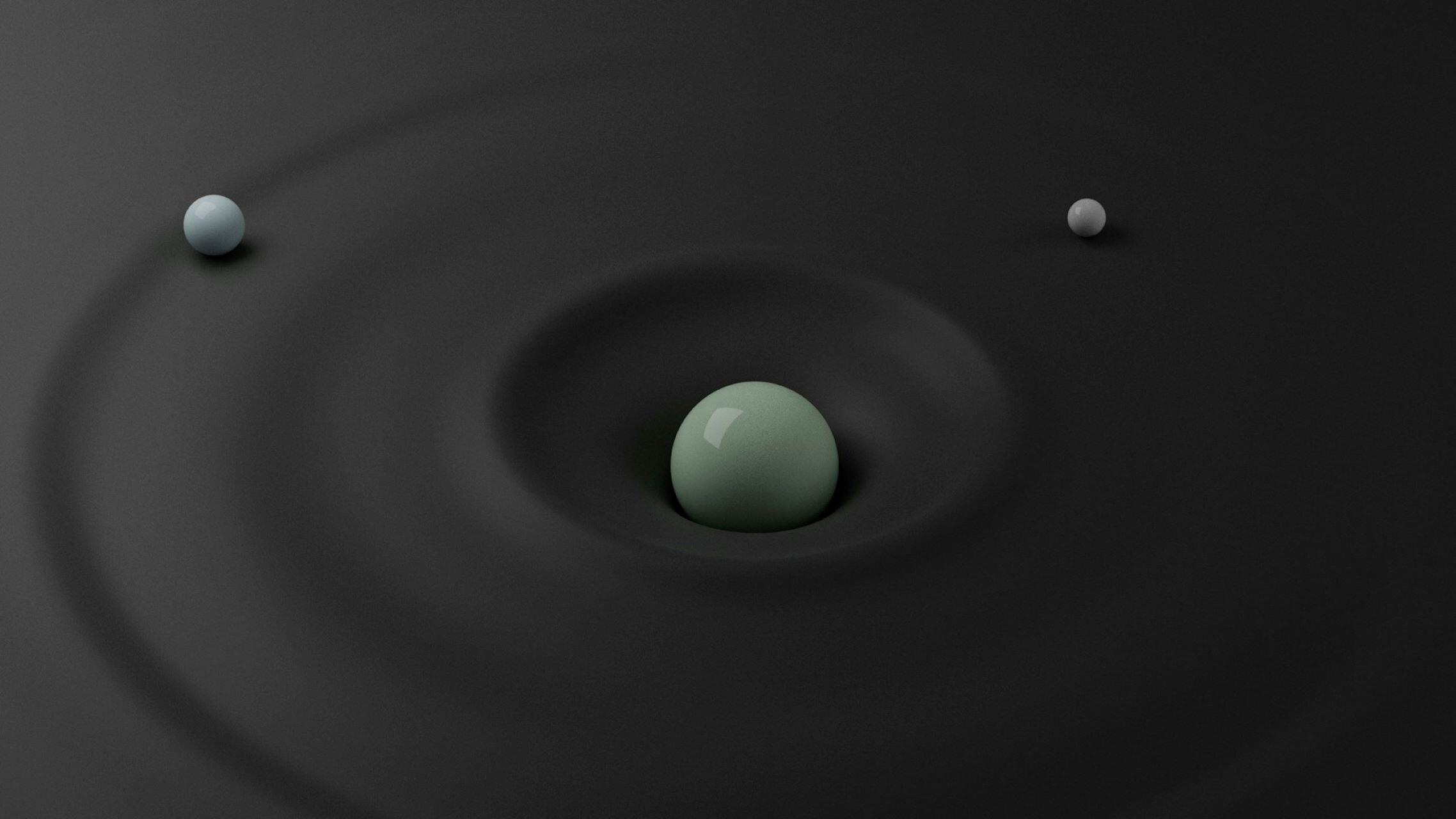
Newton’s law of universal gravitation explains how every object in the universe attracts every other object with a force. The strength of this force depends on two factors: the mass of the objects and the distance between them. The greater the mass, the stronger the attraction. As the distance between objects increases, the gravitational force decreases according to the inverse-square law. This principle explains why planets orbit the Sun and why objects fall toward the Earth.
Through careful observation and mathematical analysis, Newton developed the law of universal gravitation; every object in the universe attracts every other object with a force that depends on their mass and the distance between them.⁵ The force decreases as the distance between the objects increases, following the inverse-square law. Newton's idea explains both everyday phenomena and the motion of planets. And while space isn't perfectly Euclidean, the work of mathematicians like Euclid helped get math to a place where Newton could work with it.
The very force that causes an apple to fall also keeps the Moon in orbit around the Earth and governs the movement of planets around the Sun. His work was the foundation for classical mechanics and changed how scientists understood motion and gravity.
Development of Calculus
Just like some of the work of Archimedes, Isaac Newton is known for his work in physics, but his contributions to mathematics were also groundbreaking. At Trinity College, Cambridge, Newton developed new mathematical methods to describe change and motion. In his manuscript On Analysis by Infinite Series, he introduced ideas that would be known as integral and differential calculus. Newton referred to this approach as the method of fluxions.
Calculus is a way mathematicians can solve problems involving changing quantities. Using these methods, scientists could calculate the rate of change of objects, determine the slope of curves at specific points, and find the maximum or minimum values of functions. Calculus also enables the calculation of the areas of shapes bounded by curves. For students who want extra support with these concepts, working with a math tutor can make the basics much easier to master.
Calculus is a branch of mathematics used to study change and motion. Developed independently by Isaac Newton and Gottfried Wilhelm Leibniz in the seventeenth century, calculus enables mathematicians to compute rates of change, slopes of curves, and areas under complex curves. It is essential in fields such as physics, engineering, economics, and astronomy.
Calculus quickly attracted the attention of the leading scholars in Europe. His research established him as one of the most important mathematicians of his time. In addition to calculus, Newton also developed the binomial theorem, often written as (a+b)n, which applies to a wide range of mathematical calculations.
Behavior of Optics and Light
Newton also contributed to light and optics. Many scientists of the time believed that white light was pure and could not be separated into different colors. Newton's experiments using a glass prism challenged this idea.
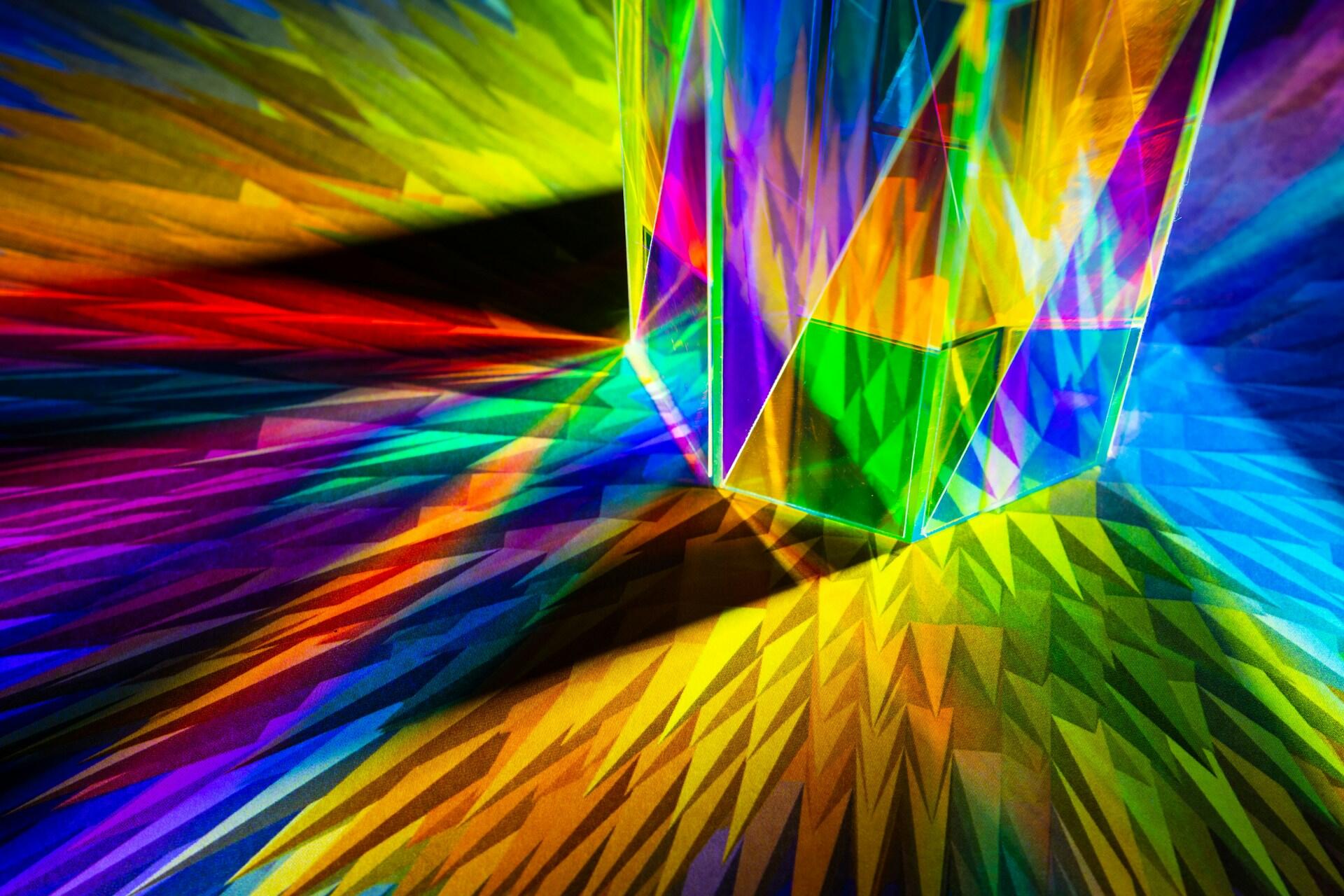
He passed sunlight through the prism, and he observed that the light split into a band of colors.⁶ This phenomenon, a spectrum, showed that white light is actually composed of many different colors. Each color bends at a slightly different angle when passing through a prism, a property Newton described as refrangibility.
These experiments changed how we thought of light. Newton showed that the colors are already present in white light rather than being created by the prism itself. Without this work, modern optics and later research in physics and astronomy wouldn't be possible.
Telescope Reflector
Newton also changed astronomy with the reflecting telescope. Most telescopes in the seventeenth century used glass lenses to magnify distant objects. However, these lenses often distorted light and produced blurred images. Newton designed a telescope that used mirrors instead of lenses. Mirrors reflect light without separating it into different colors, allowing the instrument to produce clearer images, as Newton showed in 1668 when he successfully built his first reflecting telescope. A small curved mirror collects and focuses light. This produced magnification far greater than earlier designs. Even today, reflecting telescopes remain an important tool in modern astronomy.
His Legacy and Impact on Math
Newton's work had a lasting impact on math and science.⁷ In 1687, he published Philosophiæ Naturalis Principia Mathematica, commonly known as Principia. This was his work that explained the laws of motion and universal gravitation using precise mathematical reasoning. The book is one of the most important texts ever written and changed physics forever, though Newton maintained that his work was in part due to the work of history's other great mathematicians, such as the Ancient Greek mathematicians Thales and others.
It's the foundation of classical mechanics and helped cement mathematics's place as an essential tool for understanding the natural world. His methods influenced generations of scientists and mathematicians working in areas like astronomy, engineering, and physics. The concepts he introduced are still taught in schools and universities all over the world.
Newton is remembered as one of science's most important figures. Thanks to his contributions to calculus, optics, and gravity, he completely changed scientific thinking, influencing modern research and technology for centuries.
References
- “Isaac Newton.” Encyclopaedia Britannica, Encyclopaedia Britannica, https://www.britannica.com/biography/Isaac-Newton. Accessed 5 Mar. 2026.
- “Isaac Newton.” Encyclopaedia Britannica, https://www.britannica.com/summary/Isaac-Newton. Accessed 5 Mar. 2026.
- “Isaac Newton Timeline.” Encyclopaedia Britannica, Encyclopaedia Britannica, https://www.britannica.com/summary/Isaac-Newton-Timeline. Accessed 5 Mar. 2026.
- “Newton’s Laws of Motion.” NASA Glenn Research Center, NASA, https://www1.grc.nasa.gov/beginners-guide-to-aeronautics/newtons-laws-of-motion/. Accessed 5 Mar. 2026.
- “Newton’s Law of Gravitation.” NASA Goddard Space Flight Center, https://pwg.gsfc.nasa.gov/stargaze/Sgravity.htm. Accessed 5 Mar. 2026.
- “Visible Light and the Electromagnetic Spectrum.” NASA Science, https://science.nasa.gov/ems/09_visiblelight/. Accessed 5 Mar. 2026.
- “What Was Isaac Newton’s Childhood Like?” Encyclopaedia Britannica, Encyclopaedia Britannica, https://www.britannica.com/question/What-was-Isaac-Newtons-childhood-like. Accessed 5 Mar. 2026.
Summarize with AI:
Did you like this article? Leave a rating!

 Loading...

