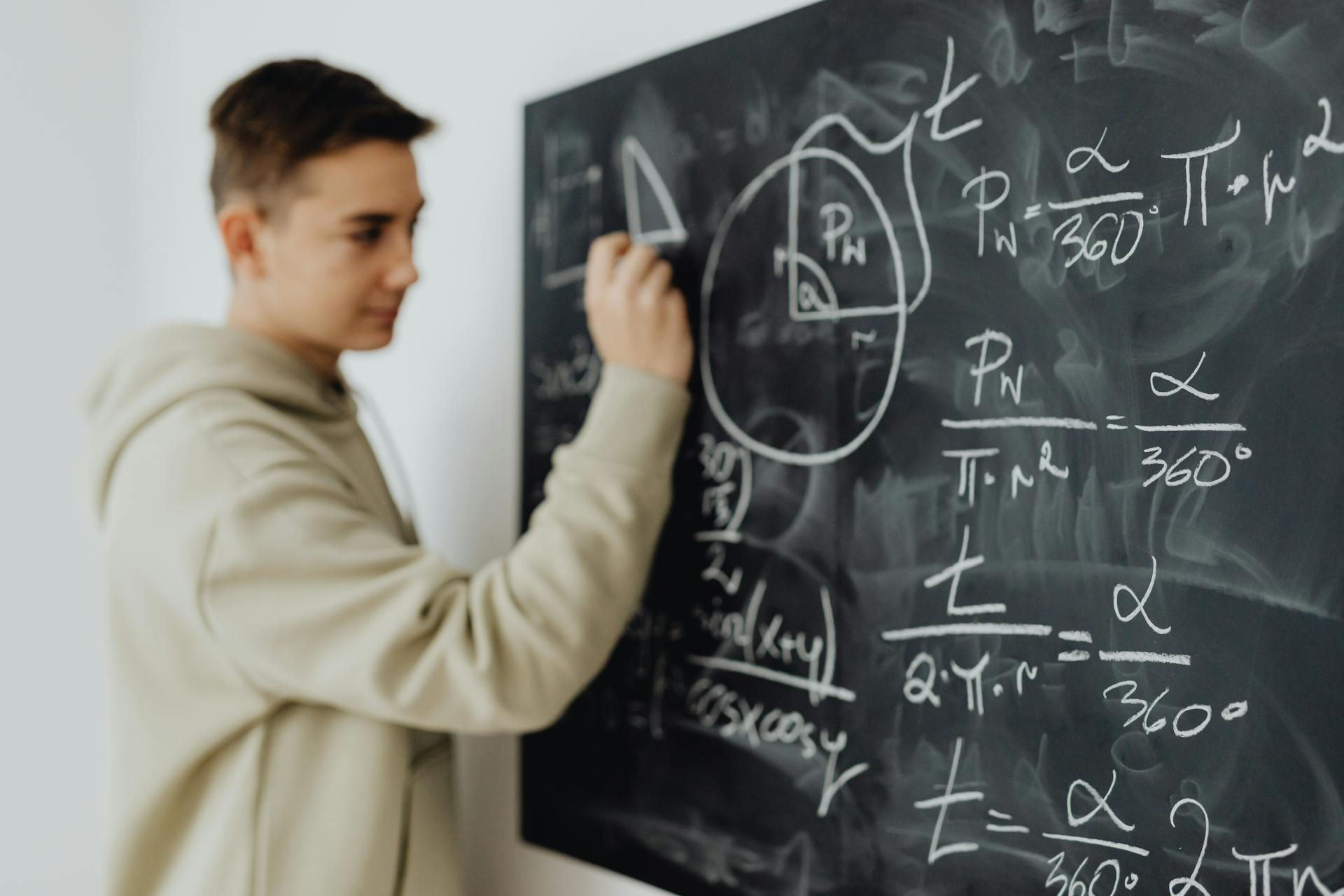

Mathematics has evolved thanks to the discoveries of scholars such as Thales, Pythagoras, and Euclid, as well as influential figures such as Isaac Newton, René Descartes, and Archimedes. They helped develop aspects of math like geometry, algebra, calculus, and scientific reasoning. Their teachings have remained central to modern math education, making them some of the finest math teachers ever. Let's explore what they achieved and why it was so important.
| Mathematician | Origin | Birth–Death | Key Contributions |
|---|---|---|---|
| Thales of Miletus | Miletus (modern-day Turkey) | c. 625 BCE – c. 547 BCE | Early developments in geometry and formulation of Thales’ theorem |
| Pythagoras | Samos, Greece | c. 570 BCE – c. 495 BCE | Development of the Pythagorean theorem and philosophical approach to numbers |
| Euclid | Athens, Greece | c. 330 BCE – c. 265 BCE | Author of Elements, which systematised geometry using axioms and proofs |
| Archimedes | Syracuse, Sicily (Ancient Greece) | c. 287 BCE – 212 BCE | Work on geometry, hydrostatics, and approximation of the value of pi |
| René Descartes | La Haye en Touraine, France | 1596 – 1650 | Creation of analytic geometry linking algebra and geometry through coordinate systems |
| Isaac Newton | Woolsthorpe, England | 1642 – 1727 | Development of calculus and mathematical foundations of classical physics |
| Maria Montessori | Chiaravalle, Italy | 1870 – 1952 | Development of the Montessori method using hands-on materials to teach mathematical concepts |
| Caleb Gattegno | Alexandria, Egypt | 1911 – 1988 | Innovative mathematics teaching methods and the Silent Way learning approach |
| Theoni Pappas | United States | 20th–21st century | Popular mathematics books explaining mathematical ideas to students and general readers |
| Eddie Woo | Sydney, Australia | 1985 – present | Global mathematics outreach through online teaching and educational videos |
| Titu Andreescu | Romania / United States | 1956 – present | Coaching international mathematics olympiad teams and writing problem‑solving textbooks |


Thales of Miletus
A great philosopher in ancient Greece, Thales of Miletus is best known for his famous theorem, which we still learn in high school today. However, going beyond his famous work, do we really know who Thales is? Born in what is now part of Turkey in 625 BCE, Thales of Miletus is considered one of the seven sages of ancient Greece.⁹ The young mathematician studied various sciences in Egypt, at a time when subjects were reserved for Egyptian and Babylonian priests.
From them, Thales learned geometry, astronomy, and philosophy. In fact, the Egyptian pyramids were often the subject of the young apprentice’s scientific experiments. After this experience, Thales returned home to Miletus with the hope of establishing the school of Milan. There, Thales became a professor and began teaching his disciples all the discoveries he had made abroad, while continuing his research across different domains.
The discovery of the theorem we know today, according to legend, was made by Thales, who wanted to calculate the height of a pyramid from the shadow of his cane. It was through this inquiry that Thales invented his now-famous theorem:
If A, B, and C are distinct points on a circle where the line AC is a diameter, then the angle ABC is a right angle.
Thales’ knowledge also extends to cover the field of astronomy, where he discovered how to use the Little Dipper, or Ursa Minor, to guide sailors in the open ocean; how to calculate the duration of a year in relation to solstices and equinoxes; and identified the trajectory of the sun between the two tropics, etc. Thales died in approximately 547 BCE in Miletus.
In ancient Greece, mathematics, philosophy, and natural science were closely connected. Scholars such as Thales, Pythagoras, and Archimedes studied the structure of the universe as a whole rather than separating disciplines into modern academic subjects. Their mathematical discoveries were often tied to philosophical questions about nature, order, and logic.
Pythagoras and His Influence on Mathematics
As every student can recall, Thales’ theorem is covered in the curriculum alongside Pythagoras’ theorem. A concept covered early in high schoolers' academic careers, Pythagoras’ theorem is one of the most important chapters in the development of geometry. Pythagoras, which translates to “announced by Pythia,” was born on the island of Samos in Greece at the end of the 6th century BCE.⁸ The history of the infamous scientist is based only on some works written before Pythagoras’ death.
The mathematician Pythagoras was a very gifted and athletic student. Most notably, he participated in the Olympic Games in the combat category. Interested in philosophy, history, and the sciences, he became a student of Thales. Following in his professor's footsteps, Pythagoras left home to learn Egyptian and Babylonian sciences. After finishing his studies, he returned to his island with the idea of starting a school, exactly as Thales had done. Pythagoras, however, did not receive the same welcome as his teacher had and was consequently expelled from his native city. He fled to greater Greece, where he was finally able to establish his school, the School of Pythagoreans.
With his disciples, the mathematician managed to demonstrate his now infamous theorem:
The square of the hypotenuse (the side opposite the right angle) is equal to the sum of the squares of the other two sides. Or a2+b2=c2
The influence of Pythagoras on the discipline of mathematics doesn’t end there. The Pythagorean snail, Pythagoras’ table, and his School for Pythagoreans changed the field of mathematics forever. Pythagoras died approximately 500 BCE.
Euclid and His Discoveries in Mathematics
The life and discoveries of Euclid changed the approach to teaching mathematics. Trigonometry, algebraic reasoning, equations, fractions, logarithms, Euclid's axioms, Euclidean division, Euclidean geometry, Euclidean algorithms – many of today’s math courses are structured with regard to Euclid’s research.
Born in Athens around 330 BCE, Euclid became a professor at the School of Alexandria. His mathematical discoveries were inspired by his frequent visits to the library and to the Museum of Alexandria. The mathematician is now celebrated worldwide for his seminal work, the Elements, written around 300 BCE.⁵ Considered the Mathematics Bible, this book has, like the Bible, continued to be sold since its inception.
years.
Divided into thirteen books, Elements develops several theories concerning the geometric plane and general arithmetic (triangles, right angles, circles, etc.). Through these works, Euclid proved Pythagoras’ theorem and developed the function of the greatest common divisor (GCD) in Euclidean division. Euclidean divisions are nothing but the simple division taught in elementary school. This division involves the four main elements: a dividend, a divisor, a quotient, and a remainder. Euclid also explained how to find the HCF (highest common factor), a procedure that involves finding the greatest number that is common to two numbers and is divisible by both. Finding the HCF makes division much easier. Euclid died in 265 BCE in Alexandria.
Sir Isaac Newton and the Development of Calculus
Isaac Newton (1642–1727) is not just a simple mathematician.⁷ Physician, philosopher, and astronomer, Isaac Newton was born in Woolsthorpe in Lincolnshire, UK. Raised mainly by his father and his grandmother, he was described as a distracted student and very gifted at building machines of all kinds. When his mother decided to take Newton out of school so he could help on the family farm, one professor convinced her to let him enroll at the University of Cambridge. There, he studied arithmetic, geometry, trigonometry, astronomy, and optics – and subsequently graduated in 1665.
If I have seen further, it is by standing on the shoulders of giants.
Isaac Newton
Isaac Newton is known first and foremost for discovering the phenomenon of gravitation. Legend has it that Isaac Newton must have discovered gravity while observing apples falling in an orchard. In mathematics, Newton introduced derivatives and binomials, helping prove that the formula [(a+b)n] holds for any value of n. While Newton became an accomplished professor, he also used his free time to study the behavior of light and, more broadly, optics. More specifically, he studied the behavior of white light through a transparent prism and realized that light splits into many beams of different colors. He used his experience with light to invent the first reflector telescope, which proved successful within his contemporary scientific community worldwide.
René Descartes and Analytic Geometry
Studying René Descartes in math is an unmissable step in the journey of understanding the history of mathematics and, more precisely, the operation of equations. Born in France in 1596 in the town of Haye, René Descartes was raised by his grandmother in an upper-class family. His father was an advisor to the Parliament of Brittany. René Descartes wrote many scientific works during his career. He started most notably with “The World, or Treatise on Light,” which describes many of the physical phenomena of daily life, including the movement of the earth around the sun. However, his most celebrated work remains 1637’s “Discourse on Method.”⁶
Written entirely in French, Descartes produced many mathematical developments, the most significant of which was his utilization of letters to signify the unknowns in an equation. It is because of this work that we started using the letters x, y, z, or a, b, c to do the same. Descartes also wrote powers in a method that went against the traditions of the era – writing x4 instead of xxxx. Descartes also invented analytic geometry, which represents figures using algebraic calculations derived from a system of coordinates. Refined calculations, Cartesian equations, we owe thanks to Descartes for developing all of these great chapters of math taught in high school!
Archimedes the Mathematician and Inventor
A great mathematician and physician of antiquity, Archimedes, who lived between 287 and 212 BCE, is one of the best-known scientists in the field of machine invention.¹ After having studied astronomy with his father, Archimedes continued his studies at the prestigious School of Alexandria. There, he rubbed elbows with the greats of the time, which inspired him to develop his numerous mathematical theories.
Mathematics as a discipline owes many of its tools to Archimedes, one of which is the number Pi. He calculated the relationship between the circumference of a circle and its diameter and discovered that the number he found is always the same, regardless of the circle's size. Archimedes also took pleasure in calculating areas, like the area under a parabola, and other figures. His various mathematical contributions don’t stop there; science also benefited from his knowledge and experiments through his explanation of what is today called the “principle of flotation.”
This theorem explains the force exerted by a fluid on a solid body submerged in it, whether liquid or gas. This resulted in the construction of the biggest boat of Antiquity: the Syracusia. Archimedes finished his career in the service of the city of Syracuse, developing war machines. Catapults, powerful boats - the art of war and its innovations have all been influenced by Archimedes. Amongst all of his machines, he also developed the screw, which was utilized to move liquid from a lower altitude to a higher one. Archimedes died in Syracuse during the Roman invasion. His legacy continued to influence some of the world’s biggest scientists, including Leonardo da Vinci.
600 BCE
Thales introduces early geometric reasoning
500 BCE
Pythagoras develops the Pythagorean theorem
300 BCE
Euclid writes Elements
3rd century BCE
Archimedes advances geometry and mechanics
17th century
Descartes develops analytic geometry
17th century
Newton develops calculus
20th–21st century
Modern educators reform mathematics teaching
Famous Math Philosophers of the Modern Era
Famous math teachers aren't just from centuries ago. There are teachers and mathematicians shaping how we understand the subject today. These educators have helped students understand mathematical concepts through a variety of different approaches.
Modern mathematics teaching focuses not only on discovering new theorems but also on helping students understand mathematical concepts through visual learning, problem-solving, and real-world applications. Educators such as Maria Montessori, Caleb Gattegno, and Eddie Woo emphasise intuitive understanding and student engagement in mathematics classrooms.
Maria Montessori
Maria Montessori was an Italian educator. She developed a teaching philosophy based on hands-on learning and discovery. Her educational materials, like number rods and bead chains, helped students visualize mathematical ideas. Her approach helps students understand patterns and relationships, rather than just formulas.
Montessori had ideas about mathematics education that are still influencing classrooms around the world today. She designed materials that allow students to physically manipulate numbers to better understand mathematical concepts.
Rather than relying solely on written memorization, the Montessori approach is all about exploration and discovery. Children can build confidence in their abilities from an early age, and the emphasis on independence and conceptual learning is why the methods are still widely respected in early childhood education. Even today, decades later, Montessori is still used around the world.
Caleb Gattegno
Caleb Gattegno was a mathematician known for developing new methods for teaching math.⁴ He believed students learned best when they actively discovered ideas.³ He used visual tools to help students understand mathematical relationships.
Gattegno's philosophy emphasizes student awareness and participation.⁴ He argued that teachers should guide students in discovering mathematical ideas on their own, rather than simply presenting solutions.³ He used approaches such as color-coded rods and carefully structured problems to help students visualize the mathematical relationships they were studying and develop a deeper conceptual understanding of the topics.
His work still influences modern strategies for teaching mathematics, especially those focused on inquiry-based learning and student engagement. Educators looking for alternative teaching approaches can study Gattegno's ideas. It's an excellent way to make math more intuitive and meaningful for learners.
Theoni Pappas
Theoni Pappas is an American math educator and author, best known for making math accessible to a wider audience through her books and teaching materials. She focuses on the beauty and creativity found in math, encouraging students to see mathematics as a subject of curiosity, discovery, and exploration.
Through her creative writing and teaching, she helped students discover how creative and enjoyable math can be. In her books, you'll find puzzles, patterns, and visual demonstrations of mathematical ideas in everyday life, nature, and art, bringing students close to the subject. Her approach presented math in an accessible and engaging way, which helps students who find math anxiety-inducing. Pappas' work shows how mathematical thinking is intellectually rewarding and fascinating.
Eddie Woo
Eddie Woo became known for sharing math lessons online.² His educational videos help explain complex mathematical ideas in a clear and accessible way to students all over the world.¹⁰ By combining classroom instruction with digital media, he's helped make math education more widely available.
Woo teaches mathematics by focusing on clarity, enthusiasm, and accessibility.¹⁰ Using simple explanations and practical examples, he demonstrates that complex mathematical ideas are understandable when presented properly.
His online lessons have reached millions, helping students who might not otherwise have access to high-quality math resources.² Beyond his classroom work, Woo has spoken around the world about the importance of inspiring curiosity and confidence in math learning. He's shown how digital platforms can expand the reach of great teachers, himself included.
Titu Andreescu
Titu Andreescu is a mathematician and educator known for his contributions to mathematical problem solving and competition training.¹¹ He's coached students preparing for math olympiads and written books on advanced problem-solving techniques. His work is inspiring students to develop stronger analytical thinking and deeper mathematical understanding.
Andreescu's work has been most effective in mathematical competitions and mathematics education more generally.¹¹ As a coach and an advanced mathematics educator, his books and problem collections are often used by students trying to develop a deeper mathematical reasoning and creative problem-solving skills.
He encourages persistence and analytical thinking, and in doing so, has helped many young mathematicians reach the top levels of achievement. His contributions have also influenced teachers looking to explore challenging mathematical ideas with their students.
References
- “Archimedes.” MacTutor History of Mathematics, School of Mathematics and Statistics, University of St Andrews, https://mathshistory.st-andrews.ac.uk/Biographies/Archimedes/. Accessed 4 Mar. 2026.
- Australian of the Year Awards. “Eddie Woo: Mathematics Teacher.” Australian of the Year Awards, https://australianoftheyear.org.au/recipients/eddie-woo. Accessed 4 Mar. 2026.
- “Caleb Gattegno.” Association of Teachers of Mathematics, https://atm.org.uk/caleb-gattegno. Accessed 4 Mar. 2026.
- “Caleb Gattegno.” MacTutor History of Mathematics, School of Mathematics and Statistics, University of St Andrews, https://mathshistory.st-andrews.ac.uk/Biographies/Gattegno/. Accessed 4 Mar. 2026.
- “Euclid.” MacTutor History of Mathematics, School of Mathematics and Statistics, University of St Andrews, https://mathshistory.st-andrews.ac.uk/Biographies/Euclid/. Accessed 4 Mar. 2026.
- Hatfield, Gary. “René Descartes.” Stanford Encyclopedia of Philosophy, Stanford University, https://plato.stanford.edu/entries/descartes/. Accessed 4 Mar. 2026.
- “Isaac Newton.” MacTutor History of Mathematics, School of Mathematics and Statistics, University of St Andrews, https://mathshistory.st-andrews.ac.uk/Biographies/Newton/. Accessed 4 Mar. 2026.
- “Pythagoras.” MacTutor History of Mathematics, School of Mathematics and Statistics, University of St Andrews, https://mathshistory.st-andrews.ac.uk/Biographies/Pythagoras/. Accessed 4 Mar. 2026.
- “Thales of Miletus.” MacTutor History of Mathematics, School of Mathematics and Statistics, University of St Andrews, https://mathshistory.st-andrews.ac.uk/Biographies/Thales/. Accessed 4 Mar. 2026.
- The University of Sydney. “Eddie Woo.” The University of Sydney Profiles, https://profiles.sydney.edu.au/eddie.woo. Accessed 4 Mar. 2026.
- The University of Texas at Dallas. “Titu Andreescu.” UT Dallas Profiles, https://profiles.utdallas.edu/titu.andreescu. Accessed 4 Mar. 2026.
Summarize with AI:
Did you like this article? Leave a rating!

 Loading...