
Choosing a medical school is one of the most consequential decisions a pre-med student will make. People asking what are the best medical schools in the US will find that the answer depends heavily on whether they prioritize research output, residency placement, primary care training, or value for tuition fees. The program you attend shapes your clinical training, your research opportunities, your residency match, and ultimately your career trajectory as a physician. Whether your goal is primary care, academic medicine, or a competitive specialty, the right school makes a measurable difference to your outcomes as a graduate. With over 155 accredited MD programs in the United States, knowing which schools consistently rise to the top (and understanding why) is essential context for any serious applicant. 🏥
The rankings below draw on multiple sources including US News and World Report's tier-based system, residency placement outcomes, the percentage of graduates entering primary care fields, tuition fees, research funding, and admissions selectivity. No single ranking captures every dimension of quality, but together they paint a reliable picture of the programs that consistently train the country's best physicians.
| Rank | School | Location | Acceptance Rate | Median MCAT | Median GPA | Tuition (Annual) | Class Size |
|---|---|---|---|---|---|---|---|
| 1 | Harvard Medical School | Boston, MA | ~3.5% | 522 | 3.90 | $67,000/yr | 165 |
| 2 | Johns Hopkins University School of Medicine | Baltimore, MD | ~3.7% | 521 | 3.91 | $63,000/yr | 120 |
| 3 | Stanford University School of Medicine | Stanford, CA | ~1.5% | 521 | 3.82 | $64,000/yr | 90 |
| 4 | UCSF School of Medicine | San Francisco, CA | ~2.7% | 518 | 3.79 | $36,000/yr (in-state) | 149 |
| 5 | Columbia University Vagelos College of Physicians & Surgeons | New York, NY | ~3.2% | 521 | 3.85 | $68,000/yr | 148 |
| 6 | Perelman School of Medicine at the University of Pennsylvania | Philadelphia, PA | ~3.5% | 521 | 3.89 | $65,000/yr | 150 |
| 7 | Mayo Clinic Alix School of Medicine | Rochester, MN / Scottsdale, AZ | ~1.8% | 520 | 3.87 | $60,000/yr | 54 |
| 8 | Washington University School of Medicine in St. Louis | St. Louis, MO | ~7% | 520 | 3.91 | $67,000/yr | 124 |
| 9 | Yale School of Medicine | New Haven, CT | ~4.1% | 521 | 3.87 | $65,000/yr | 103 |
| 10 | NYU Grossman School of Medicine | New York, NY | ~2.4% | 522 | 3.90 | $0 (full scholarship) | 102 |
⚠️ Data note: Stats reflect 2025–2026 admissions cycles. Always verify current figures via the AAMC Medical School Admissions Requirements (MSAR) database before applying.
Before we start...
🗳️ What matters most to you when choosing a medical school?


Top 10 Medical Schools in the US
The following ten programs represent the consensus top tier of American medical education across research output, residency placement, clinical training quality, and admissions selectivity. Each profile includes the key metrics that matter most to applicants and the distinguishing characteristics that set each school apart.
plus 37 accredited osteopathic (DO) programs!
1. Harvard Medical School
~3.5%
522
3.90
Boston, MA
Research, physician-scientist programs, global health
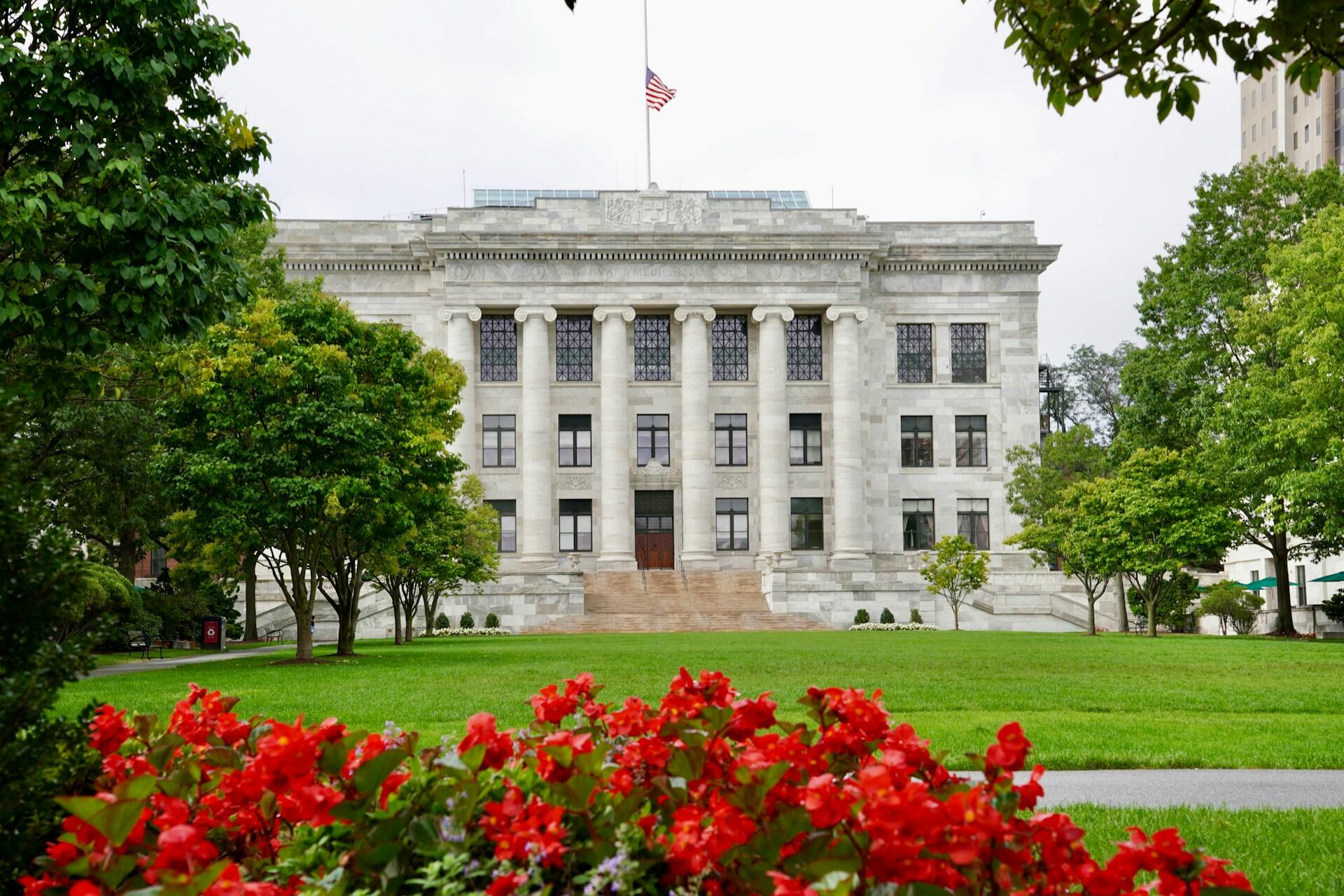
Harvard Medical School is the most recognized name in American medical education and the consistent top performer across virtually every major ranking system. Located in Boston's Longwood Medical Area, it sits within one of the largest medical complexes in the world, giving students unparalleled access to affiliated teaching hospitals including Massachusetts General, Brigham and Women's, Boston Children's, and Beth Israel Deaconess. The school offers two MD pathways: Pathways (case-based learning) and Health Sciences and Technology (co-run with MIT, focused on physician-scientists).
To nurture a diverse, inclusive community dedicated to alleviating suffering and improving health and well-being for all through excellence in education and research.
Harvard Medical School Mission Statement — hms.harvard.edu
2. Johns Hopkins University School of Medicine
~3.7%
521
3.91
Baltimore, MD
Biomedical research, residency placement, clinical training
Johns Hopkins is the institution that essentially invented modern American medical education; it was the first US medical school to require an undergraduate degree for admission and the first to admit women on an equal basis with men. Today it remains a global leader in biomedical research, with particularly strong programs in oncology, neurology, infectious disease, and surgery. The school's residency placement outcomes are among the strongest in the country, which is why it ranks at the top of residency-focused rankings like ResidencyProgramsList.
The medical campus in Baltimore sits adjacent to Johns Hopkins Hospital, consistently ranked the top hospital in the United States, giving students some of the richest clinical training environments anywhere in the country.
If you are interested in programs in the mid-Atlantic region, our guide to top medical schools in New York covers the comparable programs in the neighboring state.
3. Stanford University School of Medicine
~1.5%
521
3.82
Stanford, CA
Innovation, MD-PhD programs, technology and medicine
Stanford is widely regarded as the hardest medical school in the US to get into by raw acceptance rate, admitting roughly 1.5% of applicants into a class of just 90 students. Its location in Silicon Valley has made it uniquely positioned at the intersection of medicine and technology; research in biomedical data science, artificial intelligence in healthcare, and digital health innovation is a particular strength. The school's ties to Stanford University's engineering and computer science departments are unmatched at any other medical institution.
Stanford's MD program emphasizes research immersion early, with students typically completing a scholarly concentration and many pursuing MD-PhD or dual-degree tracks. Match outcomes in highly competitive specialties (dermatology, orthopedic surgery, neurosurgery) are exceptional. California is home to several world-class programs; for a complete state-level breakdown, our guide to top-ranked California med schools covers UCSF, UCLA, and the other leading programs in the state.
4. UCSF School of Medicine
~2.7%
518
3.79
San Francisco, CA
Primary care, public health, LGBTQ+ medicine
The University of California, San Francisco School of Medicine is the top-ranked public medical school in the United States and one of the few institutions to consistently challenge the private schools for the overall top spots. UCSF's particular strength is primary care and community health; it consistently ranks #1 or #2 in US News primary care rankings, with a higher proportion of graduates entering primary care fields than almost any other elite research institution. Its faculty research output in basic sciences rivals any private institution. For California residents, UCSF's in-state tuition of approximately $36,000 per year (a fraction of the tuition fees at comparable private schools) makes it one of the most cost-effective pathways to elite medical training in the country.
MD (Doctor of Medicine) programs are allopathic schools accredited by the LCME. They follow conventional biomedical training and are the pathway most associated with research and highly competitive specialties.
DO (Doctor of Osteopathic Medicine) programs are accredited by the COCA and include additional training in osteopathic manipulative medicine (OMM). DO graduates compete in the same residency match as MD graduates.
Both MD and DO graduates can practice medicine in all 50 states and pursue any specialty. The distinction matters most for competitive specialties (dermatology, neurosurgery) where MD programs have historically had higher match rates.
5. Columbia University Vagelos College of Physicians and Surgeons
~3.2%
521
3.85
New York, NY
Surgery, urban medicine, biomedical research
Columbia Vagelos is one of the oldest medical schools in the United States, founded in 1767, and remains one of its most elite. Located in Washington Heights in upper Manhattan, it is affiliated with NewYork-Presbyterian Hospital (one of the top-ranked hospitals in the country) and with Columbia University Irving Medical Center, which includes schools of public health, nursing, and dental medicine. The program's strength in surgery, oncology, and cardiology reflects its hospital affiliations, and its New York City location provides unmatched exposure to urban clinical medicine.
6. Perelman School of Medicine at the University of Pennsylvania
~3.5%
521
3.89
Philadelphia, PA
Research, cancer, translational medicine
Penn's Perelman School of Medicine is the oldest medical school in the United States, established in 1765, and has maintained its position as one of the country's leading research and clinical training institutions. Its Philadelphia location and affiliation with Penn Medicine (including the Hospital of the University of Pennsylvania, Pennsylvania Hospital, and Penn Presbyterian) give students access to more than 1,500 licensed beds for clinical training. Perelman's strengths include oncology (Penn was a leader in CAR-T cell therapy development), cardiovascular medicine, and translational research.
7. Mayo Clinic Alix School of Medicine
~1.8%
520
3.87
Rochester, MN / Scottsdale, AZ
Clinical training, patient-centered care, small class size
Mayo Clinic Alix School of Medicine is the smallest program in this top 10, admitting approximately 54 students per year across its Rochester, Minnesota and Scottsdale, Arizona campuses. Its small class size is its defining feature: students receive an extraordinary level of personal mentorship, faculty attention, and clinical access at one of the world's most recognized healthcare brands. The Mayo Clinic system (renowned for its team-based, patient-centered approach to medicine) is the primary clinical training environment, and students benefit directly from the institution's emphasis on collegial, collaborative care.
The best interest of the patient is the only interest to be considered.
William J. Mayo, M.D., Co-founder of the Mayo Clinic — a founding principle still central to Mayo Clinic Alix School of Medicine's mission
8. Washington University School of Medicine in St. Louis
~7%
520
3.91
St. Louis, MO
Research, generous financial aid, residency outcomes
WashU School of Medicine is one of the top NIH-funded medical schools in the country and consistently ranks among the top 5 in research output, despite being less well known outside of academic medicine circles. Its acceptance rate of approximately 7% is the highest in this top 10, which means it is marginally more accessible than its peers; though the expectation for research productivity and academic credentials remains extremely high. The school's generous financial aid program often makes it less expensive for admitted students than many lower-ranked private schools.
9. Yale School of Medicine
~4.1%
521
3.87
New Haven, CT
Student-directed learning, MD-PhD, global health
Yale School of Medicine is distinguished by its unusual educational philosophy: the Yale System, in which students are not graded on the traditional A-F scale and have significant autonomy over how they structure their learning in the preclinical years. This student-directed approach attracts a particular type of learner: self-motivated, intellectually curious, and comfortable with ambiguity. The school has one of the highest rates of MD-PhD enrollment of any program in the country, and its global health programs are among the most respected in the field.
10. NYU Grossman School of Medicine
~2.4%
522
3.90
New York, NY
Full-tuition scholarship for all MD students, NYC clinical access
NYU Grossman made national headlines in 2018 when it announced it would offer full-tuition scholarships to all MD students, regardless of need or merit. This decision (funded by a $100 million gift and subsequent donations including a $1 billion gift from philanthropist Kenneth Langone) transformed the school's applicant pool overnight, drawing applications from students who might previously have chosen lower-cost programs. The result is one of the most academically competitive and diverse incoming classes in the country, with applications more than doubling after the scholarship announcement.
What Makes a Top Medical School?
Rankings aggregate many factors, but the most important variables for any individual applicant may not be the ones that move a school up or down a list. Understanding what drives a school's reputation (and what that means for your specific career goals) is more useful than treating any ranking as a definitive verdict.
📊 How Medical School Rankings Are Calculated
- US News Research Rankings: peer assessment scores, total research activity, NIH funding, faculty-to-student ratio, and student selectivity; including average MCAT score and average GPA for entering students.
- US News Primary Care Rankings: faculty resources, student selectivity, and the proportion of graduates entering primary care fields after graduation. Schools where a high percentage of graduates enter primary care score better here regardless of prestige.
- Residency Placement Rankings (e.g. ResidencyProgramsList): the competitiveness of the residency positions secured by recent graduates; arguably the most direct measure of a school's ability to prepare medical students for their next step.
- US News moved to a tier-based system in fall 2024, grouping schools into four performance tiers rather than assigning individual numerical ranks. Schools that declined to share data are listed as 'unranked' but may still be excellent programs.
- Tuition fees differ significantly between public and private institutions. In-state tuition at a public school like UCSF can be under $40,000 per year, while tuition fees at top private schools often exceed $65,000 annually.
Specialty match outcomes: If you are targeting dermatology or neurosurgery, research where that specific school's graduates match in your field.
Location: residency programs recruit heavily from affiliated institutions and nearby schools. Where you train often influences where you match.
Class size: a class of 54 (Mayo) and a class of 165 (Harvard) produce radically different educational experiences. Smaller classes offer more mentorship; larger classes offer broader peer networks.
Financial aid and cost: the sticker price of elite private schools can exceed $300,000 for four years. Scholarship availability and loan repayment programs matter enormously for long-term career flexibility.
Mission fit: public service-oriented schools vs. research-intensive institutions vs. primary care-focused programs select for and produce different kinds of physicians. Your personal goals should drive this choice.
Medical Schools by Region: Key Hubs to Know
There are approximately 155 LCME-accredited allopathic (MD) medical schools and 37 osteopathic (DO) schools currently operating in the United States; around 192 accredited programs in total when both degree types are counted. For anyone asking how many medical schools are in the US, that number shifts slightly each year as new programs receive accreditation. While the national top 10 draws most of the attention, excellent programs exist across every region of the country, and geographic factors (in-state tuition, proximity to residency programs, the patient populations you will train with, and where you ultimately want to practice) can matter as much as a school's national rank.
Northeast and Mid-Atlantic
The Northeast and Mid-Atlantic states are the most densely concentrated medical education hubs. New York alone has 17 accredited programs, Massachusetts has 4, and Pennsylvania has 9; together accounting for a significant share of the country's most competitive medical schools. The West Coast, anchored by California's 16 programs, is similarly rich, with UCSF and Stanford joined by strong programs at UCLA's David Geffen School of Medicine, UC San Diego School of Medicine, and USC Keck School of Medicine.
South and Southwest
Texas is one of the most medically rich states in the South and Southwest, with 15 accredited programs that collectively train thousands of physicians every year. Baylor College of Medicine in Houston is the state's flagship private research institution (consistently ranked among the best medical schools in the country for research output and residency placement) while UT Southwestern in Dallas, UTHealth Houston, Texas A&M, and Texas Tech serve a vast and medically underserved state with a diverse range of program focuses. Our guide to the best medical schools in Texas covers every program with current admissions data, tuition fees, and program strengths.

Midwest
The Midwest is anchored by Illinois, which has 9 accredited programs ranging from elite research universities to community-focused regional schools. Northwestern University Feinberg School of Medicine and the University of Chicago Pritzker School of Medicine are the state's highest-ranked institutions nationally, while Loyola, Rush, UI College of Medicine, and Rosalind Franklin serve a broader range of applicants and communities. The University of Michigan, Mayo Clinic, and Washington University in St. Louis also make the Midwest one of the strongest regions for medical education outside of the coasts. Our guide to medical schools in Illinois covers admissions requirements and program highlights across all nine institutions in the state.
Southeast
The Southeast has grown significantly as a medical education hub over the past two decades, with Georgia's five programs at the center of that growth. Emory University School of Medicine is the region's premier research institution, with particular depth in infectious disease and global health reflecting its proximity to the CDC. The Medical College of Georgia is one of the largest medical schools in the South, with a clear primary care mission for the state's underserved rural communities, and Morehouse School of Medicine is one of only four historically Black medical schools in the country. Duke, Vanderbilt, and Wake Forest round out a Southeast region that has increasingly attracted top applicants who might previously have looked only to the coasts. Our guide to medical schools in Georgia covers every program in the state with current admissions data and what makes each one distinctive for different applicants.
References
- "Medical School Admissions Requirements (MSAR)." Association of American Medical Colleges (AAMC), 2025, www.aamc.org/msar.
- "Best Medical Schools." U.S. News & World Report, 2026, www.usnews.com/best-graduate-schools/top-medical-schools.
- "Best Medical Schools in the US." ResidencyProgramsList.com, 2025, www.residencyprogramslist.com/medical-schools/best-in-the-us.
- "Harvard Medical School." Harvard University, 2025, hms.harvard.edu.
- "Johns Hopkins University School of Medicine." Johns Hopkins Medicine, 2025, www.hopkinsmedicine.org.
- "Stanford University School of Medicine." Stanford Medicine, 2025, med.stanford.edu.
- "UCSF School of Medicine." University of California San Francisco, 2025, medschool.ucsf.edu.
- "NYU Grossman School of Medicine." NYU Langone Health, 2025, med.nyu.edu.
Summarize with AI:
Did you like this article? Leave a rating!

 Loading...