

Texas trains more physicians than almost any other state in the country. Its 16 accredited programs range from nationally ranked research powerhouses like Baylor College of Medicine and UT Southwestern to mission-driven community programs serving the Rio Grande Valley, the US-Mexico border, and rural East Texas. For prospective students, the state also offers one of the most cost-effective public medical education systems in the US, with most UT and Texas Tech system programs charging under $25,000 per year for Texas residents.
This guide covers every accredited program with current admissions data and what distinguishes each one. For applicants researching the top medical schools in Texas specifically, the programs below are ordered from most to least nationally recognized.
with programs in Houston, Dallas, San Antonio, and across the state!
💡 For a national overview of where Texas's best programs rank relative to the country's top tier, our guide to the best medical schools in the US covers the full national comparison.


The Full List of Medical Schools in Texas
The table below covers all 16 programs. Texas's UT Health and Texas Tech systems account for the majority of public programs; Baylor, TCU Burnett, and the University of Houston Fertitta College are the state's private institutions. All stats are approximate; verify current figures at aamc.org/msar before applying.
| Institution | City | Avg GPA | Avg MCAT | Annual Tuition | Type |
|---|---|---|---|---|---|
| Baylor College of Medicine | Houston | 3.88 | 518 | ~$24,900 | MD · Private |
| UT Southwestern Medical Center | Dallas | 3.90 | 519 | ~$22,400 (in-state) | MD · Public |
| UTHealth Houston McGovern Medical School | Houston | 3.81 | 515 | ~$22,800 (in-state) | MD · Public |
| University of Houston Tilman J. Fertitta Family College of Medicine | Houston | 3.71 | 509 | ~$72,000 | MD · Private |
| The University of Texas Medical Branch at Galveston | Galveston | 3.77 | 510 | ~$19,700 (in-state) | MD · Public |
| Dell Medical School at The University of Texas at Austin | Austin | 3.84 | 514 | ~$22,000 (in-state) | MD · Public |
| Joe R. and Teresa Lozano Long School of Medicine at UT Health San Antonio | San Antonio | 3.75 | 510 | ~$21,000 (in-state) | MD · Public |
| Texas A&M University College of Medicine | Bryan / Temple | 3.78 | 511 | ~$21,000 (in-state) | MD · Public |
| TCU Anne Burnett Marion School of Medicine | Fort Worth | 3.80 | 512 | ~$65,000 | MD · Private |
| Texas Tech University Health Sciences Center School of Medicine | Lubbock | 3.78 | 511 | ~$20,000 (in-state) | MD · Public |
| Texas Tech University Health Sciences Center Paul L. Foster School of Medicine | El Paso | 3.73 | 509 | ~$20,000 (in-state) | MD · Public |
| University of Texas Rio Grande Valley School of Medicine | Edinburg | 3.74 | 509 | ~$19,000 (in-state) | MD · Public |
| UT Tyler School of Medicine | Tyler | 3.73 | 508 | ~$18,000 (in-state) | MD · Public |
⚠️ Approximate figures — 2025–2026 cycle. Verify at aamc.org/msar before applying.
New York and California are the other two states with the most diverse medical education landscapes. Our guide to medical schools in New York covers all 17 accredited programs there with the same data format.
| Institution | City | Avg GPA | Avg MCAT | Annual Tuition | Type |
|---|---|---|---|---|---|
| UNT Health Fort Worth / Texas College of Osteopathic Medicine | Fort Worth | 3.55 | 505 | ~$50,000 | DO · Public |
| Sam Houston State University College of Osteopathic Medicine | Conroe | 3.60 | 505 | ~$55,000 | DO · Private |
| University of the Incarnate Word School of Osteopathic Medicine | San Antonio | 3.50 | 504 | ~$55,000 | DO · Private |
⚠️ Approximate figures — 2025–2026 cycle. Verify at aamc.org/msar before applying.
Baylor College of Medicine
Houston - MD - Private
MCAT: 518
GPA: 3.88
Tuition: $24,900
Baylor College of Medicine in Houston is consistently ranked the top program in Texas and one of the best in the country for research. It is the only major private research institution in Houston; one of the lowest-tuition private programs in the country. At roughly $24,900 per year, it is one of the most affordable private programs in the US, a legacy of its publicly supported history.
UT Southwestern Medical Center
Dallas - MD - Public
MCAT: 519
GPA: 3.90
Tuition: $22,400
Texas's top research institution; ranked among the nation's best for biomedical sciences and competitive specialty match.
UT Southwestern in Dallas is Texas's premier research institution, with particular strength in molecular biology, internal medicine, and competitive specialty match outcomes. It has the highest median MCAT in the state at 519 and consistently ranks among the top 20 US programs for research funding.
To improve the care of patients by educating outstanding medical students, residents, and clinicians while creating new knowledge through basic and clinical research.
UT Southwestern Medical Center Mission Statement
UTHealth Houston McGovern Medical School
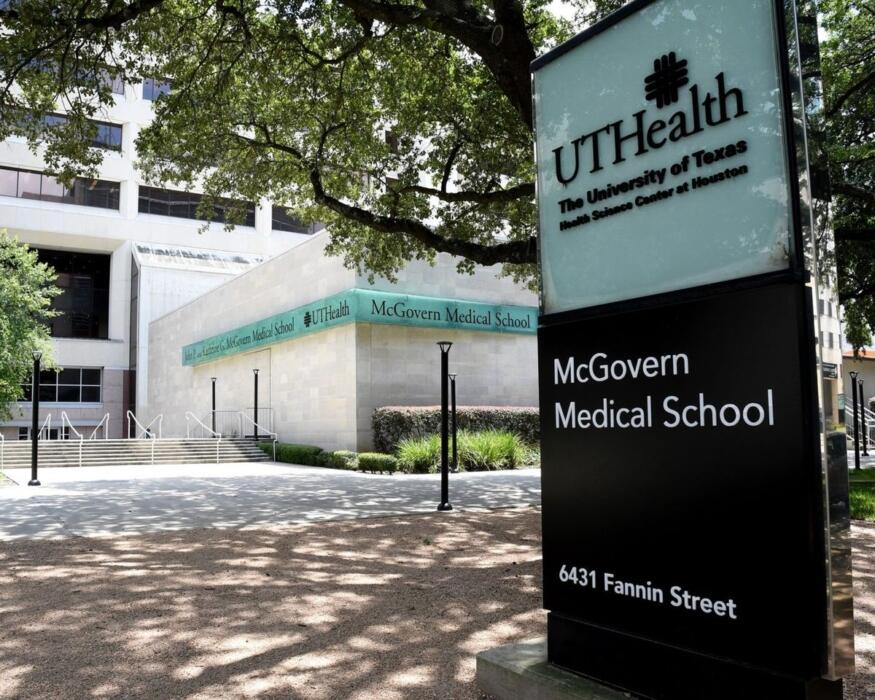
Houston - MD - Public
MCAT: 515
GPA: 3.81
Tuition: $22,800
Part of The University of Texas Health Science Center at Houston; one of the largest programs in the state by enrollment.
McGovern is one of the largest programs in Texas by enrollment and sits within the Texas Medical Center: the world's largest medical complex by bed count. Students benefit from an extraordinary concentration of affiliated hospitals and specialties all within walking distance.
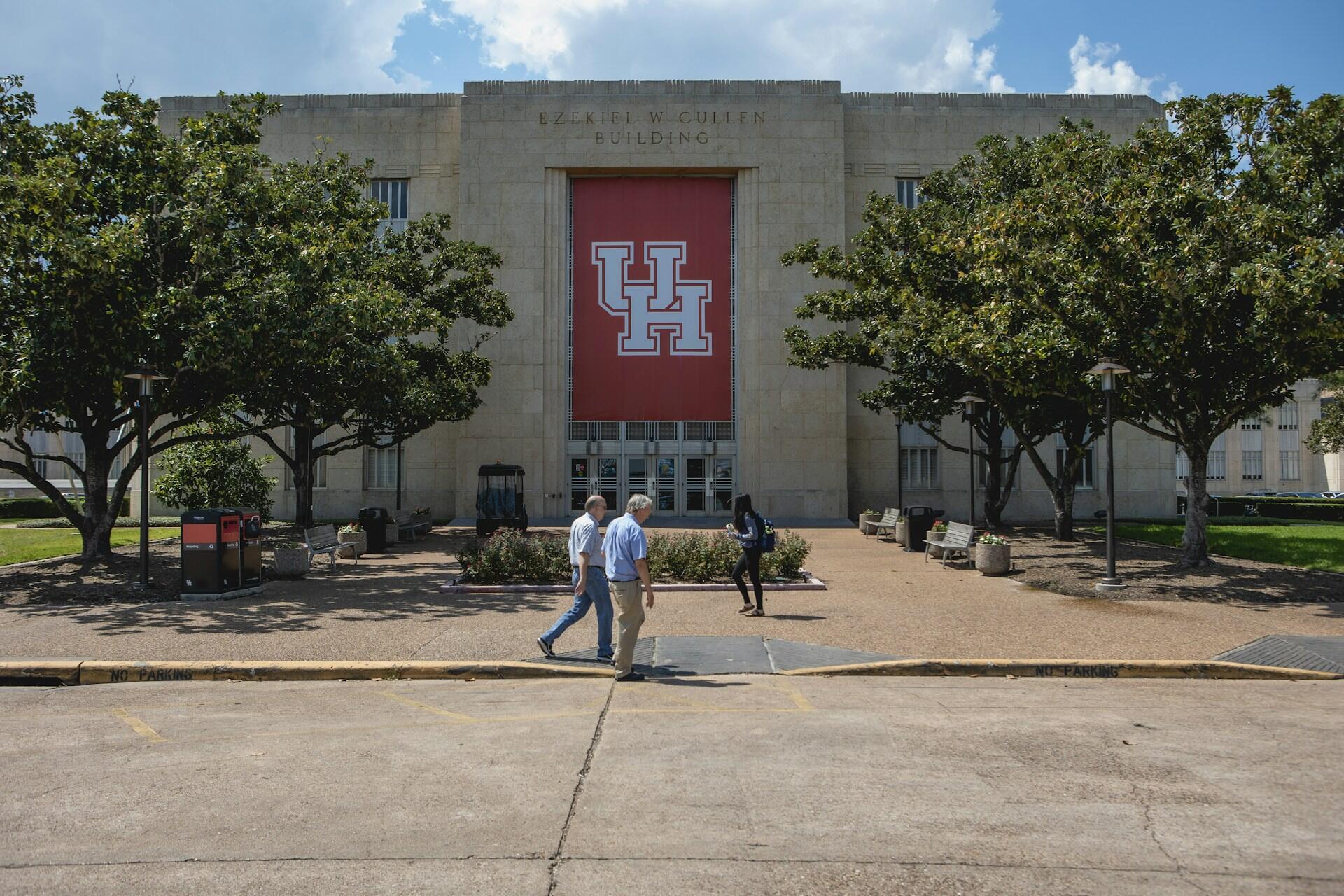
University of Houston Tilman J. Fertitta Family College of Medicine
Houston - MD - Private
MCAT: 509
GPA: 3.71
Tuition: $72,000
Launched in 2021; community-focused mission serving underserved Houston populations; still establishing its national profile.

UH's program is the newest private MD institution in Texas, launched in 2021 with a community-focused mission serving Houston's underserved neighborhoods. Its urban health curriculum and social determinants of health emphasis make it distinctive among the city's three programs.
The University of Texas Medical Branch at Galveston

Galveston - MD - Public
MCAT: 510
GPA: 3.77
Tuition: $19,700
One of the oldest medical programs in Texas (est. 1891); strong tradition in primary care and rural medicine. It has a strong tradition in primary care, disaster medicine, and correctional health — reflecting its history as a Gulf Coast institution. In-state tuition of roughly $19,700 makes it one of the most affordable options in the state.
Dell Medical School at The University of Texas at Austin
Austin - MD - Public
MCAT: 514
GPA: 3.84
Tuition: $22,000
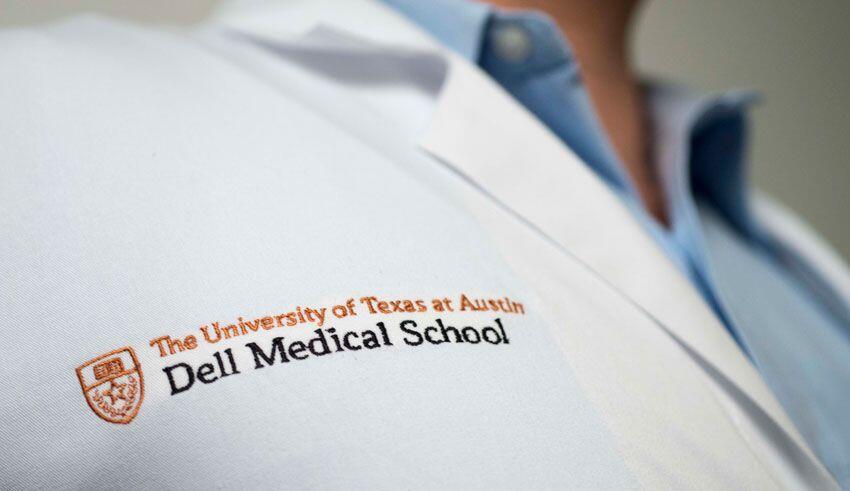
Dell Medical School opened in 2016 as one of the most intentionally designed new programs in the country, built around a value-based care model rather than traditional volume-driven medicine. Its Austin location and deep ties to UT's engineering and technology programs make it particularly strong for students interested in health systems innovation.
Joe R. and Teresa Lozano Long School of Medicine at UT Health San Antonio

San Antonio - MD - Public
MCAT: 510
GPA: 3.75
Tuition: $21,000
South Texas's primary academic medical center; strong research and clinical training in a diverse border-adjacent community.
The Long School of Medicine is South Texas's primary academic medical center, with particular strengths in diabetes research, military medicine (adjacent to major military installations), and border health. Its San Antonio location gives students access to one of the most bilingual clinical environments in the country.
Texas A&M University College of Medicine
Bryan / Temple - MD - Public
MCAT: 511
GPA: 3.78
Tuition: $21,000
Regional campuses across Texas; primary care and rural medicine mission with clinical training at Scott & White Health.
Texas A&M operates regional campuses in Bryan/College Station, Temple, and Round Rock, with clinical training largely at Baylor Scott & White Health; one of the largest nonprofit health systems in Texas. The program has a strong primary care mission and rural medicine emphasis, reflecting A&M's land-grant university heritage. California's UC programs share a similar public research university structure; our guide to top medical schools in California covers how the UC system compares.
TCU Anne Burnett Marion School of Medicine
Fort Worth - MD - Private
MCAT: 512
GPA: 3.80
Tuition: $65,000
Opened in 2019; small cohort model with emphasis on physician wellbeing and community partnership in the DFW area.
TCU Burnett opened in Fort Worth in 2019 with one of the smallest entering cohorts of any Texas program, emphasizing physician wellbeing, community-embedded clinical experiences, and a longitudinal integrated clerkship model. It is a private program with a notably collaborative rather than competitive culture.
Texas Tech University Health Sciences Center
Texas Tech University Health Sciences Center School of Medicine
- Lubbock - MD - Public
- MCAT: 511
- GPA: 3.78
- Tuition: $20,000
- TTUHSC's Lubbock campus is the flagship of the Texas Tech Health Sciences system, serving West Texas and the surrounding region. The program has a strong generalist and rural medicine track, and its public tuition for Texas residents makes it one of the most accessible programs in the western part of the state.
Texas Tech University Health Sciences Center Paul L. Foster School of Medicine
- El Paso - MD - Public
- MCAT: 509
- GPA: 3.73
- Tuition: $20,000
- The Paul L. Foster School in El Paso operates as a semi-autonomous campus of the TTUHSC system, with a clinical environment that uniquely spans the US-Mexico border. Spanish-language skills are genuinely useful here, and the program has a dual-city character that no other Texas program can replicate.
University of Texas Rio Grande Valley School of Medicine
Edinburg - MD - Public
MCAT: 509
GPA: 3.74
Tuition: $19,000
Established 2016 to serve the medically underserved Rio Grande Valley; strong emphasis on border health and community medicine.

UTRGV School of Medicine was established specifically to address one of the most medically underserved regions in the United States. The Rio Grande Valley has long had among the lowest physician-to-patient ratios in the country; this program exists to change that. Students gain clinical experience in a predominantly Hispanic, border-region community unlike any other in the state.
UT Tyler School of Medicine
Tyler - MD - Public
MCAT: 508
GPA: 3.73
Tuition: $18,000
East Texas's dedicated medical program; mission-focused on serving rural and underserved communities in the region.
UT Tyler is one of the newer additions to Texas's public medical education system, focused on East Texas's healthcare needs. It offers some of the lowest in-state tuition in the state (around $18,000 annually) and is building a regional residency pipeline for the Piney Woods and surrounding communities.
DO Programs
UNT Health Fort Worth / Texas College of Osteopathic Medicine
- Fort Worth - DO - Public
- MCAT: 505
- GPA: 3.55
- Tuition: $50,000
- The Texas College of Osteopathic Medicine at UNT Health Science Center is the oldest and largest DO program in Texas. Based in Fort Worth, it trains osteopathic physicians who compete in the same NRMP residency match as MD graduates and have a strong track record of placement in Texas residency programs.
Sam Houston State University College of Osteopathic Medicine
- Conroe - DO - Private
- MCAT: 505
- GPA: 3.60
- Tuition: $55,000
- Sam Houston State's DO program in Conroe (north of Houston) is one of the newer programs in the state, with a community and rural medicine emphasis. It gives applicants who may not meet the GPA or MCAT benchmarks of Texas's MD programs a strong pathway into the profession.
University of the Incarnate Word School of Osteopathic Medicine
- San Antonio - DO - Private
- MCAT: 504
- GPA: 3.50
- Tuition: $55,000
- UIW's osteopathic program in San Antonio operates within a Catholic liberal arts university, giving it a distinctive whole-person care philosophy. It has among the most accessible admissions thresholds of any Texas program while maintaining full COCA accreditation and residency match eligibility.
Admissions Overview for Texas Medical Schools
Texas medical school admissions differ from many other states in important ways. Most programs use the standard AMCAS application for MD programs, but the state's public university system often gives preference to Texas residents; and the overall affordability of public programs makes Texas one of the most attractive states for in-state applicants.
📋 Degrees, Prerequisites, and Applications
- MD programs: Apply through AMCAS. All 13 MD programs in Texas accept AMCAS applications; submit early (June–July) for best consideration.
- DO programs: Apply through AACOMAS, which is a separate application system from AMCAS. Do not submit an AMCAS application to DO programs.
- Secondary applications: Most Texas programs send secondary application invitations, typically $50–100 per school. Budget time and money for secondaries when planning your application cycle.
- Prerequisites: All programs require a core set of undergraduate prerequisites — biology, chemistry (general and organic), physics, biochemistry, and math. Exact requirements vary by institution — read each school's prerequisite page carefully.
- Texas residency: Most public UT and Texas Tech programs heavily prefer or require Texas residency. Out-of-state applicants face significantly lower acceptance rates and higher tuition at public programs.
For students comparing Texas programs with similar systems in other states, Illinois has a comparable mix of elite private programs (Northwestern, University of Chicago) and strong public institutions. Our guide to medical schools in Illinois covers all nine programs with the same admissions framework.
Competitive MD range: median MCAT of 508–519 across Texas programs; median GPA of 3.71–3.90. Public programs tend to be slightly more accessible than Baylor and TCU Burnett.
DO programs accept lower scores on average: median MCAT 504–505, GPA 3.50–3.60. These are still competitive nationally — not easy programs to enter.
UT Southwestern has the highest median MCAT in Texas (519) and a 3.90 GPA. Baylor is a close second at 518/3.88. Both are among the most competitive programs in the South.
Community-focused programs (UTRGV, UT Tyler, UH Fertitta) place slightly less weight on raw scores and more on demonstrated commitment to underserved communities and Texas-specific healthcare needs.
Time of application matters enormously. Texas programs fill seats on a rolling basis, and applying in July vs. October can make a meaningful difference to your chances.
🎓 Choosing Between MD and DO in Texas
- Since 2020, DO graduates compete in the same NRMP residency match as MD graduates. Both pathways lead to full medical licensure in Texas and all 50 states.
- DO programs include additional training in osteopathic manipulative medicine (OMM) beyond the standard medical curriculum — a differentiator for students whose clinical interests align with that approach.
- Texas's public MD programs are so affordable (many under $25,000/year in-state) that the cost advantage of DO programs is less pronounced than in states with more expensive public MD options.
- Competitive specialties (dermatology, orthopedic surgery, neurosurgery) still favor MD programs in match data, though the gap has narrowed significantly since 2020.
If you are weighing Texas programs alongside Southeast options, Emory University, the Medical College of Georgia, and Morehouse School of Medicine all offer distinctive profiles worth considering. Our guide to medical schools in Georgia covers all five programs in the state.
References
- "Medical School Admissions Requirements (MSAR)." Association of American Medical Colleges (AAMC), 2025, www.aamc.org/msar.
- "Best Medical Schools." U.S. News & World Report, 2026, www.usnews.com/best-graduate-schools/top-medical-schools.
- "Texas Medical Schools and Hospitals." Texas Medical Association, 2025, www.texmed.org.
- "Baylor College of Medicine." Baylor College of Medicine, 2025, www.bcm.edu.
- "UT Southwestern Medical Center." UT Southwestern, 2025, www.utsouthwestern.edu.
Summarize with AI:
Did you like this article? Leave a rating!

 Loading...