
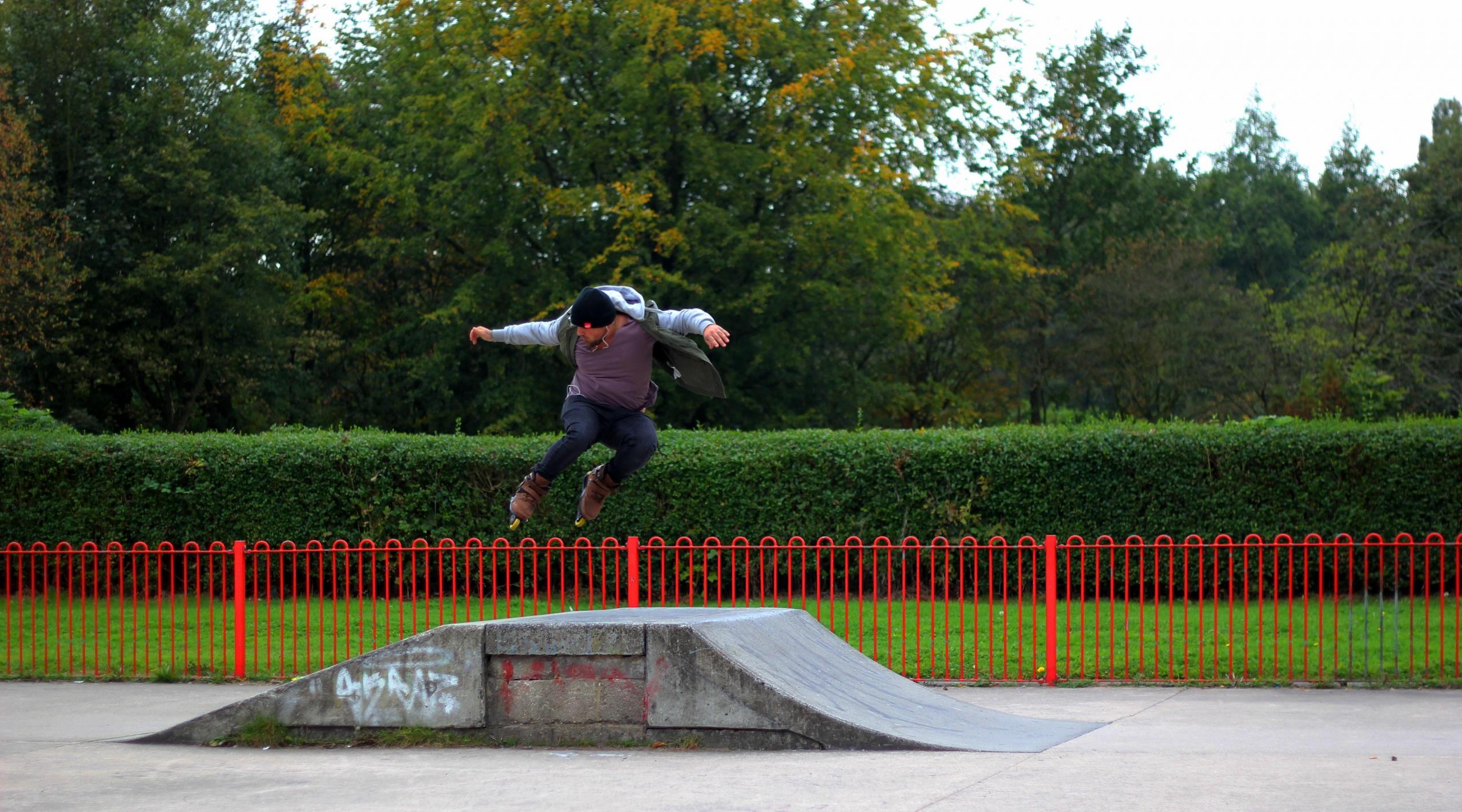

When roller disco swept across American rinks in the late 1970s, thousands of skaters discovered that spins, backward rolls, and quick footwork were not reserved for professionals. They were skills any regular could pick up with a few evenings of practice. That same truth holds today: the flashiest-looking roller skating tricks are usually built from a handful of simple, learnable movements.
The gap between watching a skater carve a smooth spin and doing one yourself is smaller than it appears. What stands in the way is rarely coordination, it is knowing which moves to learn first and in what order. Start with the right foundation and the tricks stack up faster than you would guess.
| Trick | Description |
|---|---|
| Spinning | An easy beginner trick where you bend your knees, keep feet at shoulder width, swing your arms, and go with the momentum to spin. Requires plenty of open space to avoid hitting other skaters. |
| Backward Skating | Skating in the opposite direction by bending at the knees, pointing feet in a V-shape, and pushing backward. Skaters should check behind them for others in their path. |
| One-Foot Skating | One of the easier tricks to learn: lift one leg and balance on the planted skate. Balance may only last a few seconds at first but improves with practice. |
| Wheelie | A trick borrowed from bicycles and scooters, done by putting one foot in front of the other and lifting the back so the front of the feet stays off the ground. Falling back is common, so a helmet and elbow pads are strongly recommended. |


What You Need Before You Start to Do Tricks
Tricks reward preparation. Rushing into spins and jumps before your basics are solid leads to falls and frustration, so a little groundwork protects both your confidence and your body. Here is what to have in place before you attempt your first roller skate practice and tricks.
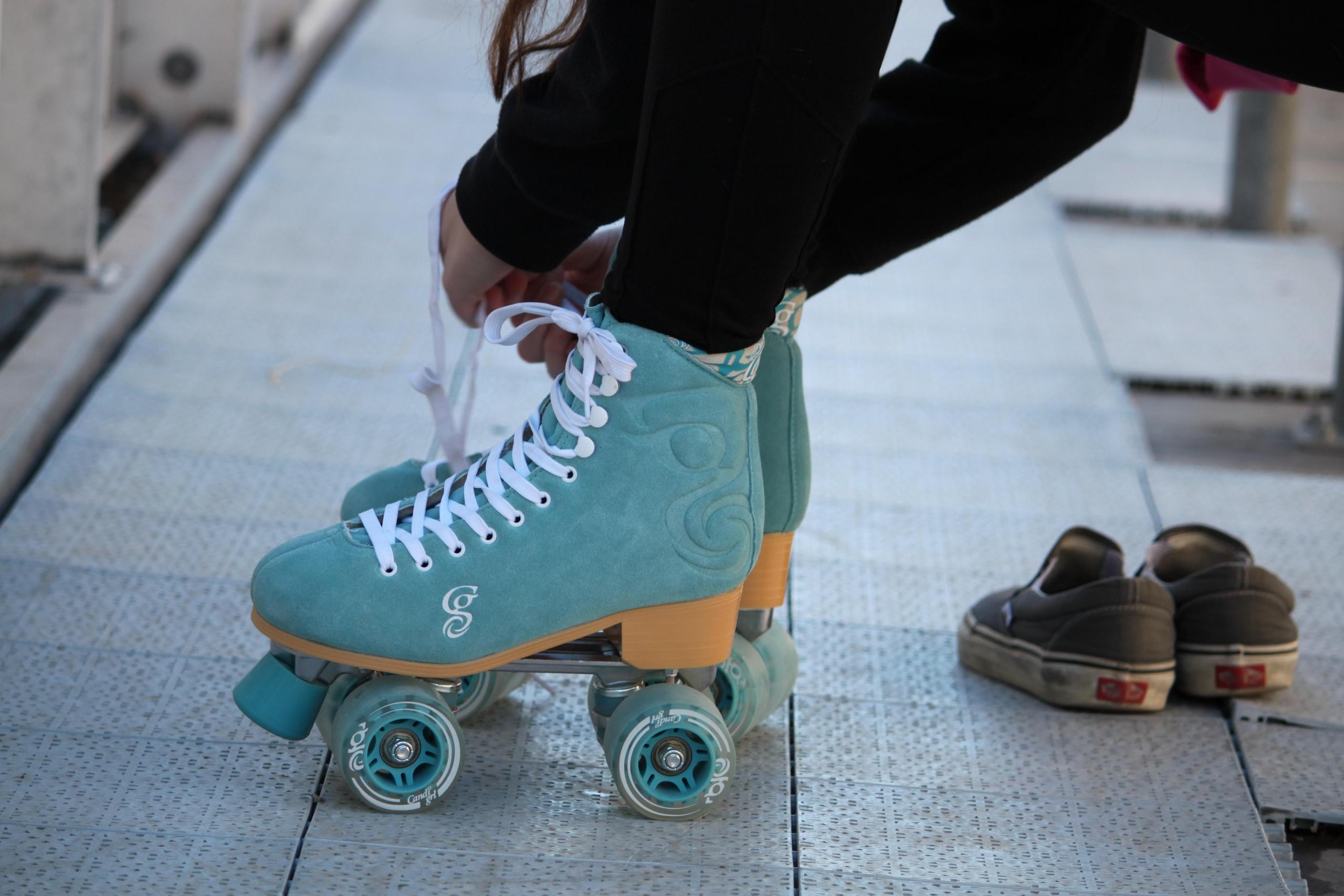
The Right Protective Gear
Tricks mean falls, so gear up properly. A certified helmet, wrist guards, knee pads, and elbow pads let you attempt new moves without fear of a painful landing. Wrist guards matter most, since a hand thrown out to catch a fall is the classic skating injury.
If you need to round out your kit, it is worth sorting your gear here before you push into anything ambitious.
A Solid Set of Basics
Before tricks come the fundamentals: gliding confidently, stopping on command, and skating backward at least a little. These are the building blocks that every trick draws on. If any feel shaky, spending time on the core information you need as well as steady practice will pay off the moment you start learning moves.
A Safe Place to Practice
Find a smooth, open, low-traffic surface, such as a quiet rink, an empty lot, or a local skatepark during quiet hours. Skateparks are ideal once you are more advanced, offering ramps and curves to grow into. Wherever you choose, clear space and a forgiving floor make learning tricks far less intimidating.
If you cannot yet stop on command and roll backward a little, spend a week on those two skills. Every trick below becomes far easier once they are automatic.
Discover roller skating nj lessons with Superprof to master your latest tricks.
Easy Roller Skating Tricks to Learn First
With your foundation set, you are ready for the fun part. These beginner-friendly moves build on each other, so work through them roughly in order. They cover both quad skates and inline skates, since the best roller skating moves differ a little between the two.
Spinning
So what exactly is this trick? Well simply put it's spinning. Spinning is quite an easy trick to learn, and of course, spinning on roller skates you don't need to push yourself to be spinning like an Olympic ice skater from the jump you can practice little by little.
To start off make sure you are bending your knees and keeping your feet at shoulder width, then start to spin your arms and go with the momentum and start spinning.
Another important tip for trying to complete this trick is to make sure you have plenty of space so you don't accidentally smack anyone!
Backward Skating
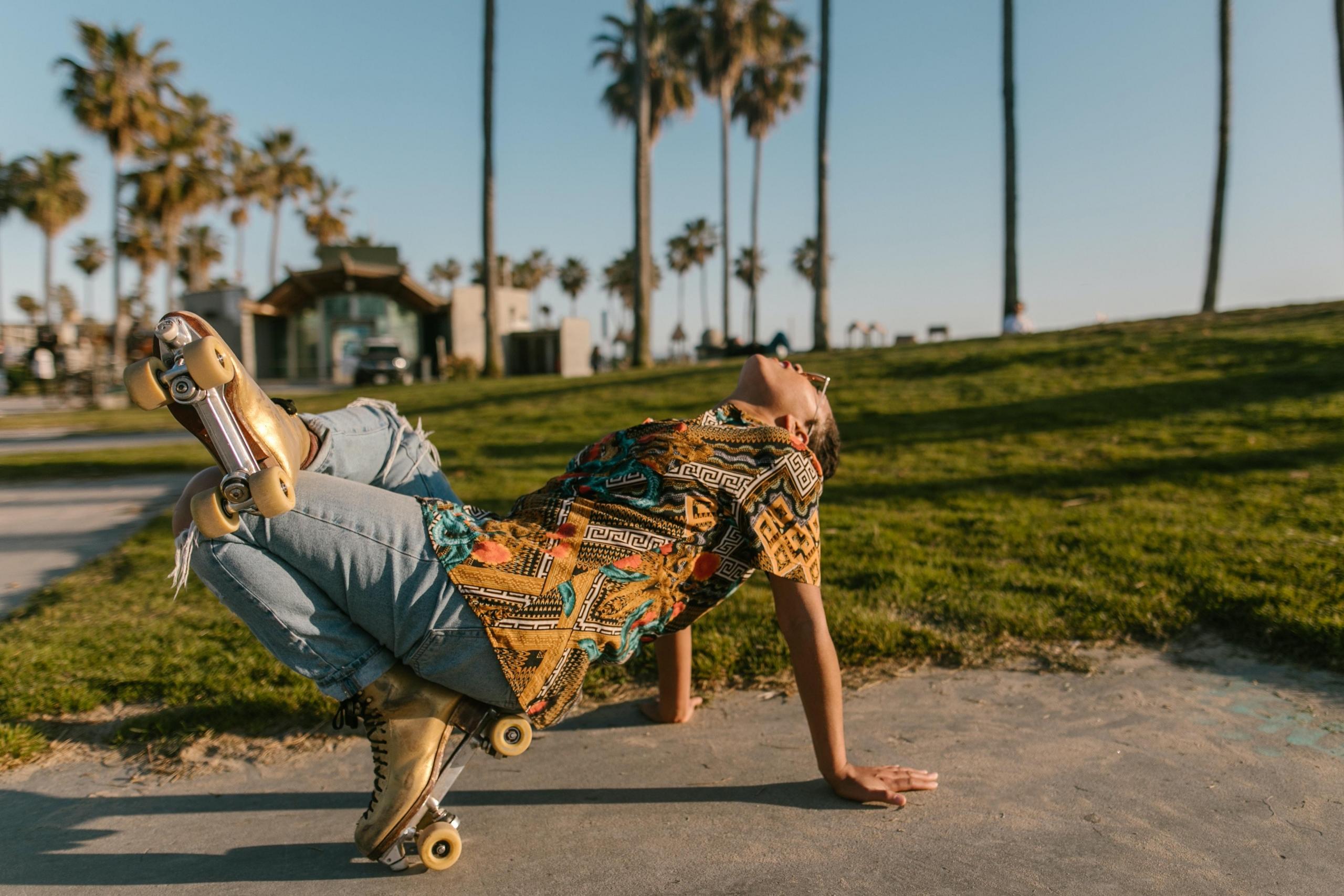
As the name suggests you'll be skating in the opposite direction. For this trick simply bend at the knees point your feet in a V-shape and start to push backward, like any trick make sure you are checking behind you for other skaters that could happen to be in your way.
One-Foot Skating
One foot skating is one of the easier of the easy tricks to learn. What you need to do for this trick is simply lift one of your legs and keep your balance on the skate you have planted on the ground. Trying out this trick at first can be really difficult and you may only be able to keep your balance for a few seconds, but after a few attempts, you will be able to keep going for much longer periods of time.

Wheelie
For this trick on roller blades, you will do a wheelie, a trick that is typically done on bicycles or scooters. You will need to put move and then put one foot in front of the other and lift from the back so that the front part of your feet are not touching the ground. You may fall back a few times, a helmet and elbow pads are strongly recommended.
Once a few of these tricks feel comfortable on their own, the real fun begins: linking them together. Try flowing from a crossover into a one-foot glide, or from a slalom into a gentle spin. Combining moves is what makes skating look effortless and expressive, and it trains your body to transition between skills without stopping. Start with just two moves at a time, keep your speed modest, and let the connection between them grow smoother with each pass before you add a third.
How to Progress Safely and Keep Improving
Learning tricks is a marathon, not a sprint. Warm up before each session, attempt new moves when you are fresh rather than tired, and always know how you will bail out of a trick before you commit to it. Falling well is a skill worth practicing on purpose, and skaters who rehearse a safe landing tend to progress with far more confidence. Set a small, specific goal for each session, such as holding a one-foot glide a second longer than last time, so you always leave the rink with a clear sense of progress.
Every trick is just good balance borrowed from the last one. Learn to glide clean and steady and the spins and jumps are already halfway there.
Roller Skating Association, Skater Development notes
Progress also depends on your equipment and your budget. Softer wheels grip better for controlled tricks, and knowing what upgrades buy you real improvement keeps your spending smart. A few refinements in technique from more experienced skaters, plus the occasional round of tips, will keep your progress steady.
Practice Smart, Not Just Hard
Repetition is what turns a shaky attempt into a clean move, but how you repeat matters. Break each trick into its smallest pieces and drill them separately before stringing them together. For a spin, that might mean practicing the wind-up, the weight shift, and the exit stance on their own. Filming your attempts and watching them back reveals small errors your body cannot feel in the moment, and it is one of the fastest ways to improve.
Common Trick Mistakes to Avoid
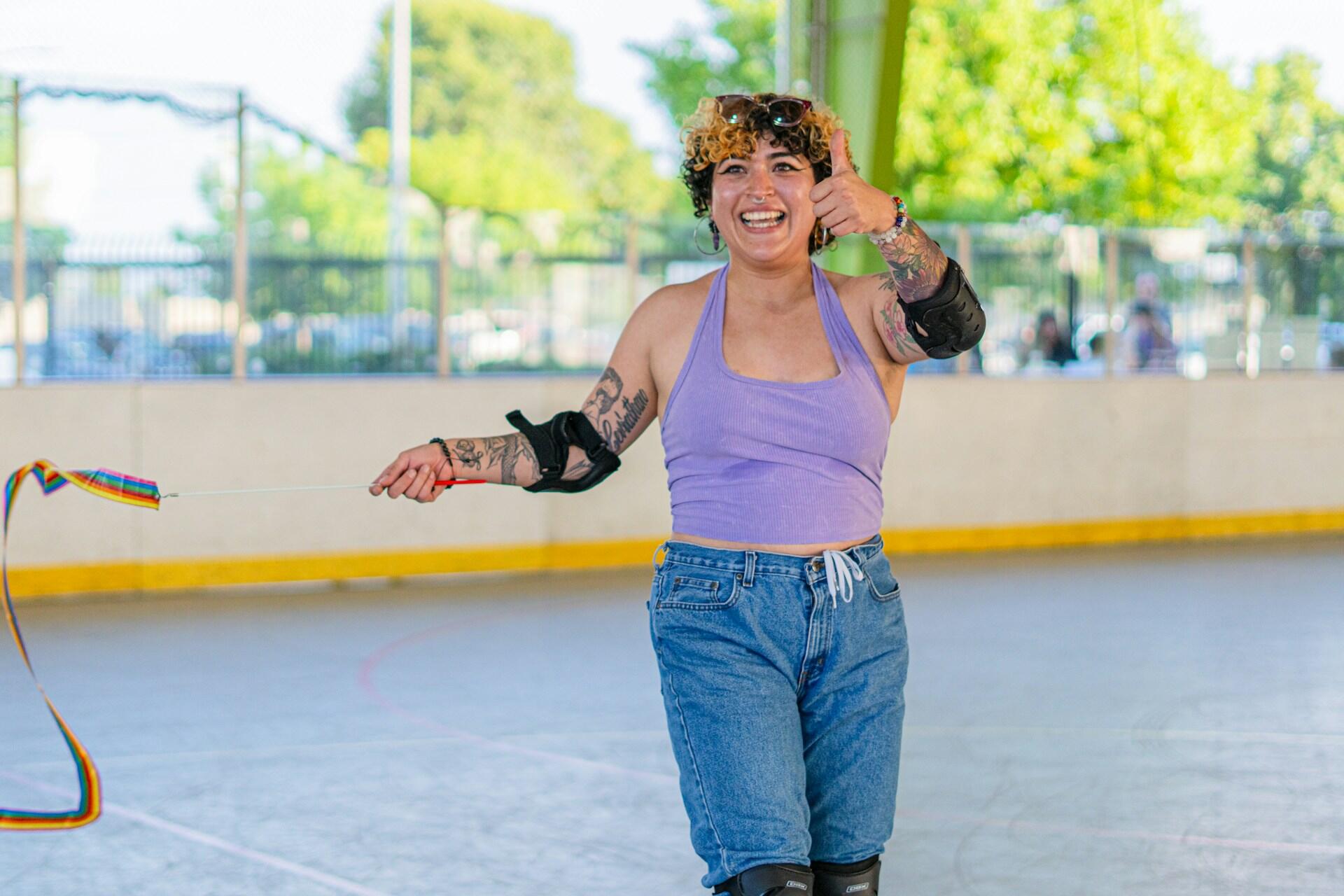
Most trick-related frustration comes from a few predictable errors. Spotting them early keeps you safe and speeds up your learning.
- Not wearing the correct gear: make sure your skating equipment fits snuggly, no matter the cost
- Skipping the basics: attempting spins before you can glide and stop cleanly almost always leads to falls,
- Looking down: watching your feet throws off your balance, so keep your eyes up and forward through every move,
- Tensing up: stiff legs absorb no shock, so stay loose and let your knees act as springs,
- Going too fast too soon: speed hides mistakes and magnifies falls, so learn each trick slowly first,
- Practicing when tired: fatigue is when most injuries happen, so save new tricks for the start of a session.
None of these mistakes are permanent, and every skater works through them. Treat each fall as feedback rather than failure, adjust one thing at a time, and give your body the rest it needs between challenging sessions. Steady, patient practice beats reckless ambition every single time.
Roller skating tricks are within reach for almost anyone willing to build a foundation first. You will be able to find Superprof tutors all across the US including roller skating lessons Atlanta to help you perfect your tricks. So, gear up, get your basics steady, find a safe surface, and learn one move at a time. The spins and crossovers that look so impressive from the sidelines are simply balance skills you have practiced enough to trust. Pick your first trick, drill it patiently, and enjoy the moment it finally clicks.
Summarize with AI:
Did you like this article? Leave a rating!

 Loading...
