Resolved exercises on polynomial degree and independent term, ordered polynomials, addition and subtraction of polynomials, multiplication of polynomials, polynomial division, division by Ruffini, remainder theorem, polynomial remainder, and factor theorem.
Determine whether the following algebraic expressions are polynomials or not. If so, indicate their degree and independent term.
a
b
c
a
Degree:  , independent term: .
b
Not a polynomial, because the literal part of the first monomial is inside a root.
c
Degree:  , independent term:
 .
Indicate whether the following algebraic expressions are polynomials or not. If so, indicate their degree and independent term.
a
b
c
d
a
Not a polynomial, because the exponent  of the first monomial is not a natural number.
b
Degree: , independent term:  .
c
Not a polynomial, because the exponent of the second monomial is not a natural number.
d
Degree:  , independent term:
 .
Write in mathematical language:
a) An ordered polynomial without an independent term.
b) An unordered and complete polynomial.
c) A complete polynomial without an independent term.
d) A polynomial of degree , complete with odd coefficients.
a) An ordered polynomial without an independent term.

b) An unordered and complete polynomial.

c) A complete polynomial without an independent term.
Impossible
d) A polynomial of degree , complete with odd coefficients.

Given the polynomials:
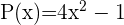


Calculate:
a
b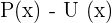
c
d
a
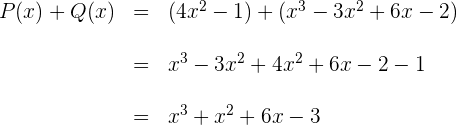
b
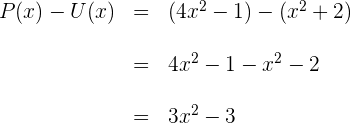
c
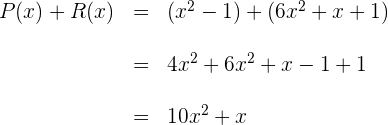
d
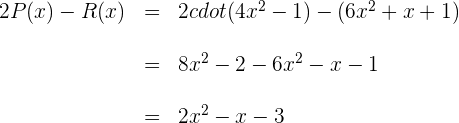
Given the polynomials:
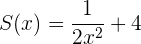
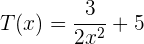
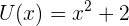
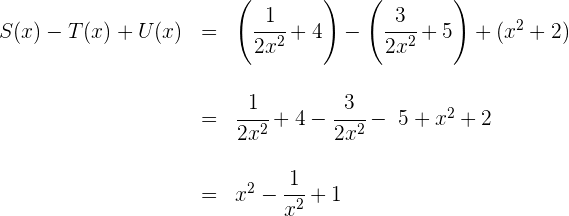
Calculate:
a
b
a
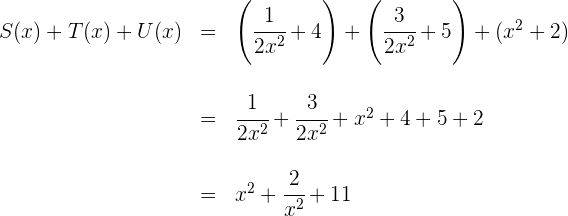
b
Given the polynomials P, Q, R:



Calculate:
a 
b 
c 
a
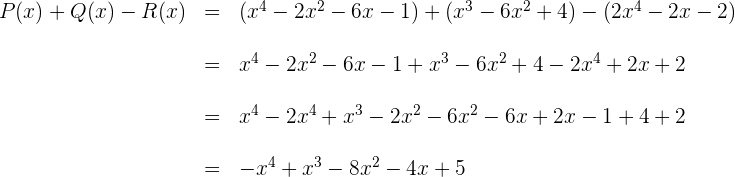
b
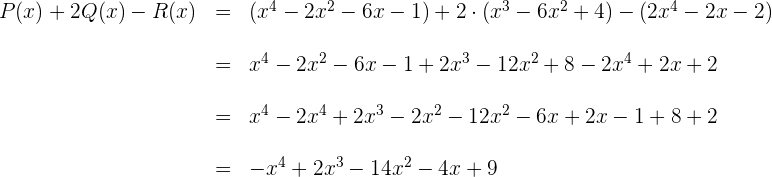
c
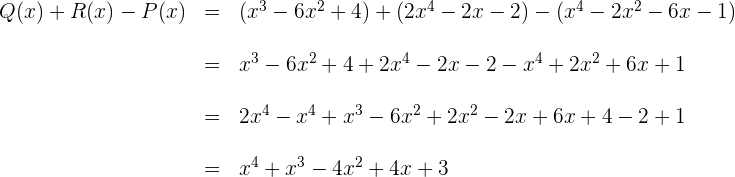
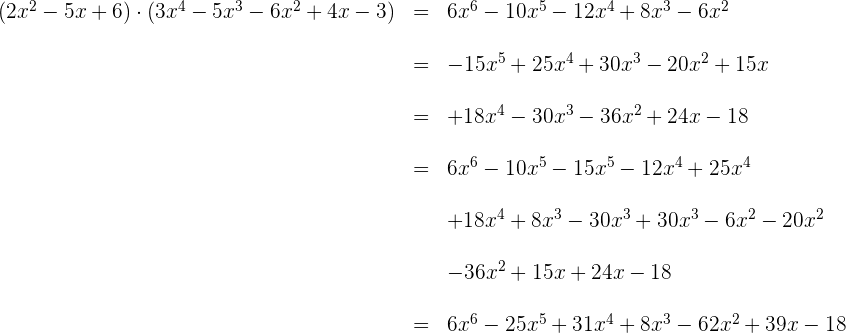
Perform the following multiplications:
a
b
c
a

b

c
Perform the following divisions:
a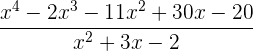
b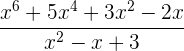
c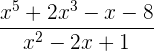
a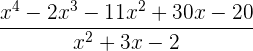
Step 1: To obtain the first term of the quotient we divide  by
 and get ; we multiply this result by the divisor and subtract from the dividend.

Step 2: To obtain the second term of the quotient we divide  by and get
 ; we multiply this result by the divisor and subtract from the remainder.
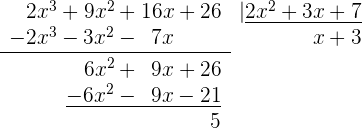
Step 3: The division has quotient  and remainder .

b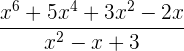

c

Divide using Ruffini's Rule:
1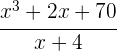
2
3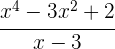
1


2


3


Without performing the divisions, find the remainder of the following operations:
1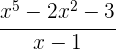
2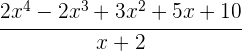
3
To find the remainder we will use the remainder theorem, which states that the remainder of dividing a polynomial  by a polynomial of the form
 is the numerical value of that polynomial at
 .
1

2


3

Indicate which of these divisions are exact:
1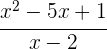
2
3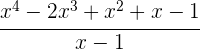
We apply the remainder theorem; if the remainder is zero, the division is exact.
1 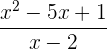

Not exact.
2

Exact.
3

Exact.
Indicate which of these divisions are exact:
1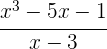
2
3
We apply the remainder theorem; if the remainder is zero, the division is exact.
1

Not exact.
2

Exact.
3

Exact.
Check that the following polynomials have as factors those indicated:
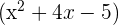
1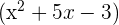 has the factor

2 has the factor

3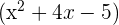 has the factor

1) 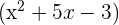 has the factor
 is divisible by if and only if
 .

is not a factor.
2)  has the factor
 is divisible by if and only if
 .

is a factor.
3)  has the factor

 .

is a factor.
Check that the following polynomials have as factors those indicated:
1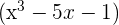 has the factor

2 has the factor

3 has the factor
1) 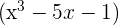 has the factor
 is divisible by if and only if
 .
is not a factor.
2)  has the factor
 is divisible by if and only if
 .

is a factor.
3)  has the factor .

is a factor.
Check that the following polynomials have as factors those indicated:
1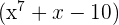 has the factor
2 has the factor
3 has the factor
1) 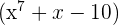 has the factor is divisible by if and only if .

is not a factor.
2)  has the factor
 is divisible by if and only if .

is not a factor.
3) 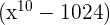 has the factor is divisible by if and only if
 .
is a factor.
Calculate the value of  so that the polynomial
 has the root

We calculate the value of knowing that by the Remainder Theorem, the numerical value of the polynomial at must be zero.

Calculate the value of so that the polynomial  has the root

We calculate the value of knowing that by the Remainder Theorem, the numerical value of the polynomial at must be zero.

Calculate the value of so that the polynomial 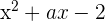 has the root

We calculate the value of knowing that by the Remainder Theorem, the numerical value of the polynomial at must be zero.

Calculate the value of so that the polynomial  has the root

We calculate the value of knowing that by the Remainder Theorem, the numerical value of the polynomial at must be zero.

Find and  so that the polynomial
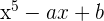 is divisible by

We factor the difference of squares:

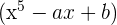 is divisible by if and only if and

We apply the remainder theorem knowing that the remainder is zero:

Simplify:

We apply the remainder theorem knowing that the remainder is zero:

Simplify:

We have obtained two equations with two unknowns. Adding both equations:

Substituting into the first equation:


Determine the coefficients and so that the polynomial  is divisible by

We perform the division.

For the division to be exact, the remainder must be zero.
For the remainder to be zero, both the coefficient of  and the constant term must be zero:

Thus: 
Find the value of  so that dividing
 by
 gives remainder
We apply the remainder theorem and know that the remainder is :

Simplify:

Determine the value of  so that
 has as one of its roots.
If is a root of the polynomial, then the numerical value of the polynomial at that value must be zero:

Simplify:

Find a polynomial of fourth degree that is divisible by  and vanishes (equals zero) for
 and

If it vanishes for and , then and  are factors of the polynomial we seek.
is another factor, since the polynomial is divisible by
We multiply the factors:

First we multiply the first two:



Calculate the value of so that the polynomial 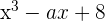 has the root
 , and calculate the other roots.
We calculate the value of knowing that the numerical value of the polynomial at must be zero:



We factor by dividing using Ruffini's rule. The quotient is  and the factorization is:

We set the second factor equal to zero and solve the quadratic equation:

Using the quadratic formula:  \Delta = 4 - 16 = -12 <0[/latex]
It has no other real roots.
Summarize with AI:
Did you like this article? Rate it!

 Loading...