Chapters


What Is Rationalization of Radicals?
Rationalization of radicals consists of removing radicals from the denominator, which facilitates the calculation of operations such as adding fractions.
We can distinguish three cases:
Case 1
Rationalization of the type 
We multiply the numerator and denominator by  .
.

Examples
1 Rationalize the expression 
We multiply numerator and denominator by the square root of 2, perform the calculations, and simplify the fraction:

2 Rationalize the expression 
To perform the addition, we rationalize the 2nd term by multiplying and dividing by the square root of 2, and perform the addition:


Case 2
Rationalization of the type 
We multiply numerator and denominator by  .
.

Example
Rationalize the expression 
We express the radicand  in exponential form:
We must multiply the numerator and denominator by the fifth root of 
We multiply the radicals in the denominator, extract factors from the radical, and simplify the fraction:

Case 3
Rationalization of the type 
And in general when the denominator is a binomial with at least one radical.
We multiply the numerator and denominator by the conjugate of the denominator.
The conjugate of a binomial is equal to the binomial with the middle sign changed:

We also need to keep in mind that: "sum times difference equals difference of squares."

Examples
1 Rationalize the expression 
We multiply numerator and denominator by the conjugate of the denominator, remove parentheses in the numerator, and perform the sum times difference in the denominator, which gives us a difference of squares:

In the denominator, we extract the radicands and divide by  , that is, we change the sign of the numerator:

2 Rationalize the expression 
We multiply and divide the fraction by the conjugate of the denominator:

We perform the sum times difference in the denominator, carry out the operations, and simplify the fraction by dividing by  :
:

3 Rationalize the expression 
We multiply numerator and denominator by the conjugate of the denominator, remove parentheses in the numerator, and perform the sum times difference in the denominator, which gives us a difference of squares:

In the numerator, we factor 12 and extract factors; we finish by performing the operations in the denominator:

Examples of Radical Rationalization Exercises
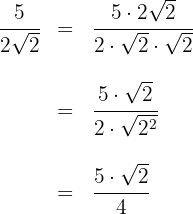
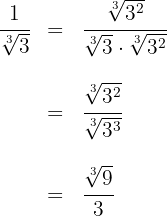
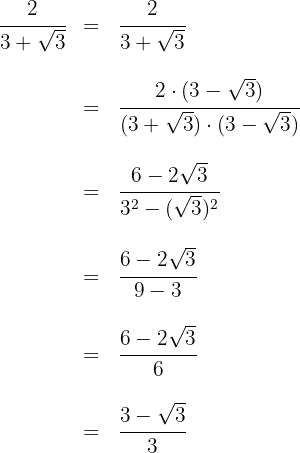
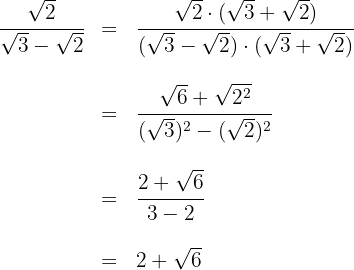
Rationalize the following expressions:




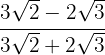
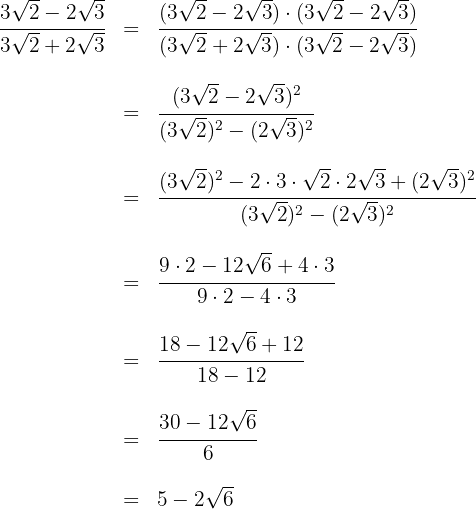
Summarize with AI:
Did you like this article? Rate it!

 Loading...