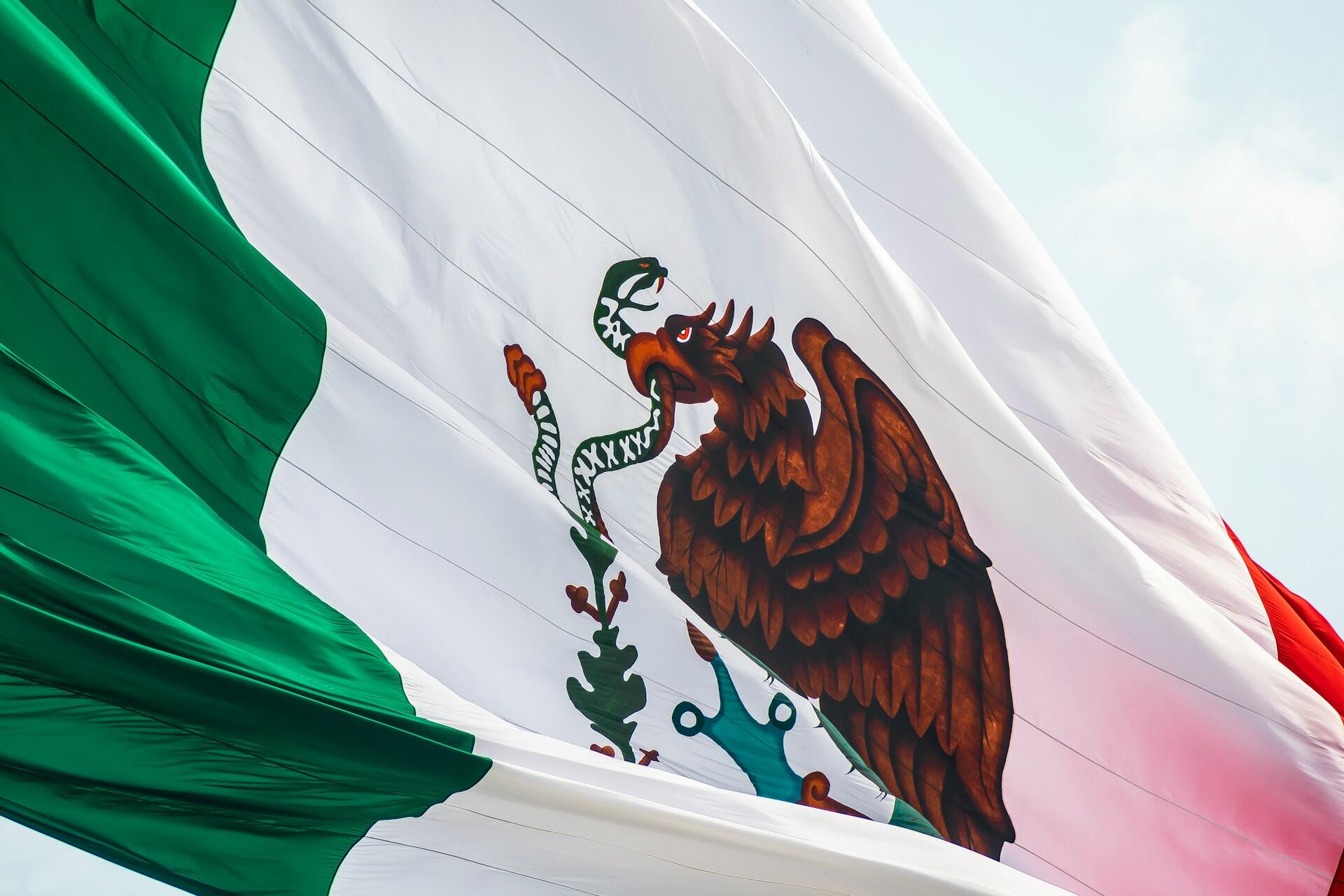

Mexico has produced world-class athletes across an extraordinary range of sports; from boxing rings and soccer pitches to Formula 1 circuits, golf courses, and Olympic arenas. The most famous Mexican athletes have not only won titles and broken records; they have become national symbols, their names synonymous with an entire country's pride and resilience.
The 15 best Mexican athletes profiled below span eight sports and nearly a century of Mexican sporting history. They include Mexican Olympic athletes who put the country on the world map, Mexican American athletes who built bridges between cultures, and cultural icons whose influence extended far beyond sport. For the full picture of Mexico's most iconic figures across music, film, and beyond, the branch article covers the country's greatest names together.
| 🏆Athlete | 🎯Sport | 📍Origin | ⭐Key Achievement | 🗓Career |
|---|---|---|---|---|
| Julio César Chávez | Boxing | Sinaloa | 89–0–1 (76 KOs), 6 world titles | 1980–2005 |
| Saúl 'Canelo' Álvarez | Boxing | Guadalajara | Undisputed super middleweight, pound-for-pound #1 | 2004–present |
| Hugo Sánchez | Soccer | Mexico City | 5 La Liga titles with Real Madrid, top scorer 5 seasons | 1977–1997 |
| Rafael Márquez | Soccer | Zamora | 5 World Cups, FC Barcelona captain | 1996–2018 |
| Jorge Campos | Soccer | Acapulco | Mexico's most iconic goalkeeper | 1988–2004 |
| Sergio 'Checo' Pérez | F1 Racing | Guadalajara | Multiple race wins, 2023 F1 vice-champion | 2009–present |
| Pedro Rodríguez de la Vega | F1 Racing | Mexico City | Won Belgian GP 1968, Le Mans class wins | 1960–1971 |
| Lorena Ochoa | Golf | Guadalajara | World #1, 27 LPGA victories, retired at 28 | 2000–2010 |
| Ana Guevara | Athletics | Sonora | World champion 400m 2003, Olympic silver 2004 | 1997–2009 |
| Soraya Jiménez | Weightlifting | Mexico City | 2000 Sydney Olympic gold | 1996–2008 |
| María Espinosa | Taekwondo | Sinaloa | Olympic gold 2008, 4 World Championship titles | 2001–2021 |
| Paola Espinosa | Diving | Mexico City | Olympic bronze 2008, silver 2012 | 2002–2021 |
| El Santo (Rodolfo Huerta) | Lucha Libre | Hidalgo | Mexico's greatest sports and cultural icon | 1934–1982 |
| Blue Demon (Alejandro Muñoz) | Lucha Libre | Nuevo León | El Santo's iconic rival and partner | 1942–1990 |
| Fernando Valenzuela | Baseball | Sonora | 1981 Cy Young + Rookie of the Year, Fernandomania | 1979–1997 |
1924
Paris Olympics
Mexico competes at the Olympic Games for the first time
1948
Mexico's first Olympic gold medal
Humberto Mariles wins in equestrian!
1968
Mexico City hosts the Summer Olympics
Felipe Muñoz wins gold in 200m breaststroke
1981
Fernandomania sweeps the US
Fernando Valenzuela wins both the Cy Young Award and NL Rookie of the Year
1986
Mexico hosts the FIFA World Cup for the second time
1987
Julio César Chávez wins his third world title
He begins his legendary 89-fight unbeaten streak
1993
El Tri reaches the FIFA Confederations Cup final under Hugo Sánchez's generation
2000
Soraya Jiménez wins Olympic gold at Sydney
The first Mexican woman to win an Olympic gold medal
2006
Lorena Ochoa ascends to world #1 ranking in golf
2008
María Espinosa wins Olympic gold in taekwondo; Paola Espinosa wins Olympic bronze in diving
2012
Sergio Pérez wins his first Formula 1 Grand Prix at the Malaysian GP
The first Mexican driver to win an F1 race
2022
Canelo Álvarez becomes undisputed super middleweight world champion
2023
Checo Pérez finishes 2nd in the F1 World Drivers' Championship
Mexico's best overall season result in F1 history


🥊 Boxing — Mexico's Most Beloved Sport
No country has a deeper relationship with professional boxing than Mexico. The sport is woven into national identity in a way that goes beyond athletics; Mexican boxers are folk heroes, and the best among them carry the weight of an entire nation's pride into the ring. Two names stand above all others.
Julio César Chávez
Julio César Chávez is the greatest Mexican boxer in history and one of the greatest fighters of any nationality the sport has ever seen.
From Sinaloa, he turned professional at 16 and built an unbeaten record that stretched to 89 fights across 13 years; a run that is virtually impossible to contextualize against modern boxing. He held world titles at super featherweight, lightweight, and light welterweight simultaneously and was named Fighter of the Decade for the 1980s by the World Boxing Council.
Chávez's style was a perfect expression of Mexican boxing culture: high pressure, iron chin, relentless body work, and an ability to absorb punishment while searching for a knockout that made him almost impossible to stop. He drew over a million paid attendees across his fights in Mexico; numbers no other boxer in the country has approached. Among the most famous Mexican athletes of all time, Chávez stands apart as the one who made the sport a national religion.
Saúl "Canelo" Álvarez
Canelo Álvarez is the best active boxer in the world and the heir to Chávez's legacy as Mexico's defining champion.
Born in Guadalajara and turning professional at 15, he became the youngest world champion in Mexican boxing history before growing into the pound-for-pound #1 ranked fighter globally. His 2021–2022 undisputed super middleweight campaign (unifying all four major belts across four fights) is one of the great sustained achievements in modern boxing.
Canelo's commercial impact has transformed the sport's economics: his fights on DAZN and HBO have broken pay-per-view records and his brand value extends well beyond boxing. He is the defining Mexican athlete of his era in combat sports, equally beloved in Mexico and across the US Mexican diaspora.
Mexico's famous musicians and Canelo share the same quality; the ability to carry national identity on an international stage.
⚽️ Soccer — The Soul of Mexican Sport
Fútbol is Mexico's most popular sport by participation and viewership, and the Mexican national team (El Tri) has produced players who competed at the highest levels of European soccer. Three names define the country's relationship with the beautiful game.
Hugo Sánchez
Between 1985 and 1992, he won five consecutive Spanish La Liga top scorer awards (a feat never before achieved by any player in the competition's history) and five league titles with Real Madrid. His acrobatic scissor-kick celebrations became iconic across Spanish soccer.
Sánchez's success in Europe opened the path for subsequent generations of Mexican players to seek careers abroad. He was named by Pelé as one of the 100 greatest living soccer players and by FIFA as one of the greatest players in the history of soccer. He remains the benchmark against which every Mexican soccer player is measured.
Rafael Márquez
A composed central defender from Zamora, Michoacán, he captained Mexico at five consecutive World Cups (2002–2018); the first player of any nationality to captain his country at five World Cups. At club level, he was the first Mexican player to win the UEFA Champions League, doing so with FC Barcelona in 2006 and 2009.
Known as "El Kaiser of Michoacán," Márquez's reading of the game and leadership qualities made him one of the most respected defenders of his generation in European soccer. He retired in 2018 as Mexico's most decorated outfield international. His career is the clearest evidence that Mexican soccer can produce players who compete at the absolute highest level globally.
Jorge Campos
His fluorescent, hand-designed goalkeeper kits became one of the most recognizable images of 1990s soccer globally. He was named best goalkeeper in CONCACAF on multiple occasions and played at three World Cups.
Campos represents the creative, individualistic spirit that defines Mexican soccer at its best; a player who invented his own role and forced the world to notice. Among Mexican athletes, he is the one whose name draws the widest smile in recognition.
🏎️ Formula 1 — Mexico's Fastest Athletes
Mexico has produced two Formula 1 drivers of genuine world-class standing, separated by more than five decades but united by the same competitive fire. Both have drawn enormous crowds to the Mexican Grand Prix; one of the most atmospherically intense events on the F1 calendar.
Sergio "Checo" Pérez
Sergio "Checo" Pérez from Guadalajara is Mexico's greatest active sports star and the most successful Mexican athlete on the global stage right now.
A Formula 1 driver who joined Red Bull Racing in 2021 after stints at Sauber, McLaren, and Force India, he won the 2021 Azerbaijan Grand Prix (the race that announced him as a genuine race-winner) and went on to become an integral part of Red Bull's historically dominant 2022 and 2023 seasons. In 2023, he finished second in the Drivers' World Championship, Mexico's best result in F1 history.
Checo is worshipped in Mexico in a way that crosses generational boundaries. The Mexican Grand Prix at the Autodromo Hermanos Rodríguez has become one of the loudest and most passionate events in world sport when he races at home. He is also one of the most prominent Mexican athletes in the cultural sense; deeply Mexican in identity while competing at the pinnacle of a global, multinational sport.

Pedro Rodríguez de la Vega
Pedro Rodríguez de la Vega was Mexico's first great racing driver; a fearless competitor from Mexico City who drove for Ferrari, Cooper, and BRM in Formula 1 during the 1960s and won the 1968 Belgian Grand Prix in what is still considered one of the greatest drives in the race's history.
He also won the Daytona 24 Hours twice and the Sebring 12 Hours, establishing himself as one of the finest endurance drivers of his era.
Rodríguez died in a sportscar race in Germany in 1971 at age 31. The Autodromo Hermanos Rodríguez in Mexico City is named in honor of him and his brother Ricardo; also a racing driver who died in an accident in 1962. Both brothers are among the most famous Mexican athletes in the country's sporting pantheon.
⛳️ Golf — Mexico's World Number One
Golf has produced Mexico's most dominant individual sporting performance of the modern era. One athlete from Guadalajara reached the summit of the world rankings and stayed there for four consecutive years; a reign that placed her alongside Tiger Woods and Annika Sörenstam as one of the most complete golfers of her generation.
Lorena Ochoa
Lorena Ochoa from Guadalajara is the greatest female golfer Mexico has ever produced and one of the finest the sport has seen in any country.
From 2006 to 2010, she was the world's number one ranked female golfer; a dominance so complete that during one stretch she won 6 of 11 tournaments entered. She won 27 LPGA Tour events in her career, including two major championships, and was named LPGA Player of the Year four consecutive times.
What makes Ochoa's story even more remarkable is that she retired at 28 (at the absolute peak of her powers) to start a family, walking away from a sport she was dominating with a serenity that shocked the golf world. Her Lorena Ochoa Foundation has supported the education of thousands of Mexican children since her retirement. Among best Mexican athletes in terms of international sporting dominance, she stands alongside Canelo as the country's most complete global champion. Mexico's most popular TV shows have featured segments on her story as one of the great inspiring chapters in Mexican sporting history.
I gave my sport everything I had. Now it's time to give my family what they deserve.
Lorena Ochoa, retirement press conference, April 2010
🏅 Olympic Champions — Mexico's Medal Icons
Mexico has won 13 Olympic gold medals across the history of the Summer Games, with the most iconic coming from three women who became national heroes in their respective disciplines. These Mexican Olympic athletes collectively represent some of the finest performances in the country's competitive history.
Ana Guevara
Ana Guevara from Sonora is Mexico's greatest track and field athlete; the 2003 World Champion in the 400 meters and the 2004 Athens Olympic silver medalist in the same event.
At her peak, she was the fastest woman on the planet over 400 meters, running a personal best of 48.89 seconds (still one of the fastest times in the history of the event) and dominated the discipline across a four-year period from 2002 to 2005 that places her among the elite sprinters in the sport's history.
Guevara's success at international level came at a time when Mexico had very limited infrastructure for elite track athletics, making her achievements even more remarkable. She later served as head of Mexico's National Commission for Physical Culture and Sport (CONADE), using her platform to invest in the next generation of Mexican Olympic athletes. Among famous Mexican athletes, she is the one whose career most directly inspired improvements in the system that supports her successors.
Soraya Jiménez
Soraya Jiménez from Mexico City made history at the 2000 Sydney Olympics when she won gold in the 58kg weightlifting category; becoming the first Mexican woman in any sport to win an Olympic gold medal.
Her victory was one of the most celebrated moments in Mexican Olympic history, a milestone that changed how Mexico invested in and thought about women's sport. She carried the Mexican flag at the 2004 Athens Opening Ceremony as a direct result of her historic achievement.
María Espinosa
María Espinosa from Sinaloa is Mexico's most decorated Olympic taekwondo athlete; a four-time World Champion and Olympic gold medalist at Beijing 2008 who dominated her weight category for over a decade.
Her combination of technical precision and physical toughness made her one of the most feared competitors in international taekwondo. She competed at four Olympic Games from 2004 to 2021, making her one of the longest-serving Mexican Olympic athletes in the modern era.
Paola Espinosa
Paola Espinosa from Mexico City is the most successful diver in Mexican Olympic history, winning two Olympic medals (bronze at Beijing 2008 and silver at London 2012) across a career that spanned five World Championships medal performances.
She competed in synchronized 10m platform diving with Laura Sánchez and made the event one of the most reliably productive disciplines for Mexican Olympic athletes across two Olympic cycles.
13 Olympic gold medals won across the history of the Summer Games
First gold: Humberto Mariles, equestrian, London 1948
First women's gold: Soraya Jiménez, weightlifting, Sydney 2000
Most successful discipline historically: equestrian, boxing, and taekwondo
🤼 Lucha Libre — Sport, Art, and Cultural Identity
Lucha libre is Mexico's own invention; a form of professional wrestling characterized by high-flying aerial moves, colorful masks, and theatrical personas that has been a fixture of Mexican popular culture since the 1930s. Its greatest practitioners are among the most famous Mexican athletes in cultural terms: figures who transcended sport to become national symbols.
El Santo (Rodolfo Guzmán Huerta)
El Santo ("The Silver Masked One") is the single most famous sports figure in Mexican history and one of the most recognizable cultural icons the country has ever produced.
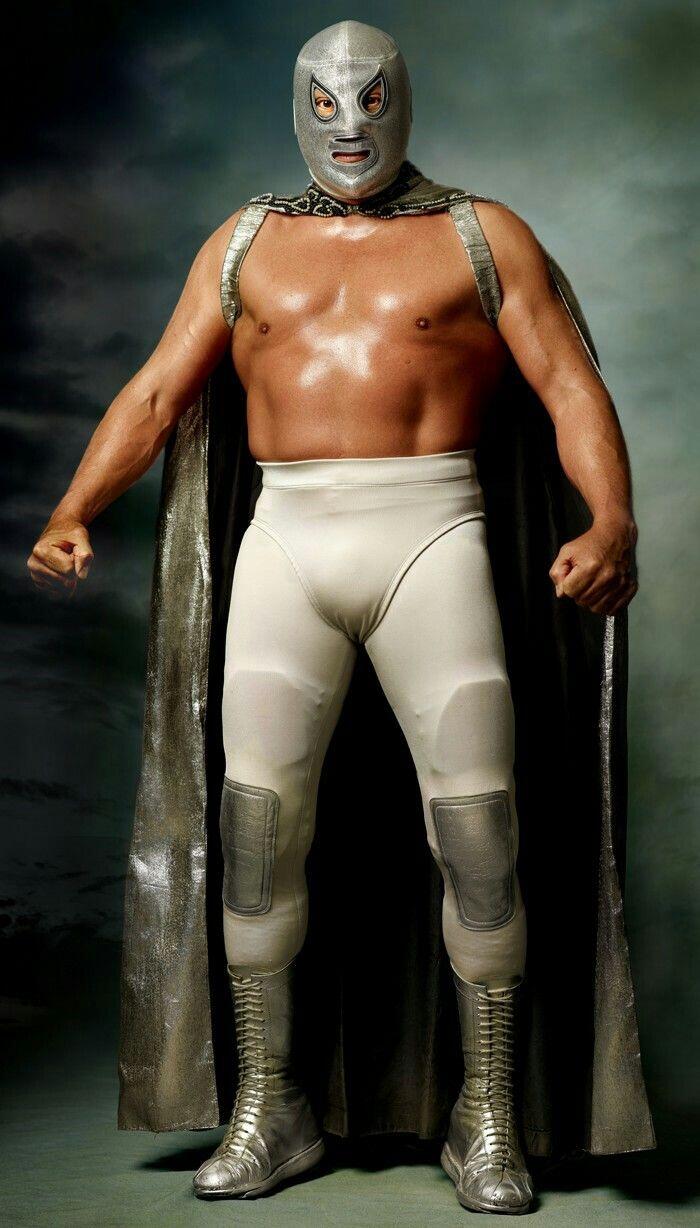
Active from 1934 to 1982, he wrestled for nearly five decades and became a genuine folk hero whose silver mask was as recognizable as the national flag. He starred in over 50 films, had his own comic book series, and was mobbed wherever he went in Mexico in a way that recalls Beatlemania in its intensity.
El Santo only removed his mask publicly once (on a television chat show in 1984) and was buried wearing it when he died a week later. His name appears on lists of the most famous Mexican athletes in every published ranking, usually above professional sportsmen with objectively more competitive achievements. He represents the unique intersection of sport, entertainment, and national mythology that lucha libre occupies in Mexican culture.
Blue Demon (Alejandro Muñoz Moreno)
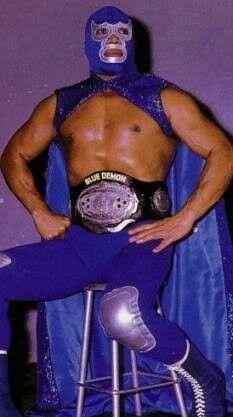
Blue Demon was El Santo's greatest rival and eventually his most famous tag team partner; a blue-masked luchador from Nuevo León whose career ran from 1942 to 1990.
He was El Santo's equal in terms of cultural reach, starring in his own series of films and developing a persona of calm technical elegance that contrasted with El Santo's more heroic, crowd-pleasing style. Together, Santo and Blue Demon remain the most iconic pairing in the history of lucha libre.
Blue Demon's influence on subsequent generations of luchadores (and on the visual language of wrestling globally, including WWE's masked performers) is direct and acknowledged. He is one of those famous Mexican athletes whose fame has only grown since his death, as lucha libre's international profile has expanded through streaming and documentary coverage.
The stories of these athletes are as compelling as anything in Mexico's greatest films; and several have been told through that medium directly.
⚾️ Baseball — Mexico's American Dream
Baseball has a deep tradition in the northern states of Mexico, and several Mexican players have built successful careers in Major League Baseball. None, however, comes close to the cultural and sporting impact of the man who made a nation fall in love with the Dodgers in the summer of 1981.
Fernando Valenzuela
Fernando Valenzuela from Etchohuaquila, Sonora, is the most beloved Mexican athlete in the history of US professional sport.
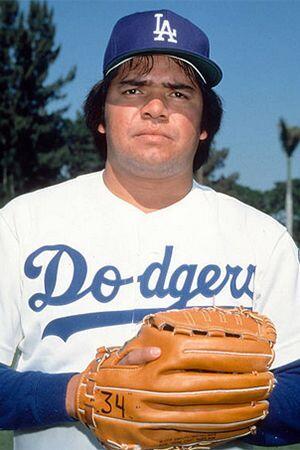
A left-handed pitcher who joined the Los Angeles Dodgers in 1981, he sparked "Fernandomania"; a cultural phenomenon that drew Mexican American fans to Dodger Stadium in unprecedented numbers and transformed the relationship between the city of Los Angeles and its Mexican community.
In 1981, he became the only player in MLB history to win the Cy Young Award and the Rookie of the Year Award in the same season.
Valenzuela's screwball was his signature pitch, and his delivery (weight shifting dramatically to one side, eyes looking skyward before releasing) was unmistakable. He was elected to the Baseball Hall of Fame in 2024, a moment that drew celebrations across Mexico and among Mexican American communities across the United States. His story is the clearest example of how sport can build cultural bridges between two countries, and he remains the defining Mexican athlete in team sport history.
Valenzuela's ability to unite two cultures through sport mirrors what Mexico's greatest musicians have done through sound. Mexico's must-listen bands carry that same cross-border energy into their music.
Summarize with AI:
Did you like this article? Leave a rating!

 Loading...