


Studying AP Statistics is more about having the right foundation. Make sure you know the difference between College Board guidance and your high school's enrollment rules. Here, we'll cover which requirements are official, local, or recommended so you can make a decision.
Key Takeaways
- College Board currently recommends completing first-year algebra before taking AP Statistics.
- Individual schools may set stricter prerequisites, including Algebra II, minimum grades, or teacher approval.
- Calculus, precalculus, and previous statistics courses are not College Board prerequisites for AP Statistics.
- Strong algebra, data interpretation, written reasoning, and calculator skills can make the course easier to manage.
College Board currently recommends that students complete a first-year algebra course before taking AP Statistics. Individual schools can set stricter enrollment rules, so some may still require Algebra II, a minimum grade, or teacher approval. The College Board does not require calculus and a previous statistics course.


What Are the Prerequisites for AP Statistics?
There are two answers here: College Board sets a recommended academic starting point, but your school chooses who can enroll. You may satisfy the official AP recommendation, but still need another course, grade, or approval.⁴ When in doubt, speak to your school.
| Area | Requirement | Why It Matters | Recommended Skill Level |
|---|---|---|---|
| First-year algebra | College Board recommended prerequisite | Provides the basic mathematical foundation for AP Statistics | Successfully completed |
| Algebra II | Not required by College Board; may be required by individual schools | Builds confidence with formulas, variables, graphs, and relationships | Helpful |
| Precalculus | Not required | Can improve general mathematical fluency | Optional |
| Calculus | Not required | AP Statistics is a non-calculus-based course | No prior knowledge needed |
| Previous statistics course | Not required | Statistics concepts are taught during the AP course | No prior knowledge needed |
| Graph and data interpretation | Recommended readiness skill | Students regularly analyze tables, graphs, distributions, and relationships | Comfortable |
| Written reasoning | Recommended readiness skill | Students must explain and justify statistical conclusions | Comfortable |
| Calculator and technology use | Helpful course skill | Statistical calculations and data analysis frequently use technology | Basic familiarity |
Be sure to check when any guidance was published and compare it with the current requirements at your school.⁶ Some older advice may mention Algebra II. The College Board framework has recently changed.
For the 2026–27 school year, the College Board removed its previous second-year algebra prerequisite for AP Statistics. The current recommended prerequisite is successful completion of a first-year algebra course, although schools may continue to use their own local requirements.⁶
The College Board requirements are likely the minimum. You'll see that some school districts may ask for Algebra 2 or Advanced Algebra 2 and recommend a grade of B+ or higher.⁷ Maybe they need Algebra II and recommend Precalculus or Mathematical Analysis.⁸ Basically, the College Board is the start, but your school ultimately calls the shots.

Official AP Statistics Course Expectations
The prerequisites can get you into the course, but they don't mean you're expected to know the content already. AP Statistics is equivalent to a one-semester introductory, non-calculus-based college statistics course and will look good if you're applying to the top schools for statistics.⁴ You'll have to learn how to use statistical methods to investigate questions and reach defensible conclusions rather than arriving with advanced mathematics already mastered.
units covering data, probability, inference, and relationships between variables.⁵
As you progress through your AP Statistics course, expect to go from describing data to probability, statistical inference, and relationships between variables. Different units may appear in a single question, and it'll be up to you to choose the method that's right for the problem. Confidence intervals and significance tests are taught during the course, not expected beforehand.⁵

AP Statistics is less about advanced calculation and more about understanding data.
Students learn to formulate questions, collect and analyze information, interpret distributions, and draw statistical conclusions from evidence.⁴
AP Statistics has a strong focus on explaining results. Students are expected to formulate questions, analyze evidence, and justify conclusions in context rather than only produce a numerical answer.⁵ After all, statistics is the process of asking questions, collecting data, analyzing it, and interpreting the results.²
of AP Statistics exam takers earned a score of 3 or higher.³
Don't let that number scare you. General student performance doesn't tell you whether the course will be easy or difficult for you personally and whether or not you'll find statistics difficult overall. Don't forget that colleges also set their own policies on the AP score required for credit or placement.³

Recommended Math Background Before AP Statistics
For AP Statistics, there's the math that constitutes the prerequisites, and then there's the math that'll help. The recommendation is first-year algebra, but additional experience with algebra can reduce the effort you spend on basic manipulation while learning new statistical ideas.⁶ Nobody's asking you to be the most advanced math student in your grade; you need to be well prepared.
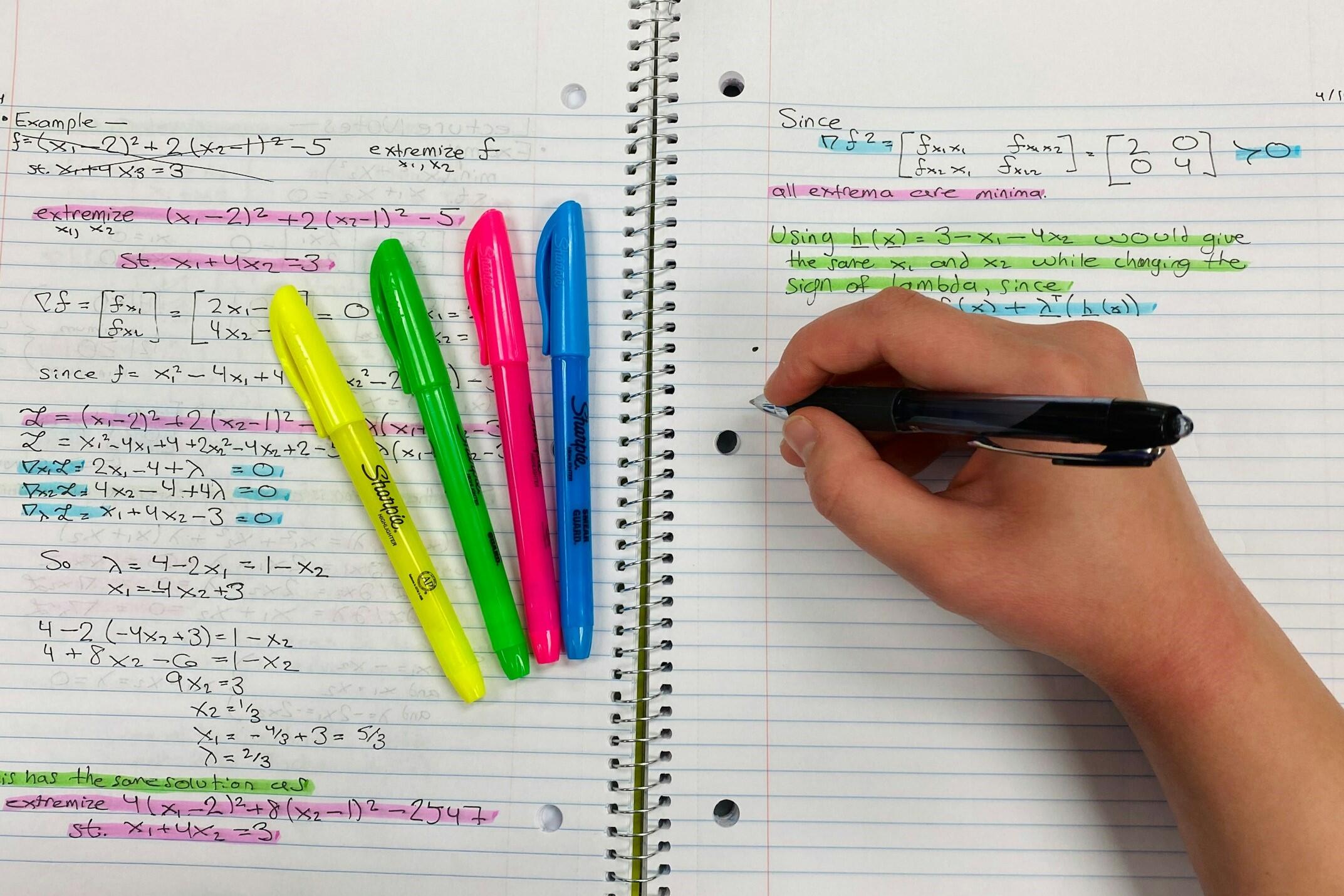
Strong algebra skills make it easier to work with formulas, percentages, variables, and relationships between quantities.
Algebra II can therefore be useful preparation even though it is no longer an official College Board prerequisite.⁶
You should be comfortable solving straightforward equations, working with fractions and percentages, reading graphs, and using formulas with several variables. You shouldn't need advanced algebra techniques, though these basic skills should help you work on a foundation where you can focus on the statistical question rather than getting stuck in the arithmetic. You should also understand linear relationships for when you get to correlation and regression. You should have the numerical confidence to recognize relationships, follow calculations, and understand what the numbers represent in a real dataset. AP Statistics could be thought of as preparation for statistics at college, while a college statistics degree could be thought of as preparation for a career using statistics.
AP Statistics is designed as an introductory, non-calculus-based college statistics course. Students do not need calculus or precalculus before enrolling. However, stronger algebra skills can make some parts of the course easier.⁴
While you're free to read and study the AP Statistics syllabus before you enroll, you don't have to. You'll be taught probability distributions, sampling distributions, confidence intervals, inference, and regression as part of the course.⁴ Don't panic if these terms are new to you; focus on strengthening algebra, interpreting graphs, and explaining what numerical information means.
Skills You Should Have Before Taking AP Statistics
Keeping up will be easier if you have the right habits. Not every useful skill is necessarily math-based, even if a mathematical foundation will help a lot. Other skills from other classes will help you in AP Statistics and in statistics classes after that.
If you need help before an AP Statistics class or even assistance while you study statistics coursework, look to Superprof private statistics tutors. You'll find them allover the country and around the world through online statistics turtoring. With most offering the first session, you can try a few out, compare the data, and choose the right one for you.
Interpret Graphs, Tables, and Data
You don't need to recognize every statistical graph before you begin. You should, however, be able to spot patterns, compare values, and notice anything unusual. The key is explaining what the visual information shows in the context of the question.
Explain Your Reasoning in Writing
AP Statistics requires students to think carefully and to construct effective arguments using appropriate evidence.¹
Daren Starnes, AP Statistics teacher and statistics textbook author.
Getting the right number isn't always enough in statistics. You also need to explain what your answer means and why the evidence supports it. Clear written reasoning is especially important when a question asks you to justify a conclusion.
Apply Algebra in Context
AP Statistics often puts familiar algebra into unfamiliar situations. You need to keep track of what each variable represents as you work through formulas and equations. That makes it easier to connect the calculation back to the real statistical problem.
Use a Graphing Calculator and Digital Tools
You don't need to know every statistical calculator function before starting the course. Basic confidence entering data, checking calculations, and learning new functions is enough. The more important skill is understanding what the calculator output actually means.
Read Multi-Step Problems Carefully
Statistics questions can contain several pieces of information at once. Read carefully, identify what is relevant, and work out what the question is really asking. Your final response should then connect directly back to the original situation.
References
- American Statistical Association. “Celebrating 20 Years of the AP Statistics Exam.” Amstat News, 1 Nov. 2017, https://magazine.amstat.org/blog/2017/11/01/ap-statistics-exam/. Accessed 2 Sept. 2026.
- American Statistical Association. Pre-K–12 Guidelines for Assessment and Instruction in Statistics Education II (GAISE II): A Framework for Statistics and Data Science Education. 2020, https://www.amstat.org/docs/default-source/amstat-documents/gaiseiiprek-12_full.pdf. Accessed 2 Sept. 2026.
- College Board. “2026 AP Score Distributions.” AP Students, https://apstudents.collegeboard.org/about-ap-scores/score-distributions. Accessed 2 Sept. 2026.
- College Board. “AP Statistics.” AP Students, https://apstudents.collegeboard.org/courses/ap-statistics. Accessed 2 Sept. 2026.
- College Board. AP Statistics Course and Exam Description, Effective Fall 2026. 2026, https://apcentral.collegeboard.org/media/pdf/ap-statistics-course-and-exam-description-effective-fall-2026.pdf. Accessed 2 Sept. 2026.
- College Board. “AP Statistics Revisions.” AP Central, https://apcentral.collegeboard.org/courses/ap-statistics/future-revisions. Accessed 2 Sept. 2026.
- Issaquah School District. “AP Statistics - MT605A/B.” 2026–2027 Course Catalog, https://www.isd411.org/2026-2027/course-catalog/course-description/~board/2026-27-hs/post/mt605-ap-statistics. Accessed 2 Sept. 2026.
- Virtual Virginia. “AP Statistics.” Virtual Virginia, https://virtualvirginia.org/course/ap-statistics/. Accessed 2 Sept. 2026.
Summarize with AI:
Did you like this article? Leave a rating!

 Loading...

