Key Resources for Solving the Proposed Exercises
To be able to solve the following exercises, it is necessary to have the following tools on hand:
- Unit circle
- Basic trigonometric identities
- Pythagorean trigonometric identities
- Even and odd trigonometric identities
- Double angle trigonometric identities
- Half angle trigonometric identities
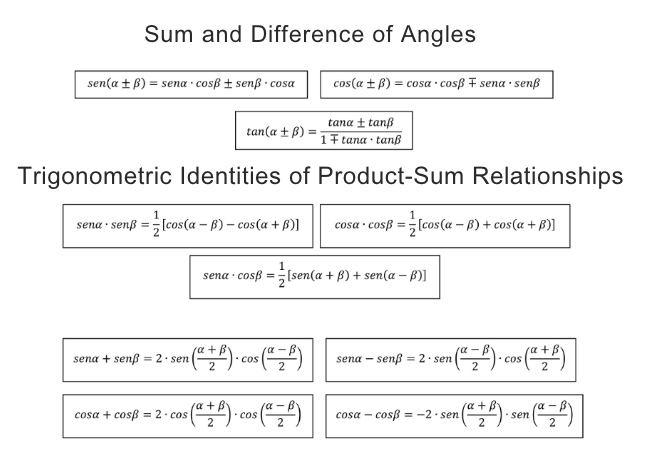
- Sum and difference of angles and product-sum relationships
Unit Circle
The table known as the unit circle contains the values of the most representative radii used in trigonometry. Besides, the name of this circle is due to the fact that it is a circle with radius 1.
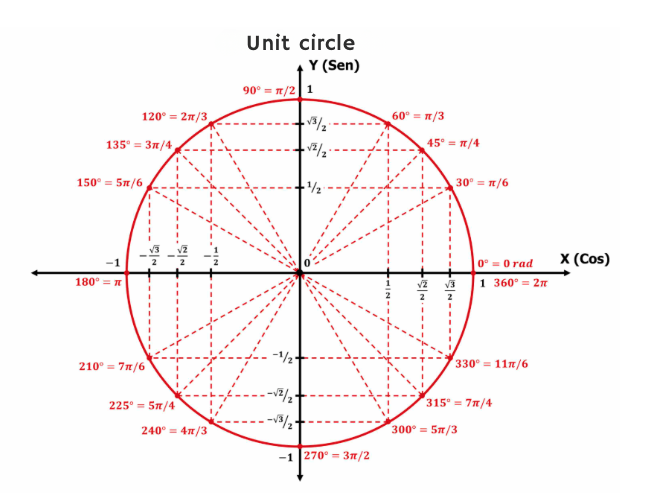
With this tool it will be very easy to locate the value of angles. For example, if we wanted to know the value of  , we simply need to position ourselves on the sine axis, that is, the y-axis, and then position ourselves at the value
  .
.
We will notice that the table indicates that the angle is  , which is the value in degrees, but there is also a value in radians, which is
  .
.
When we need to locate values for the tangent, let us recall that the tangent is a straight line that touches the circumference at a single point. In the case of this circumference, the tangent used is the one that touches the point at  , and the height of the tangent will depend on the value in the equation. For example, in the equation
  , we solve for the variable and obtain
  . Then we look for the tangent of height
  and draw a line to the origin. We will observe the point where it intersects the circumference and look for the value in the table.
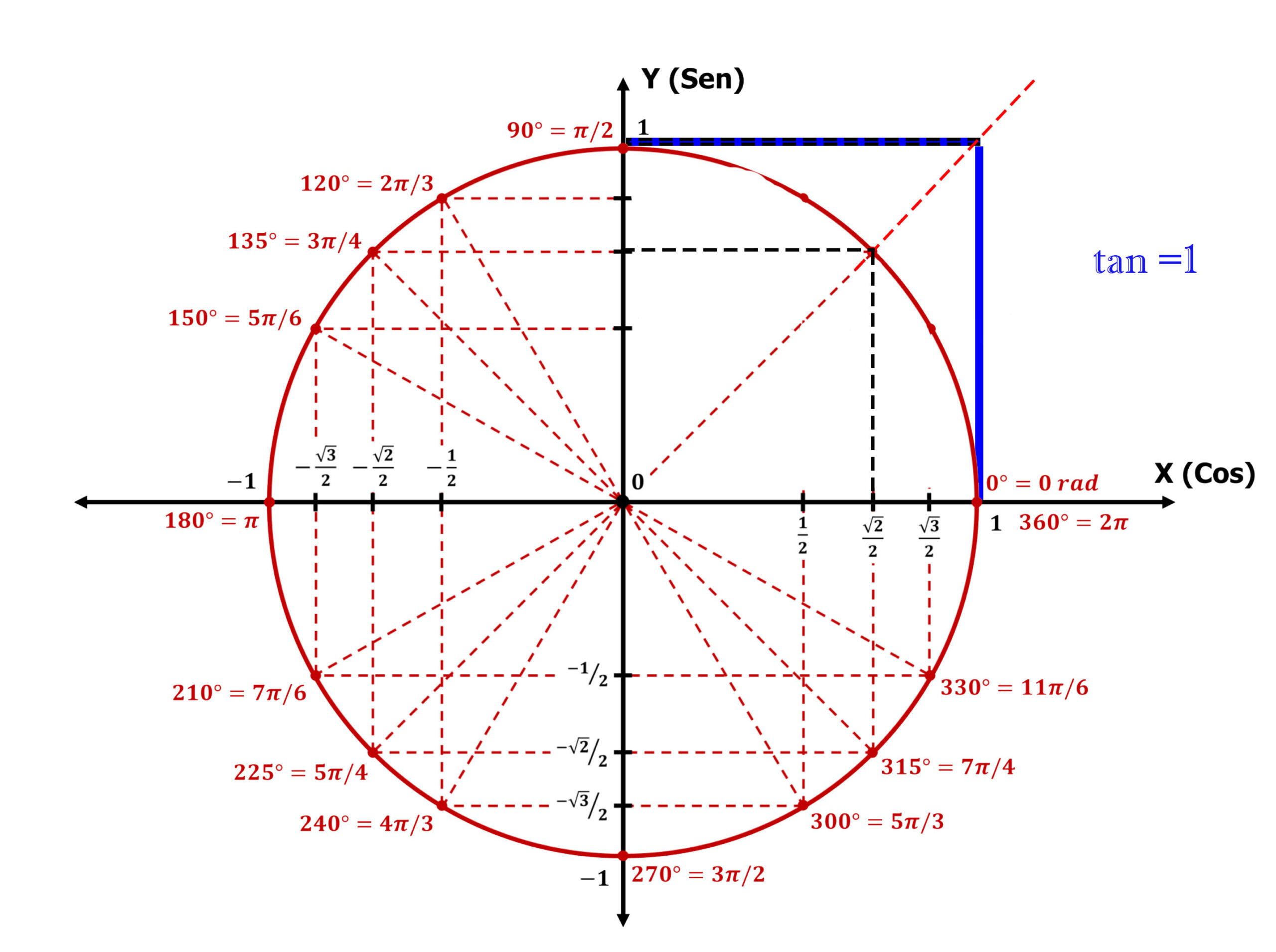
It corresponds to  .
.
It could also be said that it corresponds to 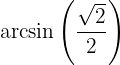 or
or 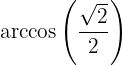 .
.
Looking for private mathematics classes? Find them on Superprof!
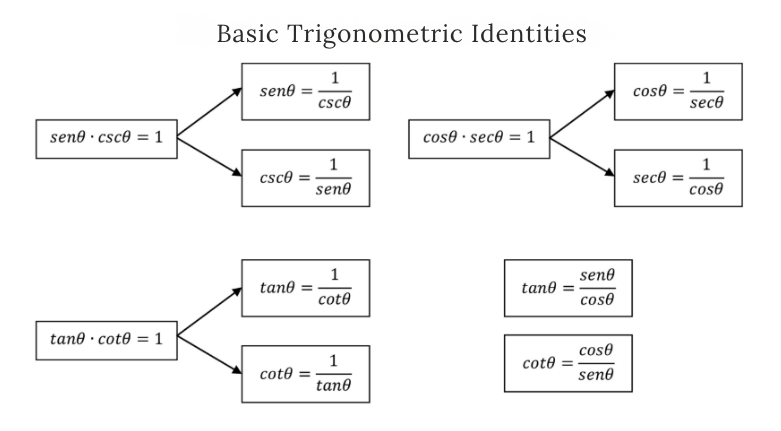
Basic Trigonometric Identities
Trigonometric identities are defined equalities that help us perform algebraic work without headaches.
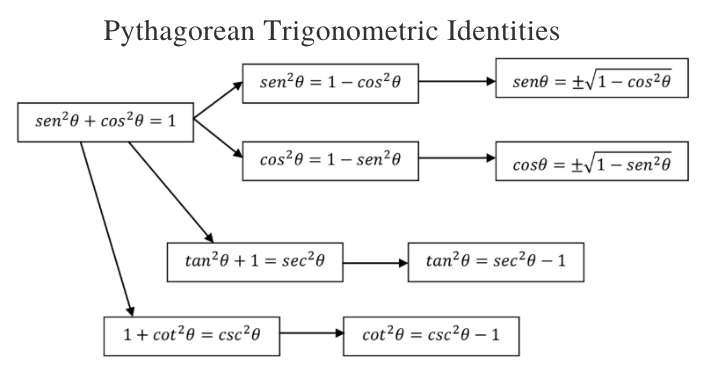
Pythagorean Trigonometric Identities
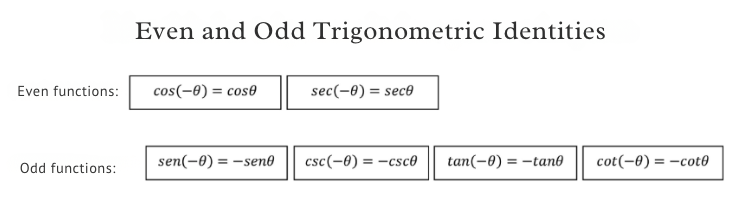
Even and Odd Trigonometric Identities
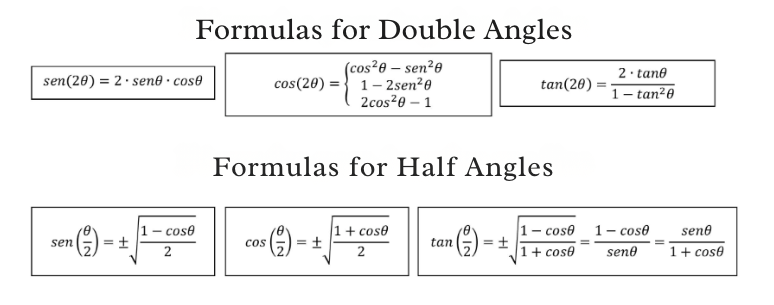
Double Angles and Half Angles
Sum and Difference of Angles and Product-Sum Relationships
Exercises on Trigonometric Equations
Solve by isolating the variable and locating values on the unit circle.
1 
2 
3 
4 
5
6 
7 
8
9
10
11
12
13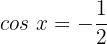
To solve the following trigonometric equations, it is necessary to remember the inverse function property:
 =x
=x
1 
We solve for the variable x, using the inverse property:

We locate in the table the value for  .
.
We position ourselves on the sine axis, that is, the y-axis. Now we locate the value  on the axis. Finally, we move to the points that cross the circumference and pass through . These values will be the result of the equation:


2
We solve for the variable x, using the inverse property:

We locate in the table the value for  .
.
We position ourselves on the cosine axis, that is, the x-axis. Now we locate the value on the axis. Finally, we move to the points that cross the circumference and pass through . These values will be the result of the equation:


3 
We solve for the variable x, using the inverse property:


In our table, visualizing a tangent line of zero height, obviously when we search for the value in the unit circle, we find that it corresponds to zero degrees. Therefore:
4
We solve for the variable x, using the inverse property:


We locate in the table the value for  .
.
We position ourselves on the sine axis, that is, the y-axis. Now we locate the value on the axis. Finally, we move to the points that cross the circumference and pass through . These values will be the result of the equation:

5
We solve for the variable x, using the inverse property:


We locate in the table the value for  .
.
We position ourselves on the cosine axis, that is, the x-axis. Now we locate the value on the axis. Finally, we move to the points that cross the circumference and pass through . These values will be the result of the equation:

6 
We solve for the variable x, using the inverse property:


This exercise was shown in the example at the beginning of the lesson where you can observe the graphical representation.
We visualize a tangent line of height , we draw a line from that height to the origin, and we observe the point of intersection with the circumference. We search for the value of that point in our unit circle and obtain the value of the equation:


7
We solve for the variable x, using the inverse property:


We locate in the table the value for  .
.
We position ourselves on the sine axis, that is, the y-axis. Now we locate the value on the axis. Finally, we move to the points that cross the circumference and pass through . These values will be the result of the equation:

8 
We solve for the variable x, using the inverse property:


We locate in the table the value for  .
.
We position ourselves on the cosine axis, that is, the x-axis. Now we locate the value on the axis. Finally, we move to the points that cross the circumference and pass through . These values will be the result of the equation:

9
We solve for the variable x, using the inverse property:


Positioning ourselves at the coordinate  , we visualize a tangent line of height . We draw a line from that height to the origin, and we observe the point of intersection with the circumference. We search for the value of that point in our unit circle and obtain the value of the equation:

10 
We solve for the variable x, using the inverse property:

We locate in the table the value for 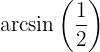 .
.
We position ourselves on the sine axis, that is, the y-axis. Now we locate the value  on the axis. Finally, we move to the points that cross the circumference and pass through . These values will be the result of the equation:

11 
We solve for the variable x, using the inverse property:

We locate in the table the value for 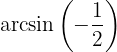 .
.
We position ourselves on the sine axis, that is, the y-axis. Now we locate the value  on the axis. Finally, we move to the points that cross the circumference and pass through . These values will be the result of the equation:

12 
We solve for the variable x, using the inverse property:

We locate in the table the value for 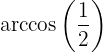 .
.
We position ourselves on the cosine axis, that is, the x-axis. Now we locate the value on the axis. Finally, we move to the points that cross the circumference and pass through . These values will be the result of the equation:

13 
We solve for the variable x, using the inverse property:

We locate in the table the value for 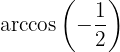 .
.
We position ourselves on the cosine axis, that is, the x-axis. Now we locate the value on the axis. Finally, we move to the points that cross the circumference and pass through . These values will be the result of the equation:

Solve Using Trigonometric Identities

To solve the equation, we look for the values of 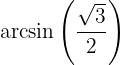 in the table:
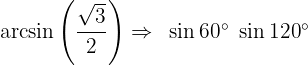
This gives us 2 possible cases. We substitute for the first case:

We solve for the variable:


We substitute for the second case:

We solve for the variable:



Using trigonometric identities, we will try to simplify this equation into simpler functions such as sine, cosine, or tangent.
Let us use the trigonometric identity 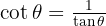 :
:

Now we will use the trigonometric identity 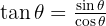 :
:
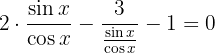
We simplify:

We will perform the subtraction of fractions using cross product to obtain:

We simplify:

We convert the unit into an equivalent fraction with the same denominator:
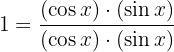
We substitute and simplify:


Now we multiply both sides of the equation by  :
:
On the left side we have:

When we simplify, we obtain:

On the right side we have  , which is clearly equal to zero.
Therefore:

We factor:

Now there are 2 cases:
First case: solving for the first term:


For this case, we divide both sides by  :
:
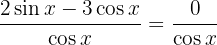
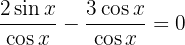
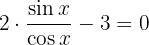
We use the identity 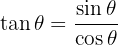 :
:

We solve for the variable:

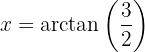

Second case: solving for the second term:


For this case, we divide both sides by :
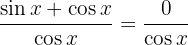
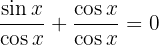
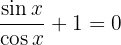
We use the identity :

We solve for the variable:

Now we search for the value in our unit circle as we have done previously:


We can clearly observe that the equation is of the form:

That is, a second-degree equation that can be solved using the general formula:
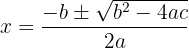
We substitute:

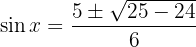
Case 1:
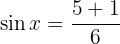

We solve for the variable:

We locate the value on the unit circle:

Case 2:
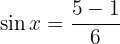


We solve for the variable:
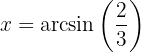
We locate the value on the unit circle:


We will use the following Pythagorean identity:

We substitute in our equation:


We combine like terms:

We solve for the variable:
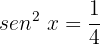
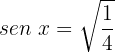
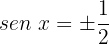


We will use the trigonometric identity for double angles:

Of the 3 options we have, we will use the first  :
:
We substitute in our equation:


Now we will use the following Pythagorean identity:
We substitute in our equation:

We equate the equation to zero and simplify like terms:


Now we will factor:

We observe that 2 cases are generated.
Case 1:


Case 2:

As we can observe in the unit circle, the values of the sine and cosine functions are in the interval [-1, 1], so does not exist, therefore this case has no solution.
No solution

In this case we will use the trigonometric identity for the sum of angles:

We substitute the values of our exercise into the trigonometric identity:

We simplify like terms:


For the equation to equal zero, it is clear that one of the 2 terms must equal zero:
Case 1: 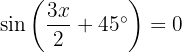
Case 2: 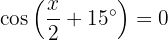
Solving Case 1:
We solve for the variable by applying the inverse function property:

Looking at the unit circle, we know that:

Solving the equation for  :
:
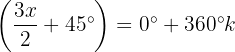
We solve for the variable:

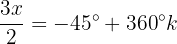

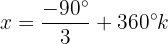

Solving the equation for  :
:
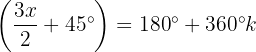
We solve for the variable:



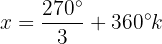

This means that if the variable x takes any of these 2 values, then the equation  will equal 0 and the equation is satisfied.
Solving Case 2:
We solve for the variable by applying the inverse function property:

Looking at the unit circle, we know that:

Solving the equation for  :
:

We solve for the variable:



Solving the equation for  :
:

We solve for the variable:

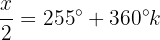


This means that if the variable x takes any of these 2 values, then the equation will equal 0 and the equation is satisfied.
In conclusion, the values that the variable x can take and that are solutions to the equation are:

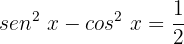
For this case, we will use a trigonometric identity for double angles:

First, we multiply our entire equation by -1:
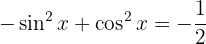
Now we order it so it looks more like our trigonometric identity:
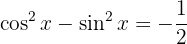
We use the identity, substituting the values of our equation:

To solve for the variable, we need to use the inverse function property:

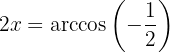
Searching in the unit circle, we find that:

Solving for  :
:

We solve for the variable:

Solving for  :
:

We solve for the variable:

The values that the variable x can take and that are solutions to the equation are:


We will use the trigonometric identity for the sum of cosines:

We substitute:


Our equation becomes:

We divide both sides of the equation by 2:

We divide both sides of the equation by cos(x):

We apply the inverse function property:


We solve for the variable:


The equation is satisfied when .

For this case, we will use the trigonometric identity found in the "Double Angle Trigonometric Identities" section:
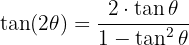
We will substitute with the values of our equation to get:
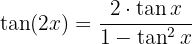
Then, our equation will be of the following form:
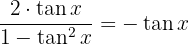
We equate the equation to zero:
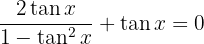
We perform the sum of fractions using cross product:

We eliminate the denominator by multiplying both sides of the equation by  :
:

We perform the indicated product:

We group like terms and add them:

We factor using  as a common factor:

Now we divide both sides of the equation by and get:

We multiply both sides of the equation by -1 and order to solve as a second-degree equation:


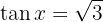
We apply the inverse function property:




First, we subtract  from both sides:


Now we square both sides:

We equate the equation to zero:

We solve the squares, using the binomial squared formula:


We use the Pythagorean trigonometric identity:

We substitute:

We simplify:


We simplify like terms:

We will perform a change of variable:
Let 
We substitute:

Observe that this is a second-degree equation that we can solve using the general formula:
We substitute:

We solve:

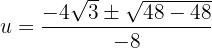
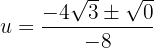
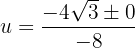
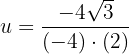

We undo the change of variable:
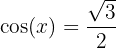
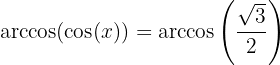
We apply the inverse function property:
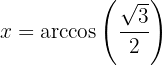
Now we only need to locate the value in our unit circle table:

The equation is satisfied when x takes any of these 2 values.

For this case, we will use the trigonometric identity for double angles:
We look in our unit circle for the value corresponding to  :
:
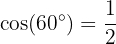
We substitute:
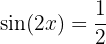
We apply the inverse function property:
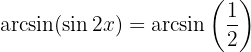
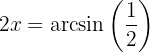
We locate the corresponding values in our unit circle:

Then:

We solve for the variable by dividing by 2:

The equation is satisfied when x takes any of these 2 values.

We will use the following trigonometric identity for double angles:

But before substituting, we will obtain a variant by dividing both sides of the identity by 2:
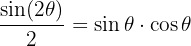
We substitute:

We simplify by performing the indicated division:

We divide both sides by 2:
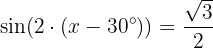
We apply the inverse function property:

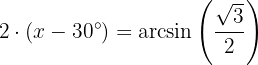
We locate the value for  in our unit circle:

We substitute for both cases:
Case 1:

We divide both sides by 2:

We solve for the variable by adding 30° to both sides of the equation:
Case 2:

We divide both sides by 2:

We solve for the variable by adding 30° to both sides of the equation:

The equation is satisfied when:


We will use the basic trigonometric identity:
We substitute:
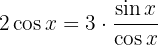
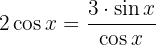
We eliminate the denominator by multiplying both sides of the equation by :

Now we will use the Pythagorean trigonometric identity:
We substitute:

We apply the distributive property:

We equate to zero and order:

We multiply the entire expression by -1:

We perform a change of variable, where:

We substitute:

We solve using the general formula for second-degree equations:

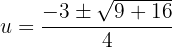
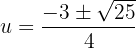
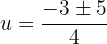
We undo the change of variable:
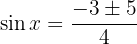
Case 1:
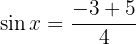


We apply the inverse function property:
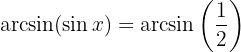
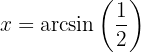
We locate the corresponding value in our unit circle:

Case 2:
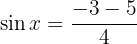
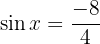

We apply the inverse function property:

As we know and can observe in our unit circle, the sine function is not defined for values greater than 1, nor for values less than -1. Therefore, this case has no solution.
The function is satisfied when:


We will use the following trigonometric identity for double angles:
We substitute:

Therefore:

We simplify:

We equate the equation to zero:

We factor:



We extract the common term  :
:

Now we will factor the part inside the bracket:

We will rewrite 3 as  :
:

We order so we can apply the difference of squares:


We apply the law of exponents  :
:

Now we can apply the difference of squares:

Recall that this is the result of the bracket part we had above. We will now substitute it into our equation since it is already factored:

It is clear that for the equation to be satisfied, it is enough that one of the brackets equals zero. Therefore we have 3 cases:
Case 1: When 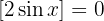
We divide both sides of the equation by 2:


We locate on the unit circle:

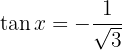
Case 2: When 
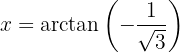
We divide both sides by  and use the basic trigonometric identity for tangent:

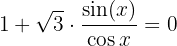

We solve for the variable:

Case 3: When 
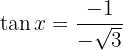
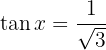
This case is quite similar to Case 2:

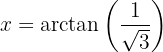

The equation is satisfied when x takes any of the following values:


We equate the equation to zero:

We apply a change of variable, where 
We substitute:

We use the following trigonometric identity for double angles:

We substitute our variable into the identity:

We substitute what we obtained into our equation:

We develop:

We add like terms and order:


We perform another change of variable, let 

We solve using the general formula for second-degree equations:

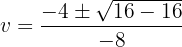
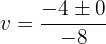


We undo the last change of variable:

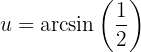
We locate the values in our unit circle and find that:

Now we undo the first change of variable:

We solve for the variable by multiplying by 2:

The equation is satisfied when x takes any of these 2 values.
If you're looking for an online math tutor, or simply specific math classes, Superprof can help you find the best tutor that fits your goals and needs.
Summarize with AI:
Did you like this article? Rate it!

 Loading...