L'Hôpital's rule is an important theorem in differential calculus used to evaluate indeterminate limits of functions. It was developed by the French mathematician Guillaume de L'Hôpital in the 18th century. This rule provides an effective method for calculating limits of the form  or
or  , which are indeterminate forms.
L'Hôpital's rule is a very useful tool for simplifying calculations and solving limits that would otherwise be difficult to compute. However, it is important to remember that it only applies in specific situations where the necessary conditions are met.


L'Hôpital's Rule
If and
and  are 2 continuous functions such that:

L'Hôpital's rule tells us that:
 .
.
To apply L'Hôpital's rule, you must have a limit of the form  , and have one of the following indeterminate forms:
 ,
,
Below are some solved exercises to help understand more clearly.
Solved Exercises Using L'Hôpital's Rule

1. Identify indeterminate form

2. Apply L'Hôpital's rule
We differentiate the numerator and denominator of the quotient. We take the limit.

3. Obtain the limit

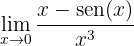
1. Identify indeterminate form

2. Apply L'Hôpital's rule
We differentiate the numerator and denominator of the quotient. We take the limit.

We obtain an indeterminate form again, so we will apply L'Hôpital's rule again.

Once more.

3. Obtain the limit

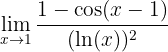
1. Identify indeterminate form

2. Apply L'Hôpital's rule
We differentiate the numerator and denominator of the quotient. We take the limit.

We apply the rule again.

3. Obtain the limit


1. Identify indeterminate form

2. Apply L'Hôpital's rule
We differentiate the numerator and denominator of the quotient. We take the limit.

We use the following property of trigonometric functions  , and we apply L'Hôpital's rule again.

3. Obtain the limit


1. Identify indeterminate form

2. Apply L'Hôpital's rule
We differentiate the numerator and denominator of the quotient. We take the limit.

3. Obtain the limit

Indeterminate Forms in Powers
The indeterminate forms  ,
,  and
and  are obtained when we consider expressions of the form:

These indeterminate forms are solved by first applying logarithm properties:
We have the function:

We apply logarithm:

We apply exponential:

Therefore

So to solve the initial limit, it is enough to obtain the limit of its logarithm:

And thus, the original limit will be:

Solved Exercises with Indeterminate Forms

1. Identify indeterminate form

2. We take the limit of the logarithm

We have an indeterminate form 
3. Apply L'Hôpital's rule

Indeterminate form
We apply L'Hôpital's rule again.

4. We obtain the limit
Therefore

And then


1. Identify indeterminate form

2. We take the limit of the logarithm

We have an indeterminate form 
3. Apply L'Hôpital's rule
When differentiating we obtain

Therefore

4. We obtain the original limit
Therefore

Thus


1. Identify indeterminate form

2. We take the limit of the logarithm

We have an indeterminate form 
3. Apply L'Hôpital's rule
When differentiating we obtain

Therefore

We apply L'Hôpital's rule again.

4. We obtain the original limit
Therefore

Thus


1. Identify indeterminate form

2. We take the limit of the logarithm

We have an indeterminate form
3. Apply L'Hôpital's rule
When differentiating we obtain

Therefore

4. We obtain the original limit
Therefore

Thus


1. Identify indeterminate form

2. We take the limit of the logarithm

We have an indeterminate form
3. Apply L'Hôpital's rule
When differentiating we obtain

4. We obtain the original limit
Therefore

Thus

Solved Exercises for the Infinity Minus Infinity Indeterminate Form
In these cases we need to see how "fast" the functions go to infinity. Additionally, if they are fractions, they are put over a common denominator.

1. Identify indeterminate form

2. We rewrite the expression

3. Apply L'Hôpital's rule
When differentiating we obtain

I obtain another indeterminate form, so I apply the rule again.

4. We obtain the limit
Therefore


1. Identify indeterminate form

2. We rewrite the expression

3. Apply L'Hôpital's rule
When differentiating we obtain

We obtain another indeterminate form, so I apply the rule again.

4. We obtain the limit
Therefore


1. Identify indeterminate form

2. We rewrite the expression

3. Apply L'Hôpital's rule
When differentiating we obtain

We obtain another indeterminate form, so I apply the rule again.

4. We obtain the limit
Therefore


1. Identify indeterminate form

2. We rewrite the expression

3. Apply L'Hôpital's rule
When differentiating we obtain

I obtain another indeterminate form, so I apply the rule again.

4. We obtain the limit
Therefore


1. Identify indeterminate form

2. We rewrite the expression

3. Apply L'Hôpital's rule
When differentiating we obtain

4. We obtain the limit
Therefore

Zero Times Infinity Indeterminate Form
These indeterminate forms can be transformed into cases we have already seen, such as or .
As shown below, we have:

where  y
y 
Then we can rewrite it in such a way that it is easier to take the derivative:

or

Having this, we can now use L'Hôpital's rule.
Solved Exercises for the Zero Times Infinity Indeterminate Form

1. Identify indeterminate form

2. We rewrite the expression

Indeterminate form of type
3. Apply L'Hôpital's rule
When differentiating we obtain

4. We obtain the limit
Therefore


1. Identify indeterminate form

2. We rewrite the expression

Indeterminate form of type
3. Apply L'Hôpital's rule
When differentiating we obtain

We apply L'Hôpital's rule again.

4. We obtain the limit
Therefore


1. Identify indeterminate form

2. We rewrite the expression

Indeterminate form of type
3. Apply L'Hôpital's rule
When differentiating we obtain

We apply L'Hôpital's rule again.

4. We obtain the limit
Therefore


1. Identify indeterminate form
2. We rewrite the expression

We express the same thing in a convenient way to be able to apply L'Hôpital's rule.

3. Apply L'Hôpital's rule
When differentiating we obtain

4. We obtain the limit
Therefore


1. Identify indeterminate form

2. We rewrite the expression

Indeterminate form of type
3. Apply L'Hôpital's rule
When differentiating we obtain

4. We obtain the limit
Therefore

Various Exercises on Indeterminate Forms and L'Hôpital's Rule

1. Identify indeterminate form

2. Apply L'Hôpital's rule
When differentiating we obtain

3. We obtain the limit
Therefore


1. Identify indeterminate form

2. Apply L'Hôpital's rule
We differentiate the numerator and denominator of the quotient. We take the limit.

3. We obtain the limit


1. Identify indeterminate form

2. Apply L'Hôpital's rule
We differentiate the numerator and denominator of the quotient. We take the limit.

3. We obtain the limit


1. Identify indeterminate form

2. Problem reformulation
Only by expressing it differently can we find the conditions to apply L'Hôpital's rule.

3. Apply L'Hôpital's rule
We differentiate the numerator and denominator of the quotient. We take the limit.

4. Obtain the limit


1. Identify indeterminate form

2. We calculate the limit of the logarithm

We have an indeterminate form
3. Apply L'Hôpital's rule
We differentiate the numerator and denominator of the quotient. We take the limit.

4. Obtain the limit


1. Identify indeterminate form

2. We calculate the limit of the logarithm
We have an indeterminate form
3. Apply L'Hôpital's rule
We differentiate the numerator and denominator of the quotient. We take the limit.

We apply L'Hôpital's rule again.

4. We obtain the limit


1. Identify indeterminate form

2. Apply L'Hôpital's rule
We differentiate the numerator and denominator of the quotient. We take the limit.

We apply L'Hôpital's rule again.

3. We obtain the limit


1. Identify indeterminate form

2. We rewrite the expression

Indetermination
3. Apply L'Hôpital's rule

We apply L'Hôpital's rule again.

4. Obtain the limit


1. Identify indeterminate form

2. We take the limit of the logarithm

We take an indeterminate form
3. Apply L'Hôpital's rule

4. We obtain the original limit


1. Identify indeterminate form

2. We take the limit of the logarithm

We rewrite it conveniently.

We have an indeterminate form
3. Apply L'Hôpital's rule

We apply L'Hôpital's rule again.

4. We obtain the original limit

Summarize with AI:
Did you like this article? Rate it!

 Loading...