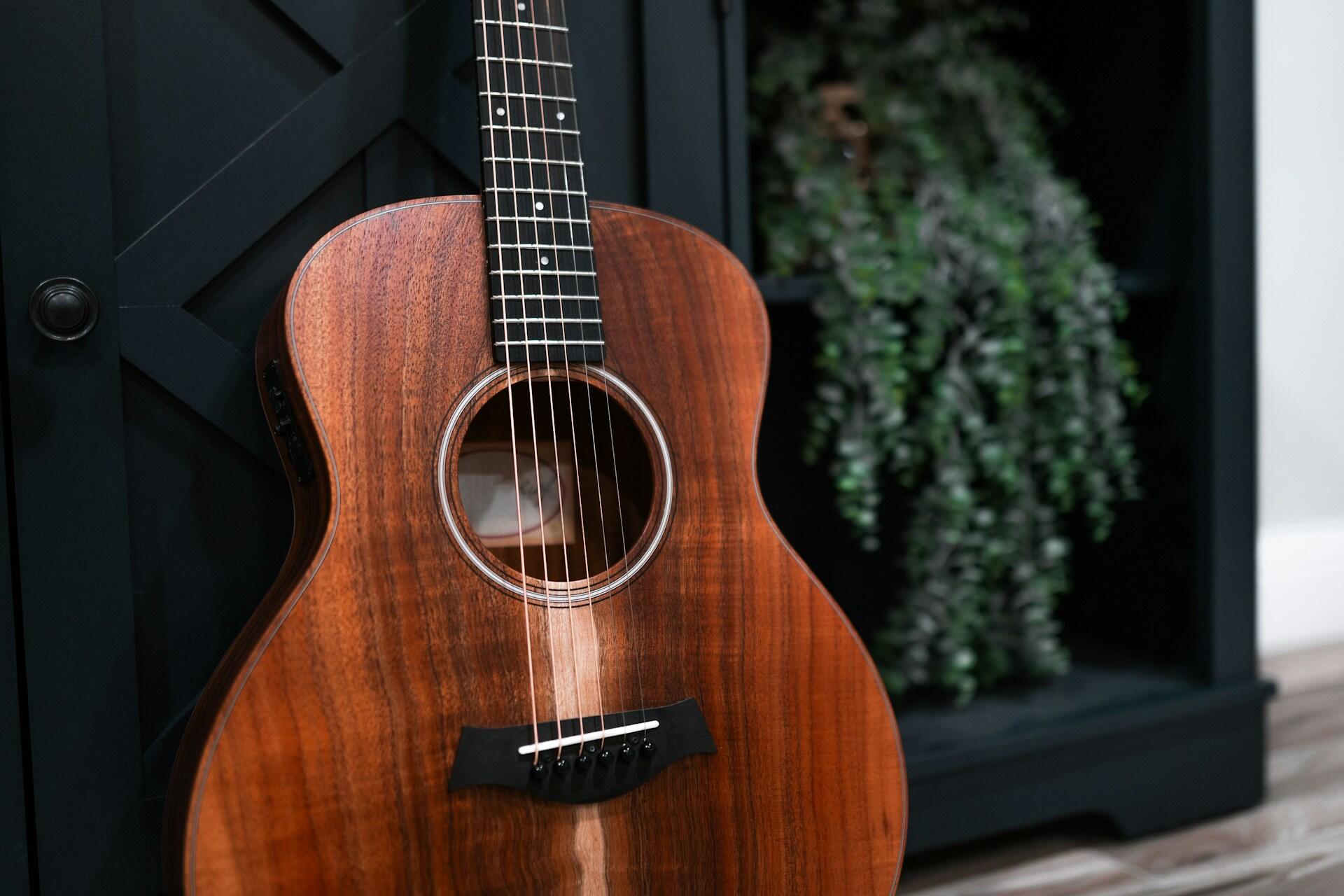
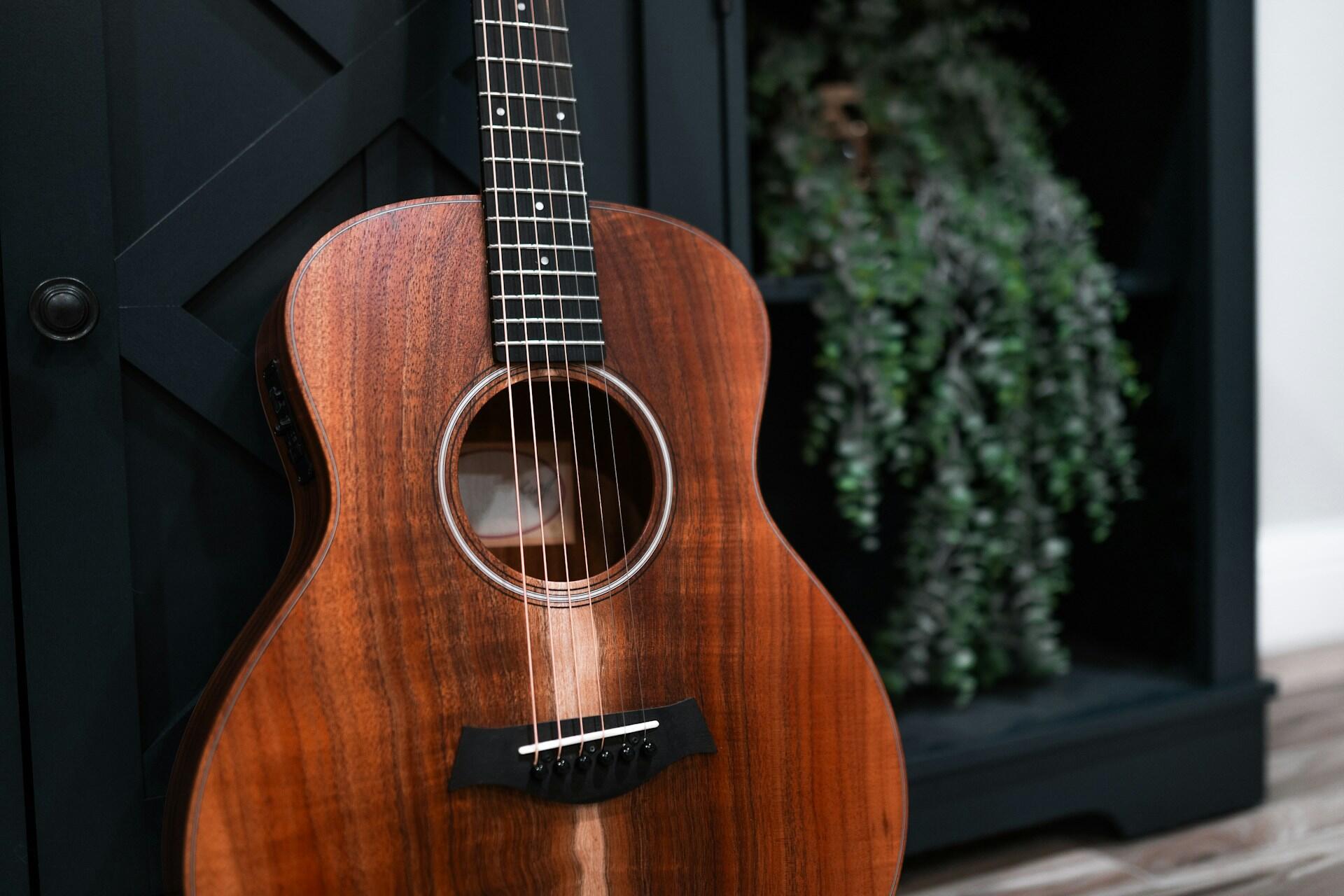
The easiest guitar chords are open chords, played near the nut with open strings ringing. E minor is the simplest of all: two fingers, and you strum all six strings. E, A, Am, D, Dm, G, and C complete the core set of open chords.
Below are 12 beginner shapes, plus the order to learn them, starter progressions, and a daily routine.
Fingers you need for E minor
2the fewest of any full open chord, with all six strings played





How Do You Read a Chord Diagram?
A chord diagram is a map of the neck. Vertical lines are strings, with the low E on the left, and horizontal lines are frets. An X above a string means you leave it out, and an O means you play it open.
The number in each dot is a finger: 1 for index, 2 middle, 3 ring, and 4 pinky. The chart below shows the chords in this guide.
beenhereStick to one shape per chordEach chord can be played in several places on the neck. Learn these easiest versions first, and add others later.
Which Easy Chords Should You Learn First?
Start with E minor and E major. Neither needs a muted string, so you can strum freely. Next, add A, Am, and D, which sit close together on the 2nd fret.
G and C come last, because they stretch across three frets. G, C, D, and Em are the I, IV, V, and vi chords of G major, so together they cover a whole key.
How Do You Play the Five Open Major Chords?
Major chords sound bright and settled, and each one below uses three fingers.
G Major Chord
G major contains G, B, and D. Keep your thumb behind the neck for reach.

- 1st finger: 5th string, 2nd fret
- 2nd finger: 6th string, 3rd fret
- 3rd finger: 1st string, 3rd fret
- Play strings 2, 3, and 4 open
C Major Chord
C major is built from C, E, and G. Its fingers climb diagonally from the 1st to the 3rd fret.

- 1st finger: 2nd string, 1st fret
- 2nd finger: 4th string, 2nd fret
- 3rd finger: 5th string, 3rd fret
- Play strings 1 and 3 open, and mute string 6
A Major Chord
A major spells A, C♯, and E. Three fingers share the 2nd fret, so angle them to fit.

- 1st finger: 4th string, 2nd fret
- 2nd finger: 3rd string, 2nd fret
- 3rd finger: 2nd string, 2nd fret
- Play strings 1 and 5 open, and mute string 6
E Major Chord
E major holds E, G♯, and B. There are no strings to mute.

- 1st finger: 3rd string, 1st fret
- 2nd finger: 5th string, 2nd fret
- 3rd finger: 4th string, 2nd fret
- Play strings 1, 2, and 6 open
D Major Chord
D major uses D, F♯, and A on the top four strings only. Start your strum on the open 4th string.
- 1st finger: 3rd string, 2nd fret
- 2nd finger: 1st string, 2nd fret
- 3rd finger: 2nd string, 3rd fret
- Play string 4 open, and mute strings 5 and 6
What Are the Easiest Power Chords?
A power chord, written with a 5, contains only a root and a fifth. With no third, it is neither major nor minor, and it suits rock riffs.
D5 Power Chord
D5 sits around the 5th fret and plays D, A, and a higher D. Aim your strum at the middle three strings only.

- 1st finger: 5th string, 5th fret
- 3rd finger: 4th string, 7th fret
- 4th finger: 3rd string, 7th fret
- Mute strings 1, 2, and 6
A5 Power Chord
A5 is the same shape moved to the low E string. It plays A, E, and a higher A.

- 1st finger: 6th string, 5th fret
- 3rd finger: 5th string, 7th fret
- 4th finger: 4th string, 7th fret
- Mute strings 1, 2, and 3
E5 Power Chord
E5 needs just two fingers back near the nut. It plays E, B, and a higher E.

- 1st finger: 5th string, 2nd fret
- 2nd finger: 4th string, 2nd fret
- Play string 6 open, and mute strings 1, 2, and 3
How Do You Play the Open Minor Chords and G7?
Minor chords lower the third by one fret, which gives them a darker sound.
E Minor Chord
Keep your E5 fingers where they are and strum all six strings. That’s E minor: E, G, and B.

- 1st finger: 5th string, 2nd fret
- 2nd finger: 4th string, 2nd fret
- Play strings 1, 2, 3, and 6 open
A Minor Chord
A minor, built from A, C, and E, looks like E major moved over by one string. It shares two finger spots with C major.

- 1st finger: 2nd string, 1st fret
- 2nd finger: 4th string, 2nd fret
- 3rd finger: 3rd string, 2nd fret
- Play strings 1 and 5 open, and mute string 6
D Minor Chord
D minor spells D, F, and A. Like D major, it uses only the top four strings.
- 1st finger: 1st string, 1st fret
- 2nd finger: 3rd string, 2nd fret
- 3rd finger: 2nd string, 3rd fret
- Play string 4 open, and mute strings 5 and 6
G7 Chord
G7 adds F to a G major chord, which creates a pull back toward C. Only one note differs from G: the high E string drops from the 3rd fret to the 1st.

- 1st finger: 1st string, 1st fret
- 2nd finger: 5th string, 2nd fret
- 3rd finger: 6th string, 3rd fret
- Play strings 2, 3, and 4 open
Which Easy Progressions Should You Practice?
These four progressions use only the shapes above, and each stays in one key.
- G – C – D: the I, IV, and V chords of G major
- Em – C – G – D: a rotation of the pop “best-seller” progression, heard in Adele’s “Hello”
- A – D – E: the I, IV, and V chords of A major
- C – Am – Dm – G7: four chords from C major, with G7 leading home to C
Strum each chord four times, then change. If a change is slow, strum once per chord until your hand catches up.
How Does a Capo Help Beginners?
A capo clamps across all six strings at a single fret. Every fret you move it raises the pitch by a half step. Your chord shapes stay the same, but the key changes.
Say you know a song in G, but a singer needs it in A. Clamp the capo at the 2nd fret and play your G shapes: the song now sounds in A.
What Does a Good Daily Practice Routine Look Like?
Short, regular sessions beat long, occasional ones. Martin Guitar recommends practicing often for short periods, and 15 minutes a day is a good start.
- Minutes 1–3: tune up and check one new shape string by string
- Minutes 4–8: switch between two chords, such as Em and Am
- Minutes 9–13: strum a progression slowly with a metronome
- Minutes 14–15: play along with a favorite song
beenherePractice tip: move all your fingers at onceLearn the thing properly, start out slowly. Use a metronome. I absolutely come back to this - it’s the best way to do it that I know, to get this thing right.
Tommy Emmanuel, fingerstyle guitarist, in MusicRadar
Hover your fingers above the next shape, then land them together rather than one by one. Start slowly, and speed up only once each change sounds clean.
What Are the Most Common Beginner Mistakes?
Most buzzing or dead strings come from a few small habits, and each has a quick fix.
- Flat fingers: curl them and press with your fingertips so you don’t touch neighboring strings
- Fretting in the wrong spot: press just behind the fret wire, not on it or in the middle of the fret
- Squeezing too hard: too much pressure pulls a note sharp, so use only enough to make it ring
- Strumming muted strings: start your strum on the right string for C, A, D, and Dm
Sources
- "Teach Guitar Chords," Bob Habersat, Yamaha Music, 2024. Available at: https://hub.yamaha.com/music-educators/instruments/guitars-education/teach-guitar-chords/. Accessed 28 Sept. 2026.
- "Section 6.1 Introduction to Triads," Robert Hutchinson, Music Theory for the 21st-Century Classroom, University of Puget Sound. Available at: https://musictheory.pugetsound.edu/mt21c/TriadsIntroduction.html. Accessed 28 Sept. 2026.
- "Section 6.2 Lead-Sheet Symbols," Robert Hutchinson, Music Theory for the 21st-Century Classroom, University of Puget Sound. Available at: https://musictheory.pugetsound.edu/mt21c/LeadSheetSymbols.html. Accessed 28 Sept. 2026.
- "Section 8.1 Introduction to Seventh Chords," Robert Hutchinson, Music Theory for the 21st-Century Classroom, University of Puget Sound. Available at: https://musictheory.pugetsound.edu/mt21c/SeventhChordsIntroduction.html. Accessed 28 Sept. 2026.
- "Section 7.2 Diatonic Chords in Major," Robert Hutchinson, Music Theory for the 21st-Century Classroom, University of Puget Sound. Available at: https://musictheory.pugetsound.edu/mt21c/DiatonicChordsInMajor.html. Accessed 28 Sept. 2026.
- "Section 9.7 The Best-Seller Progression," Robert Hutchinson, Music Theory for the 21st-Century Classroom, University of Puget Sound. Available at: https://musictheory.pugetsound.edu/mt21c/BestsellerProgression.html. Accessed 28 Sept. 2026.
- "Why Omitting the 5th in Guitar Chords Is a Good Idea," Richard Barrett, Guitar World, 2021. Available at: https://www.guitarworld.com/lessons/omitting-5th-in-chords. Accessed 28 Sept. 2026.
- "How to Use a Capo on a Guitar," D’Addario, 2026. Available at: https://www.daddario.com/the-lesson-room/guitar/acoustic-guitar/shop/how-to-use-a-capo/. Accessed 28 Sept. 2026.
- "8 Basic Guitar Chords You Must Know," D’Addario, 2026. Available at: https://www.daddario.com/blogs/guitar/recap-of-chords-we-know. Accessed 28 Sept. 2026.
- "Acoustic Guitar Playing Guide," Martin Guitar, 2023. Available at: https://www.martinguitar.com/blog-categories/tips-tutorials/blog-032723-acoustic-guitar-playing-guide.html. Accessed 28 Sept. 2026.
- "Tommy Emmanuel’s 8 Tips for Guitarists," David Mead, MusicRadar, 2016. Available at: https://www.musicradar.com/news/guitars/tommy-emmanuels-8-tips-for-guitarists-632783. Accessed 28 Sept. 2026.
Summarize with AI:
Did you like this article? Leave a rating!

 Loading...