

The new ACT math section, introduced in 2025, poses fewer questions than the legacy test. This gives students more time to complete each question. It’s designed to test math topics that students usually learn up to the beginning of 12th grade. The math section is one of the three core tests students must complete.


Structure and Timing of the ACT Math Section
Like most of the other sections in the ACT (aside from the writing portion), the math ACT is made entirely of multiple-choice questions.
Students must complete 45 questions within a 50-minute time restriction.
41 of the questions are scored, and 4 are field-test items, which are unscored. However, the status of the questions is not indicated, so you must assume each question is scored.
There are a few notable changes to be aware of in the legacy ACT math format versus the enhanced ACT math format:
| Legacy (Old) Test | Enhanced (New) Test as of 2025 | |
|---|---|---|
| Total Questions | 60 | 45 |
| Total Time Allotted | 60 minutes | 50 minutes |
| Avg. Time Allowed Per Question | 1 minute | 67 seconds |
| Multiple-Choice Options | 5 | 4 |
What this means for students taking the test is that there is now more time available per question, and guessing yields a higher chance of success. There are also fewer word problems than in the previous version.
The math ACT is 50 minutes long and consists of 45 questions.
Content Breakdown of the Section
There are two main reporting categories in the math ACT:
Preparing for Higher Math
Making up roughly 80% of the entire score, there are five subcategories: number & quantity, algebra, functions, geometry, and statistics & probability. These questions cover the more advanced math that students learn in high school.
Integrating Essential Skills
Constituting the remaining 20% of the test, these higher-thinking questions ask students to combine knowledge to complete specific tasks. They require a comprehensive understanding of various mathematical processes, when to use them in real-life applications, and why.
Additionally, the modeling classification is integrated into the other two main reporting categories, typically accounting for about 20% of all questions. These question types involve working with mathematical models, such as equations that explain a real-world statement (similar to word problems).
Find out more about the optional science ACT section.
Preparing for Higher Math
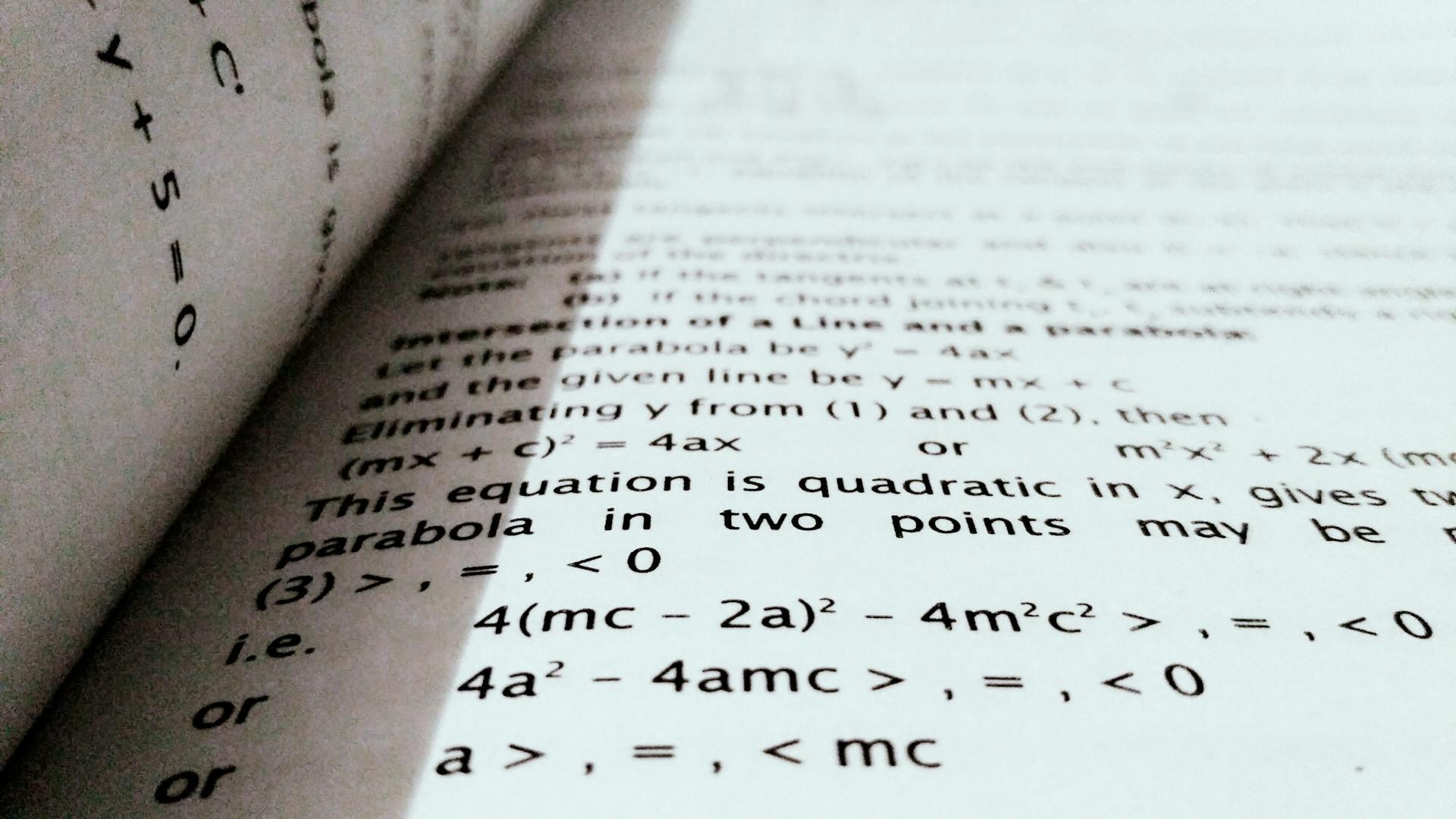
The questions in this category can vary widely, since they cover a range of topics. Generally, students need to have a firm grasp on the types of math taught in high school. While studying for the math ACT, be sure to brush up on the various skills present in each domain.
- Number & Quantity: Real and complex number systems, properties of integers, rational numbers, exponents, vectors, matrices.
- Algebra: Algebraic equations in solving, graphing, and modeling. Linear equations, inequalities, systems of equations, quadratics, polynomials, exponents, variables.
- Functions: Function notation, interpreting and manipulating different types of functions (linear, quadratic, exponential, radical, logarithmic, etc), analyzing function graphs.
- Geometry: Congruence, similarity, Pythagorean theorem, properties of circles and polygons, area and volume, 3D solids, trigonometry (sine, cosine, tangent).
- Statistics & Probability: Data analysis, probability, statistics, interpreting data sets, mean, median, and analyzing relationships in bivariate data.
It’s a thorough category that may require a fair amount of prep and study beforehand to be fully ready for. Although all the information needed to answer the problem is provided in each prompt, a fundamental understanding of when and how to apply relevant mathematical concepts is expected.
Learn how to prepare for the English ACT test.
Integrating Essential Skills
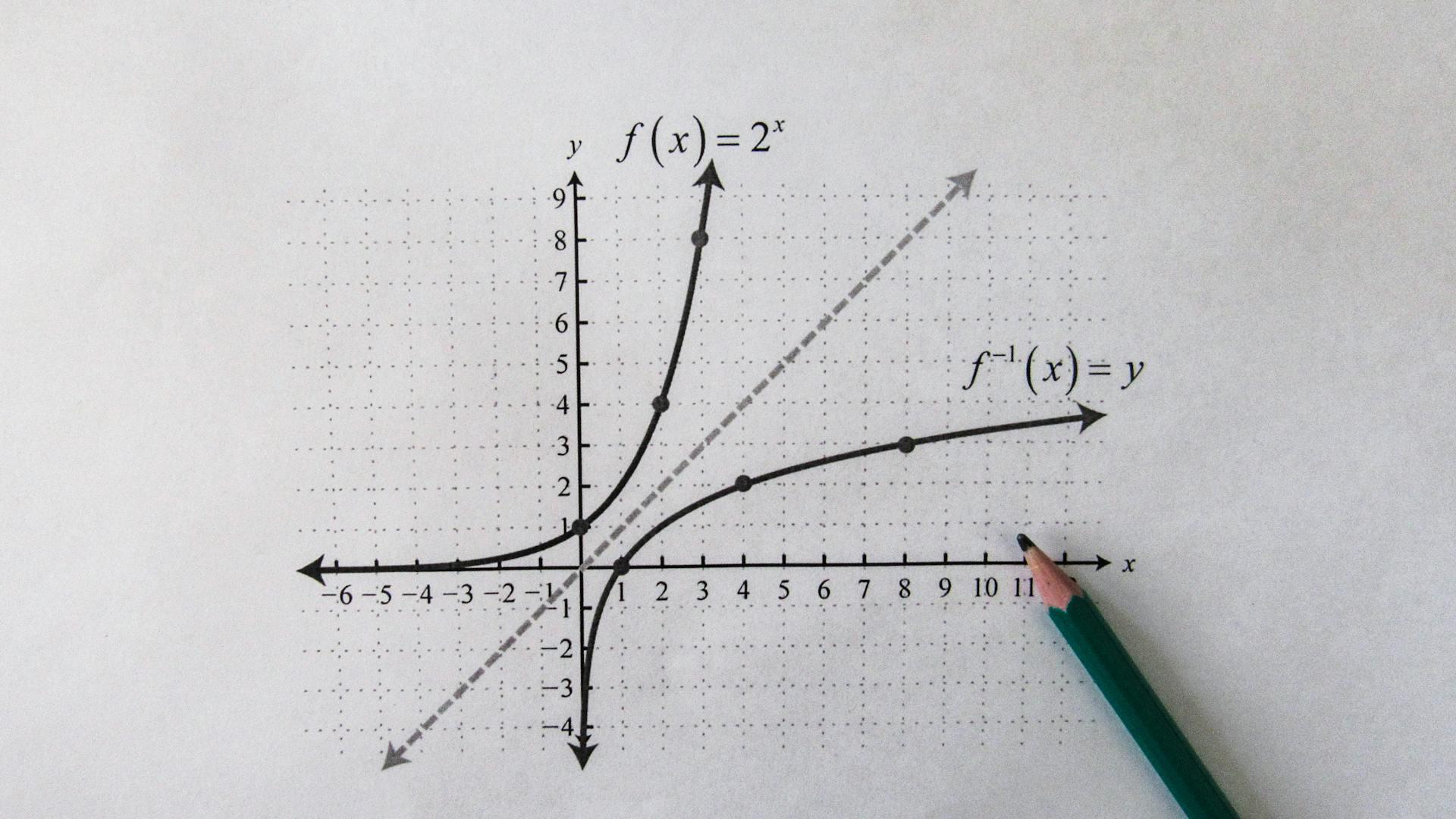
Going beyond just knowing math, this category challenges students to determine which strategies to use for solving multi-step problems. Students must often calculate rates, percentages, proportions, area, surface area, volume, medians, etc., in combination to reach the conclusion the question poses.
In simple terms, it’s drawing on your math knowledge and applying it to complex situations to reach an answer that takes more than one step to find.
The solutions to many questions will involve several steps. Make sure your answer accounts for all the necessary steps. Frequently, an answer choice is an intermediate result, not the final answer.
ACT.org
Sample ACT Math Questions
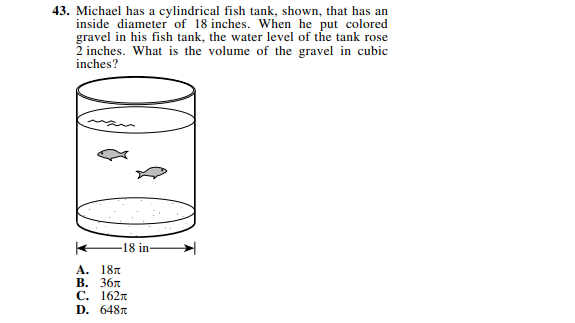
There are many different types of questions on the ACT. Taking full practice tests that offer explanations about why an answer to a problem is right or wrong is most helpful. Here's a taste of the types of prompts you can expect on your exam.
Calculator Policy
Like the SAT, the math ACT is the only section that allows calculators, though all problems can be solved without one. They can help check your math, but being able to solve equations without help from the calculator is a crucial skill. Relying too much on the calculator on test day can cost you valuable time.
Be sure to check the ACT calculator policy before test day to be sure your calculator is allowed. If you’re taking an online test, there will be a calculator provided in the test program.
In general, students can bring simple calculators that do not store any equations or perform any functions automatically (meaning scientific calculators are not allowed). You cannot use your phone’s calculator.
No. Some standardized tests provide formula sheets for students, but the ACT does not. You must memorize them and know which ones to use at which time. You will only need to use common formulas on the test (like the quadratic formula, area, volume, etc.).
Strategies to Master the ACT Math Section
The math ACT can be particularly challenging because, unlike the other ACT sections, students need to bring a lot of specific knowledge to the test. If you’re a math-minded student, this is not such a big hurdle. But, since math is typically the most difficult subject for the majority of students, it’s a major obstacle for many.
Relying on reasoning alone will only get you so far in the math section; you simply must memorize certain formulae and have a pre-existing strong understanding of the math topics listed above.
Find out how to earn a high score on the writing ACT test.
Use Official Materials for ACT Math Section Practice
Make sure you prep and study with official materials so you understand the types of prompts that appear on the test, as well as the way questions are worded. Get familiar with the type of wording in questions that indicate what, specifically, you need to pay attention to. Disregard any irrelevant or misleading information.
At first, take your time, carefully reading the prompt and each multiple-choice answer. Determine why the wrong answers are wrong and why the right answer is right. Check your reasoning with the answer key.
Getting acquainted with the logic that the test-makers present in the answer choices can help you look for telltale signs that an answer is correct or incorrect, increasing your speed.
Create a Test-Taking Strategy
On the math ACT, students found more success when they read the prompt first and tried to solve it on their own, rather than trying to work backwards from the four provided solutions. It’s too time-consuming to prove each answer individually; instead, your practice with identifying why answers are right or wrong is meant to help you quickly pick out misleading options and eliminate them.
It’s also usually helpful to attack easy and medium difficulty questions first, saving the hardest ones for last. Hard questions are worth the same amount of points as easy questions, so solving 10 easy questions is better than solving 3 hard ones.
Study and prep for the reading ACT section.
Yes. You should never leave a question blank. If you run out of time or simply don’t know the answer, make an educated guess. You do not lose any points for wrong answers.
Increase Your Testing Speed with Practice Exams
Start pacing yourself, answering 10-20 questions within 11.1-22.3 minutes, respectively. You’ll begin innately knowing the amount of time you should spend reading and answering each question. Instead of glancing at the clock every few minutes, you can remain focused and dedicated to the test.
Take at least 1-2 full-length, timed practice tests to get a better feel of the pacing. Make sure you practice with test conditions, meaning no distractions and limited calculator use.

Review High School Math Concepts
Looking over the problems you frequently miss on your practice questions, review those topics in-depth using official materials and notes from class. You can also use resources like YouTube, math textbooks, and tutoring to sharpen your skills in those areas.
Memorize the main formulas, especially in algebra and geometry. You can write them down in your test booklet yourself, but you won’t be provided with the formulae on test day.
If the integrated essential skills questions confuse you the most, spend time learning how to apply different math topics in different situations for problem-solving. This is an area a tutor can especially help with, since they can explain why each step of the problem should be approached the way it is.
Find out how all the ACT sections work together to create a comprehensive test.
Learn Calculator Independence
If you frequently rely on your graphing calculator to produce formulas for you in class, practice not using the calculator as much as possible. You’ll have to rely on yourself and your own knowledge for the assessment.
Getting better at basic arithmetic (addition, subtraction, multiplication, division) in your head will save you a lot of time. The calculator should only be used for complicated calculations and to double-check your work if you’re feeling frazzled in the moment.
Pursuing tutoring for the ACT or SAT can help you create a stronger college application.
The math ACT is, for many, the most daunting section. With proper prep and practice using helpful strategies, you can approach the section with confidence and achieve a high score.
References
- ACT Education Corp. (2025). Preparing for the ACT test. In Preparing for the ACT Test. https://www.act.org/content/dam/act/unsecured/documents/Preparing-for-the-ACT-e.pdf
- Allen, J., Thomas, J., Dreyer, S., Johanningmeier, S., Murano, D., & ACT Education Corp. (2026). Design framework for the ACT enhancements. https://www.act.org/content/dam/act/unsecured/documents/R2519-Design-Framework-for-the-ACT-Enhancements-2026-02.pdf
- Description of math test. (n.d.). ACT. https://www.act.org/content/act/en/products-and-services/the-act/test-preparation/description-of-math-test.html
- Laszlo, S. (2026, April 17). What to expect on the enhanced ACT Math Test (2026) - Test Innovators. Test Innovators. https://testinnovators.com/blog/act-math/
Summarize with AI:
Did you like this article? Leave a rating!

 Loading...