


What is a subordinating conjunction?
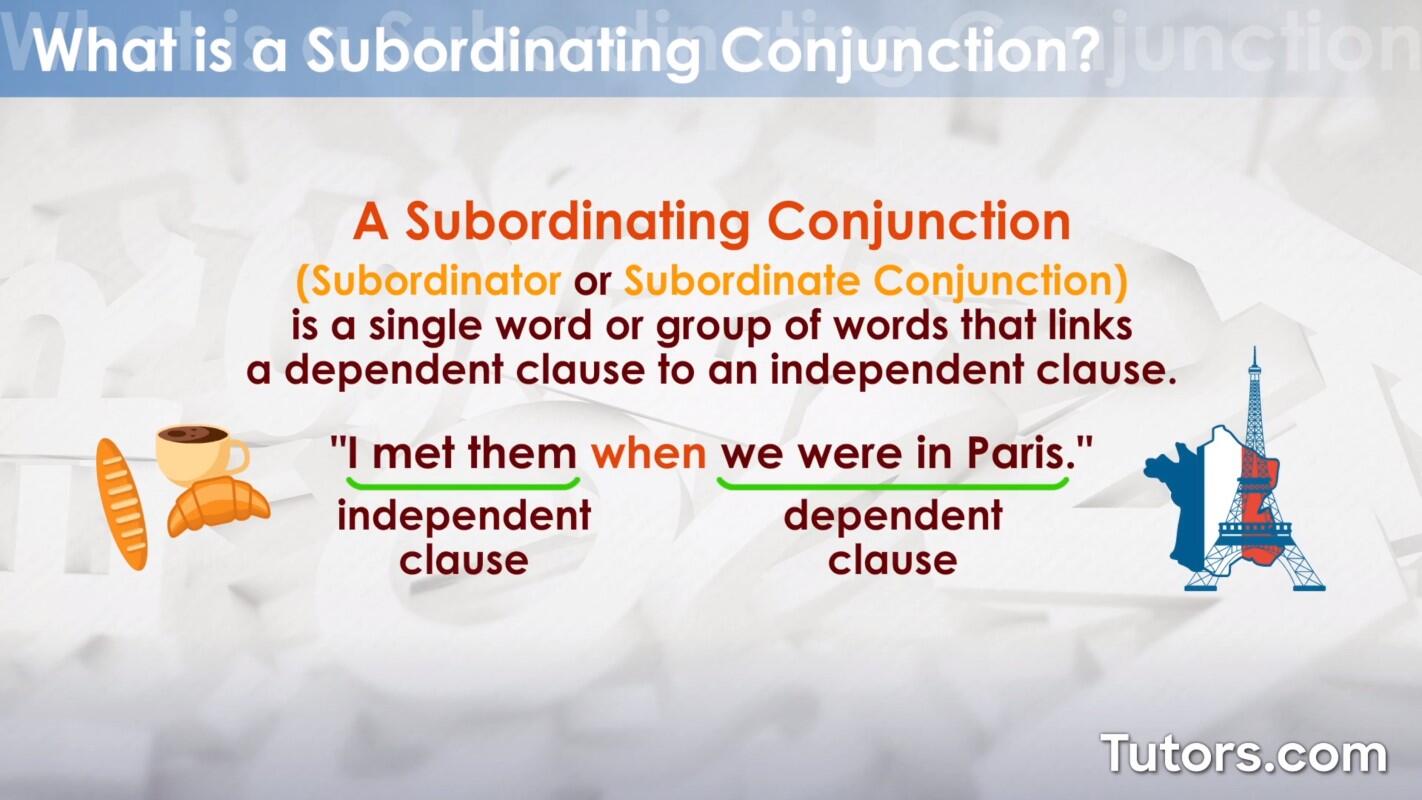
A subordinating conjunction (also known as a subordinator or subordinate conjunction) is a single word or group of words that links a dependent clause to an independent clause, creating a complex sentence.
A dependent clause, or subordinate clause, is a sentence fragment with a subject and a verb that does not present a complete thought; it cannot function as a standalone sentence. An independent clause also contains a subject and a verb; however, it does portray a complete idea, making it a complete sentence.
The singer had to delay her concert because the sound system wasn't working.
Independent Clause: The singer had to delay her concert.
Dependent Clause: because the sound system wasn't working
The function of a subordinating conjunction is to link a dependent clause that adds valuable information to the independent clause, like indicating a cause-and-effect relationship, reason, time, or place.
Types of subordinating conjunctions
There are seven main categories of subordinating conjunctions:
| Category | Explanation | Example |
|---|---|---|
| Comparison | Establishes a connection by providing a comparison | Someone has to stand in line, whether it's you or me. |
| Concession | Links clauses by conceding a point between them | Matt enjoyed his vacation despite the rain. |
| Condition | Identifies rules for the independent clause | Sara won't join the committee unless she receives a raise. |
| Manner | Determines how an action takes place | Jason ran through as if he was being chased. |
| Place | Determines where an action takes place | No one knew where to find the buried gold. |
| Reason | Defines why the independent clause was performed | April left the party early because she was tired. |
| Time | Establishes when the main clause will take place | I'll mow the lawn after watching the game. |
Subordinating conjunctions grammar
The following punctuation rules apply to the use of subordinating conjunctions:
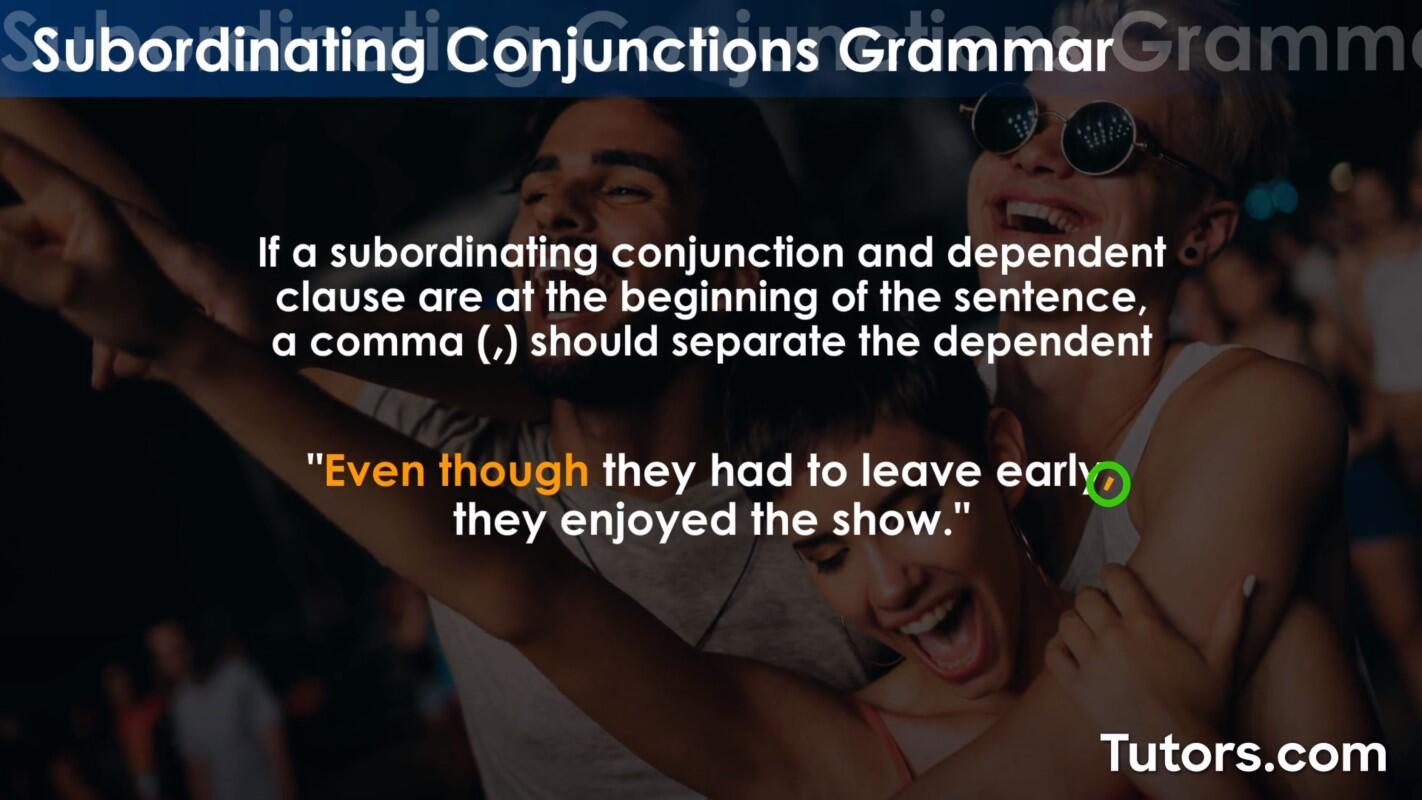
If a subordinating conjunction and dependent clause are at the beginning of the sentence, a comma should separate the dependent and independent clauses.
Even though they had to leave early, they enjoyed the show.
If a subordinating conjunction and dependent clause follow the independent clause, a comma is typically not necessary.
Walter wanted to jump off the high dive because he was afraid to do so as a kid.
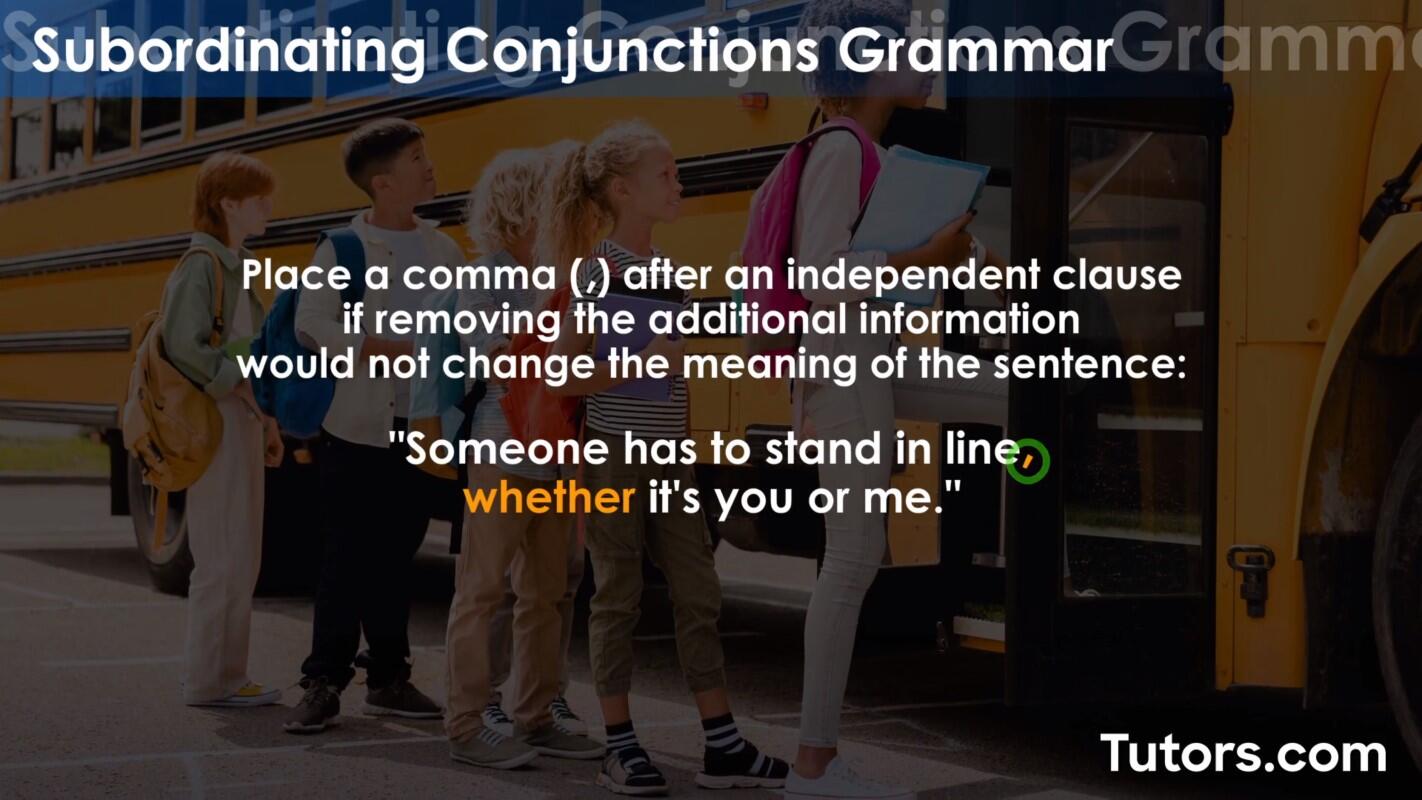
Place a comma after an independent clause if removing the additional information would not change the meaning of the sentence.
Someone has to stand in line, whether it's you or me.
Subordinating conjunction examples
The most common subordinating conjunctions include the following:
| Comparison | Concession | Condition | Manner | Place | Reason | Time |
|---|---|---|---|---|---|---|
| as much as | although | assuming that | as if | where | as | after |
| rather than | despite | if | as though | wherever | because | as soon as |
| than | even though | in case | in order | by the time | ||
| whereas | though | only if | since | once | ||
| whether | provided that | so that | until | |||
| unless | when |
Subordinating conjunctions sentences
The following sentences include examples of subordinating conjunctions in each of the seven main categories:
Comparison
As much as I like animated movies, I'm not interested in seeing this one.
Ophelia decided to complete her work at the office rather than take it home.
Ryan is coming with us whether you like it or not.
Concession
Despite her annoyance, Pam stayed for dinner.
Both groups finished their projects even though they started late.
Although Oliver's SAT score was average, he was still accepted by the university.
Condition
Even if we move closer to the city, I'll still have a long commute.
I'd be happy to lead the team provided that I receive a raise.
Ida will visit the museum only if she has enough time.
Manner
Jack swam toward the boat as if he were a dolphin.
Riley glanced back at her friends as though they had tricked her.
Place
Wherever possible, you want to use credible courses.
Zeke hid where no one would find him while playing hide and seek.
Reason
Alice didn't want to perform in the talent show because she didn't rehearse enough.
Henry left early so that he wouldn't hit traffic.
Since I wasn't feeling well, I decided to stay home from school.
Time
Before the game, we decided to stop for dinner.
Stephanie took a right turn while Janice took a left.
Paul was able to swim once his cast was removed.
Summarize with AI:
Did you like this article? Rate it!

 Loading...