


What is an informative speech?
An informative speech uses descriptions, demonstrations, and strong detail to explain a person, place, or subject. An informative speech makes a complex topic easier to understand and focuses on delivering information, rather than providing a persuasive argument.
Types of informative speeches
The most common types of informative speeches are definition, explanation, description, and demonstration.
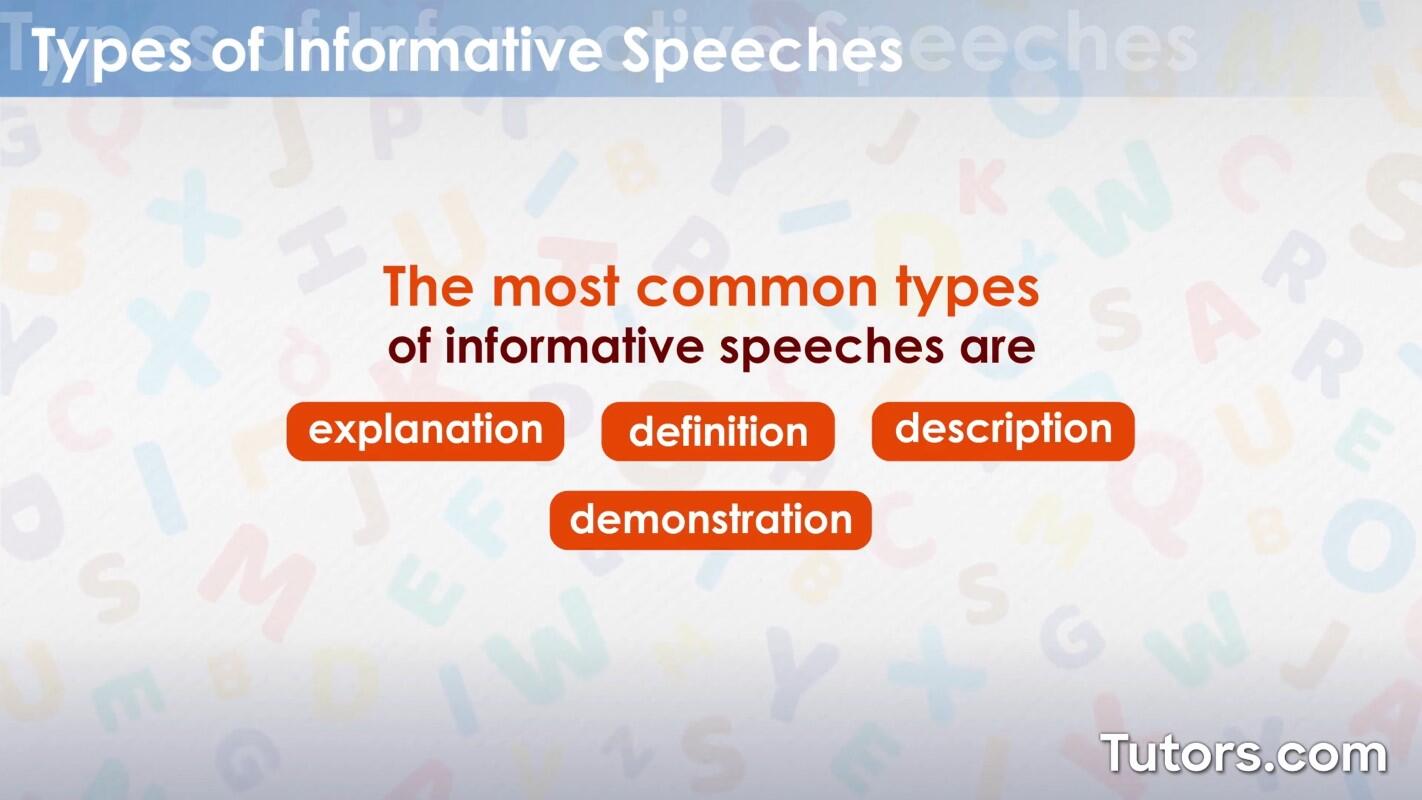
A definition speech explains a concept, theory, or philosophy about which the audience knows little. The purpose of the speech is to inform the audience so they understand the main aspects of the subject matter.
An explanatory speech presents information on the state of a given topic. The purpose is to provide a specific viewpoint on the chosen subject. Speakers typically incorporate a visual of data and/or statistics.
The speaker of a descriptive speech provides audiences with a detailed and vivid description of an activity, person, place, or object using elaborate imagery to make the subject matter memorable.
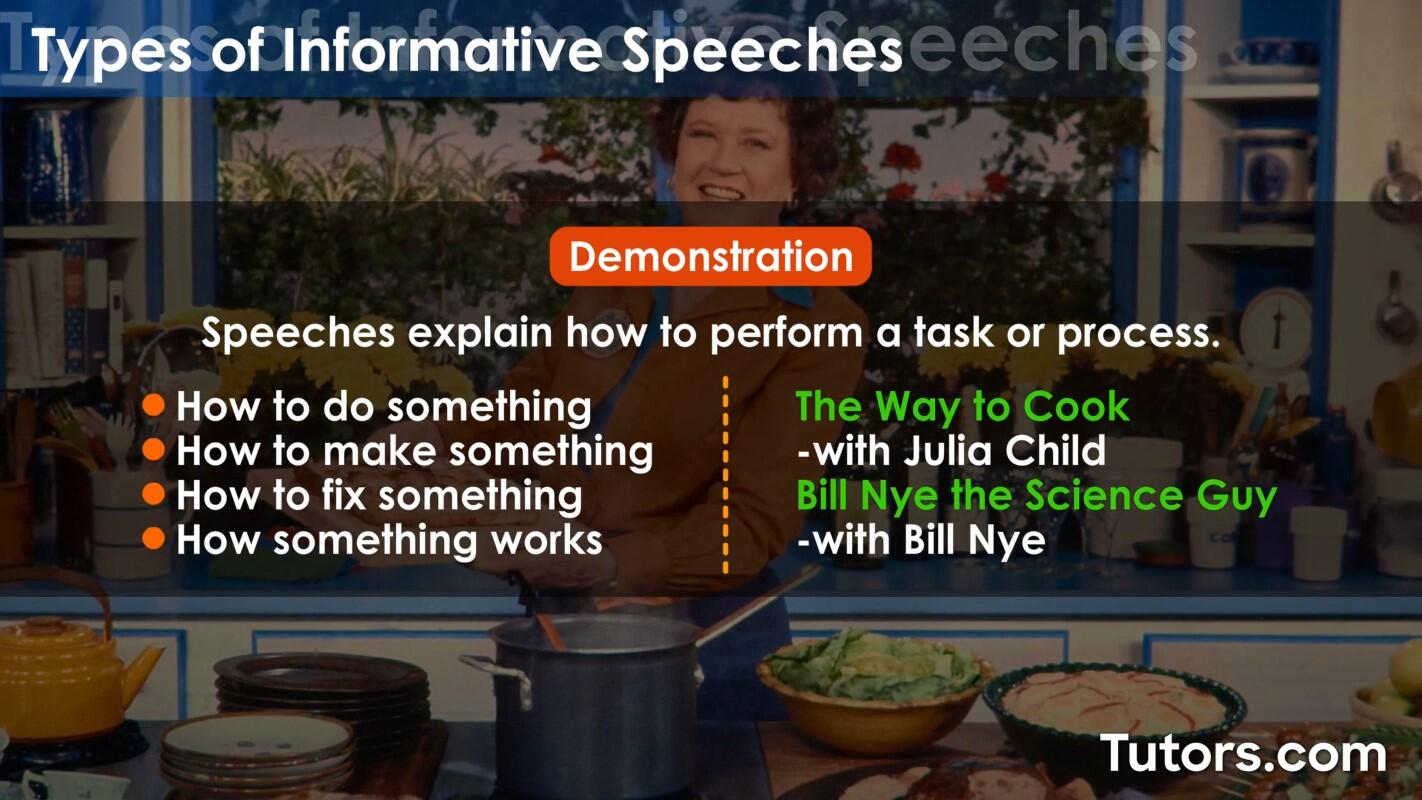
A demonstrative speech explains how to perform a particular task or carry out a process. These speeches often demonstrate the following:
How to do something
How to make something
How to fix something
How something works
How to write an informative speech
Regardless of the type, every informative speech should include an introduction, a hook, background information, a thesis, the main points, and a conclusion.
Introduction
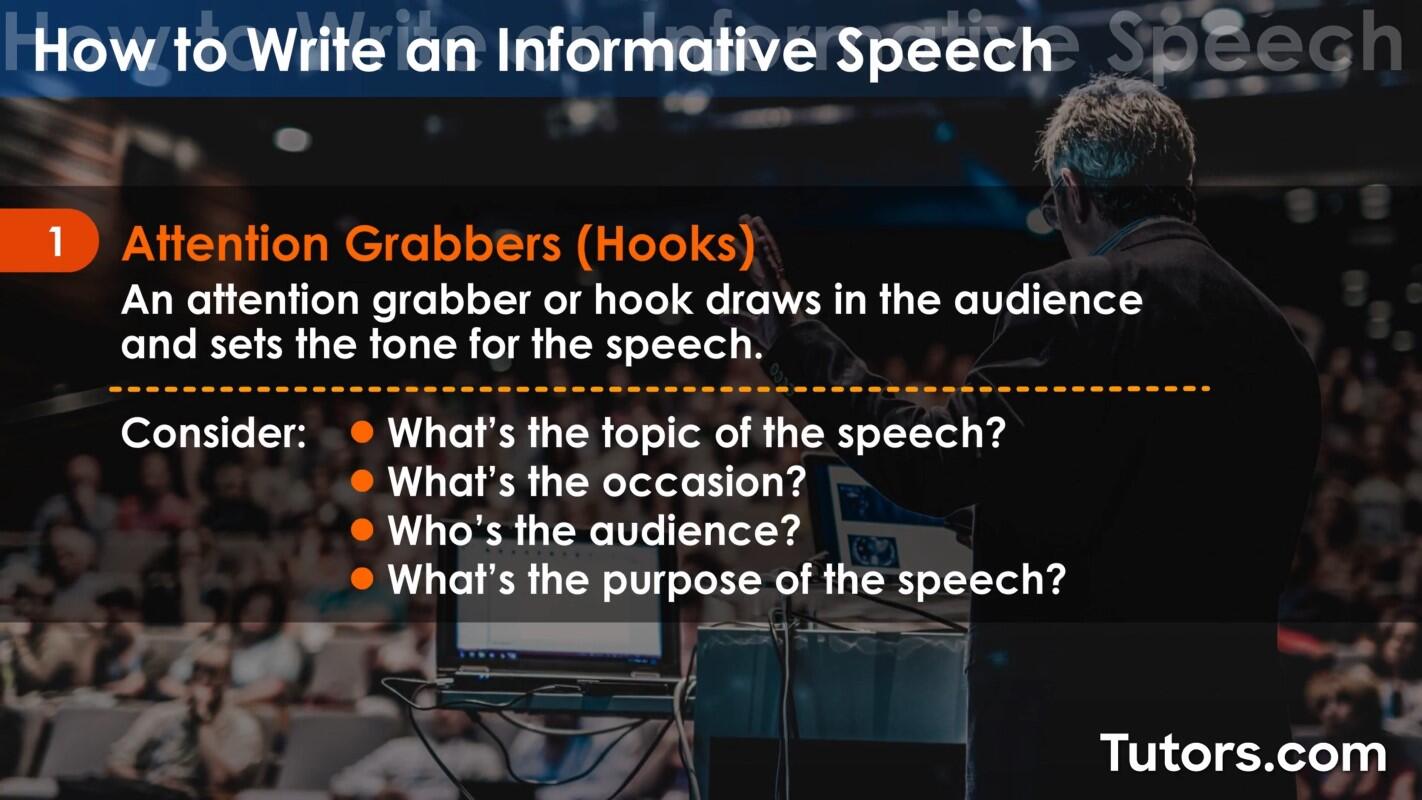
An attention grabber or hook draws in the audience and sets the tone for the speech. The technique the speaker uses should reflect the subject matter in some way (i.e., if the topic is serious in nature, do not open with a joke). Therefore, when choosing an attention grabber, consider the following:
What’s the topic of the speech?
What’s the occasion?
Who’s the audience?
What’s the purpose of the speech?
Common Attention Grabbers (Hooks)
Ask a question that allows the audience to respond in a non-verbal way (e.g., a poll question where they can simply raise their hands) or ask a rhetorical question that makes the audience think of the topic in a certain way yet requires no response.
Incorporate a well-known quote that introduces the topic. Using the words of a celebrated individual gives credibility and authority to the information in the speech.
Offer a startling statement or information about the topic, which is typically done using data or statistics. The statement should surprise the audience in some way.
Provide a brief anecdote that relates to the topic in some way.
Present a “what if” scenario that connects to the subject matter of the speech.
Identify the importance of the speech’s topic.
Starting a speech with a humorous statement often makes the audience more comfortable with the speaker.
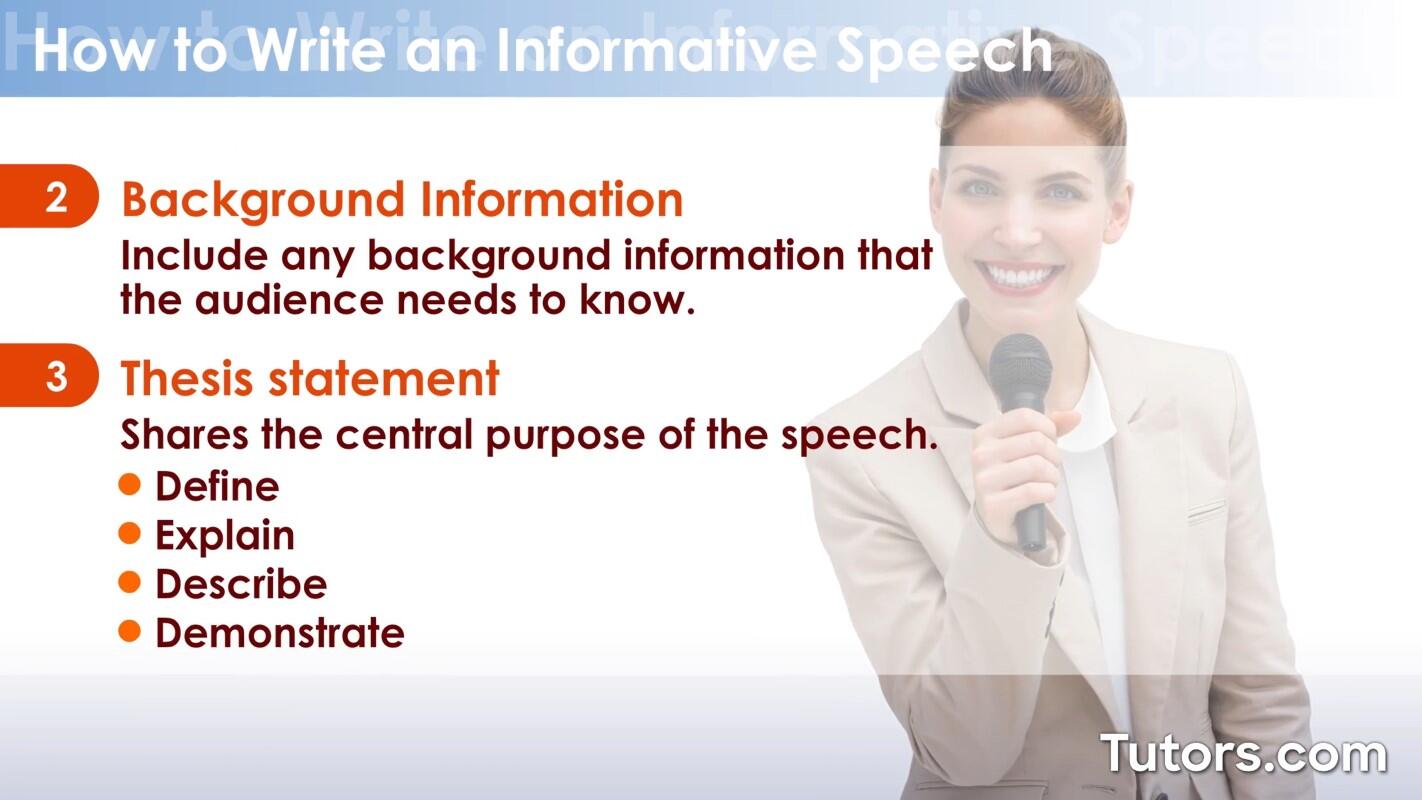
Include any background information pertinent to the topic that the audience needs to know to understand the speech in its entirety.
The thesis statement shares the central purpose of the speech.
Define
Explain
Describe
Demonstrate
Preview the main ideas that will help accomplish the central purpose. Typically, informational speeches will have an average of three main ideas.
Body paragraphs
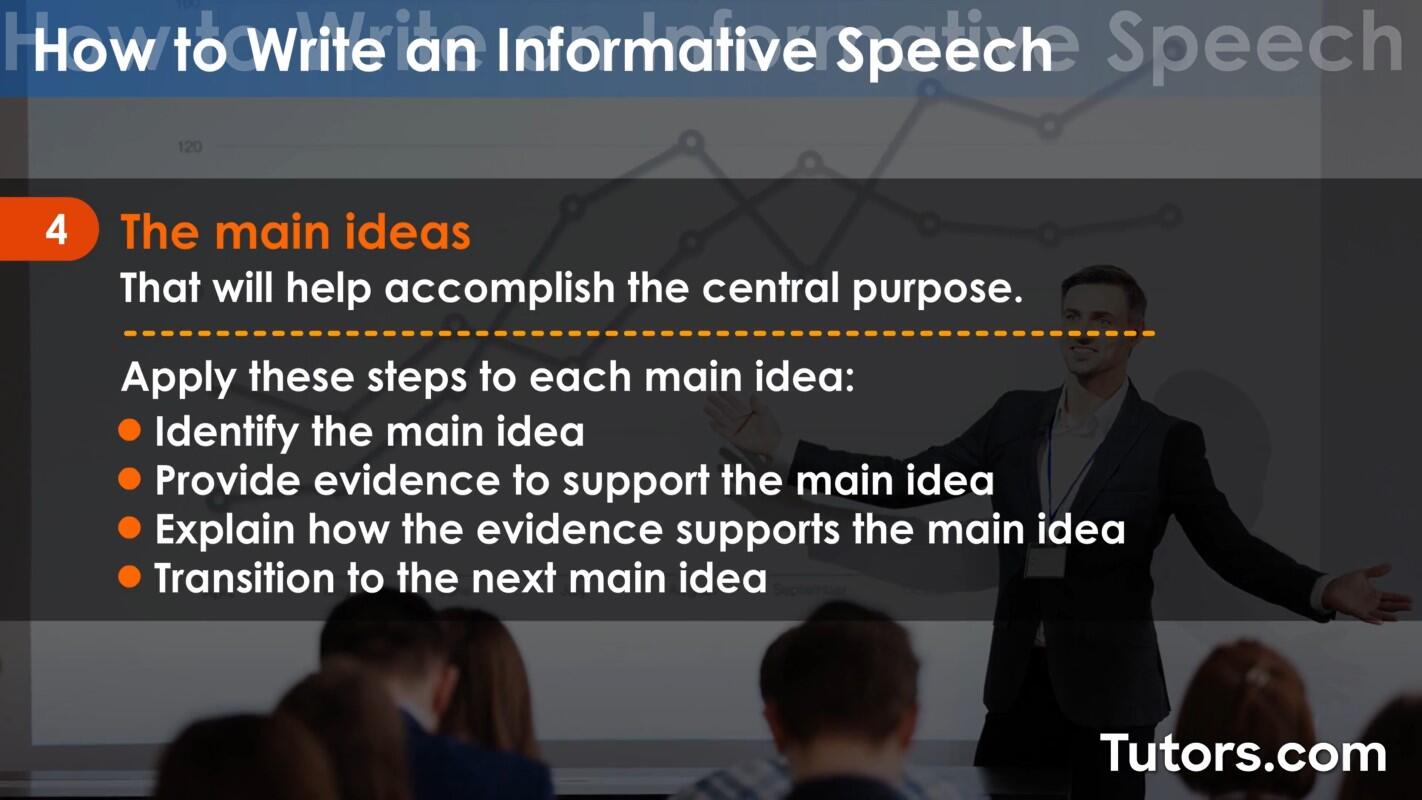
Apply the following to each main idea (body):
Identify the main idea (NOTE: The main points of a demonstration speech would be the individual steps.)
Provide evidence to support the main idea
Explain how the evidence supports the main idea/central purpose
Transition to the next main idea
Conclusion
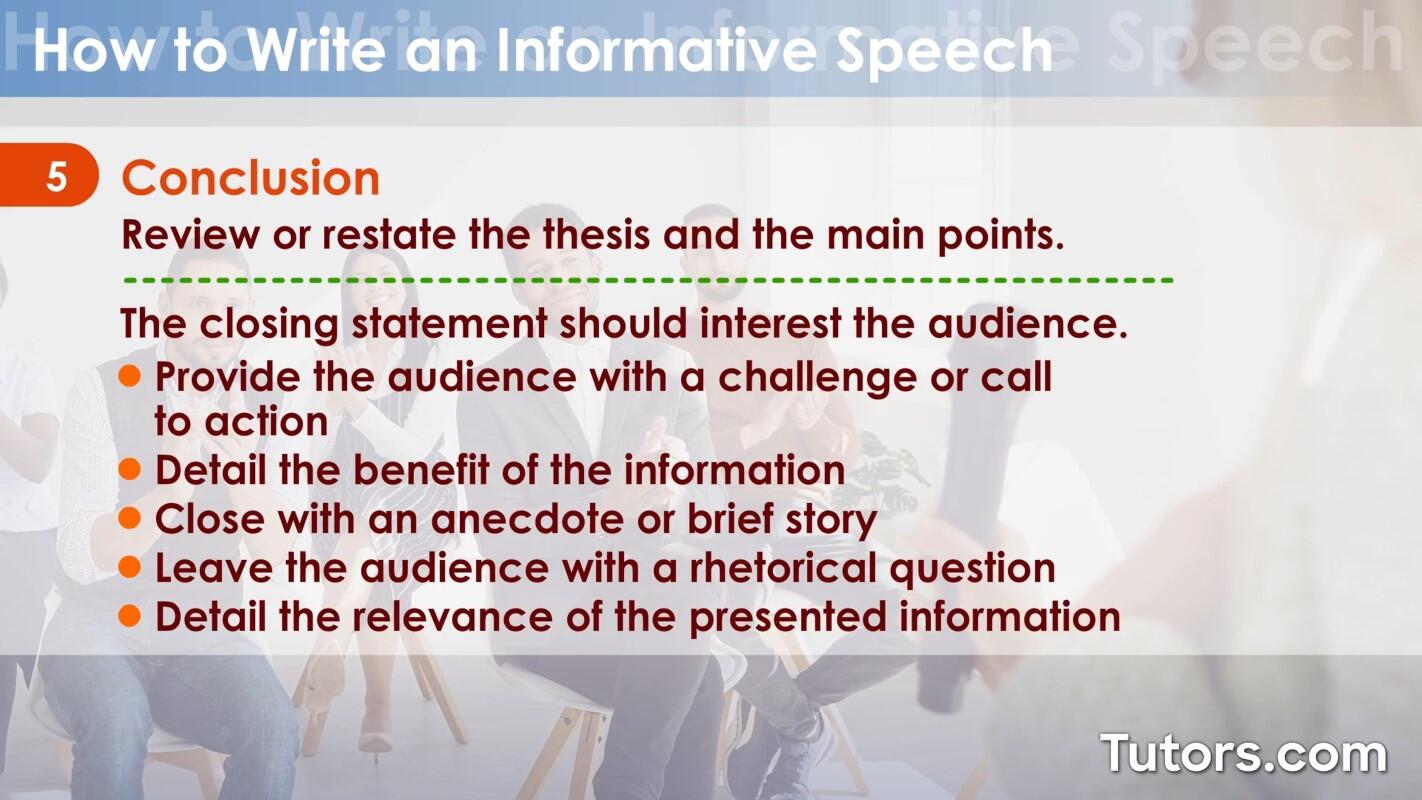
Review or restate the thesis and the main points presented throughout the speech.
Much like the attention grabber, the closing statement should interest the audience. Some of the more common techniques include a challenge, a rhetorical question, or restating relevant information:
Provide the audience with a challenge or call to action to apply the presented information to real life.
Detail the benefit of the information.
Close with an anecdote or brief story that illustrates the main points.
Leave the audience with a rhetorical question to ponder after the speech has concluded.
Detail the relevance of the presented information.
Before speech writing, brainstorm a list of informative speech topic ideas. The right topic depends on the type of speech, but good topics can range from video games to disabilities and electric cars to healthcare and mental health.
Informative speech topics
Some common informative essay topics for each type of informational speech include the following:
| Definition | Explanation | Description | Demonstration |
|---|---|---|---|
| What is the electoral college? | Holidays in different cultures/different countries | Best concert | Bake a cake |
| What is a natural disaster? | Cybersecurity concerns | Childhood experience | Build a model (airplane, car, etc.) |
| What is the “glass ceiling?” | Effect of the arts | Day to remember | Build a website |
| What is globalization? | How the stock market works | Dream job | Apply for a credit card |
| What is happiness? | Impact of global warming/climate change | Embarrassing moment | Change a tire |
| What is humor? | Important lessons from sports | Favorite place | Learn an instrument |
| What is imagination? | Influence of social media and cyberbullying | First day of school | Play a sport |
| What is love? | Social networks/media and self-image | Future plans | Register to vote |
| What is philosophy? | Evolution of artificial intelligence | Happiest memory | Train a pet |
| What was the Great Depression? | Impact of fast food on obesity | Perfect vacation | Write a resume |
Informative speech examples
The following list identifies famous informational speeches:
Definition
“Duties of American Citizenship” by Theodore Roosevelt
“Duty, Honor, Country” by General Douglas MacArthur
“Strength and Dignity” by Theodore Roosevelt
Explanation
“Give Me Liberty or Give Me Death” by Patrick Henry
“The Decision to Go to the Moon” by John F. Kennedy
“We Shall Fight on the Beaches” by Winston Churchill
Description
“I Have a Dream” by Martin Luther King, Jr.
“Pearl Harbor Address” by Franklin Delano Roosevelt
“Luckiest Man” by Lou Gehrig
Demonstration
The Way to Cook with Julia Child
This Old House with Bob Vila
Bill Nye the Science Guy with Bill Nye
Summarize with AI:
Did you like this article? Rate it!

 Loading...