


Cliché definition
A cliché is an expression, phrase or idea that has been used for so long that either the initial meaning or the impact of the statement/subject is lost. A popular cliché is “best thing since sliced bread.”
Clichés are subject to overuse and become quite common expressions in everyday language. Since they are so ingrained into the English language, many people do not recognize the original meaning or impact of the clichéd expression. Some examples of clichés as expressions include the following:
| Cliché | Modern Meaning | Origin |
|---|---|---|
| add insult to injury | act in a way that makes a bad situation worse | derives from a story of a bald man swatting at a fly that landed on his head but only hits himself |
| best thing since sliced bread | describing something recently developed and has a huge impact on everyday life | used when the Continental Baking Company introduced Wonder Bread’s first pre-sliced loaf |
| pay through the nose | pay too much money for something | Danes conquered Ireland in the 9th century and took a census by counting noses, and then each “nose” was taxed |
| no use crying over spilled milk | no reason to be upset over something that has already happened and cannot be changed | milk used to be set out for fairies to drink; therefore, if milk spilled, people saw it as an extra offering to the magical creatures |
| the devil is in the details | while the little details may seem simple or unimportant, they can often lead to problems or difficulties | thought to originate as a phrase to contradict the saying “God is in the details,” a German proverb |
While most people recognize clichés as phrases that have been repeated over time, certain methods or approaches to a subject can also be categorized as clichés. These ideas have been so overused that the impact of their use has become too predictable and unoriginal. Examples of these types of clichés include the following:
The love triangle
The chosen one
Damsel in distress
Journey for treasure
Character types: wise elder, redeemed rebel, comic relief, nice guy, plain Jane
Etymology
The French word cliché is the past participle of clicher, meaning to stereotype or copy. Printers used the word cliché to describe the electrotype or stereotype plates they used.
Synonyms include platitude, banality, bromide, and truism.
Cliché examples
Common clichés
The following clichés are some of the most popular used in everyday speech:
Emotions
Scared out of my wits
All is fair in love and war
Gut-wrenching pain

Life
Laughter is the best medicine
Haste makes waste
When life gives you lemons, make lemonade
People
Diamond in the rough
Nerves of steel
Fit as a fiddle
Time
Time heals all wounds
Time flies when you’re having fun
In the nick of time
Clichés in literature
Some of the more common clichés originated from classic works of literature, including the following example sentences:
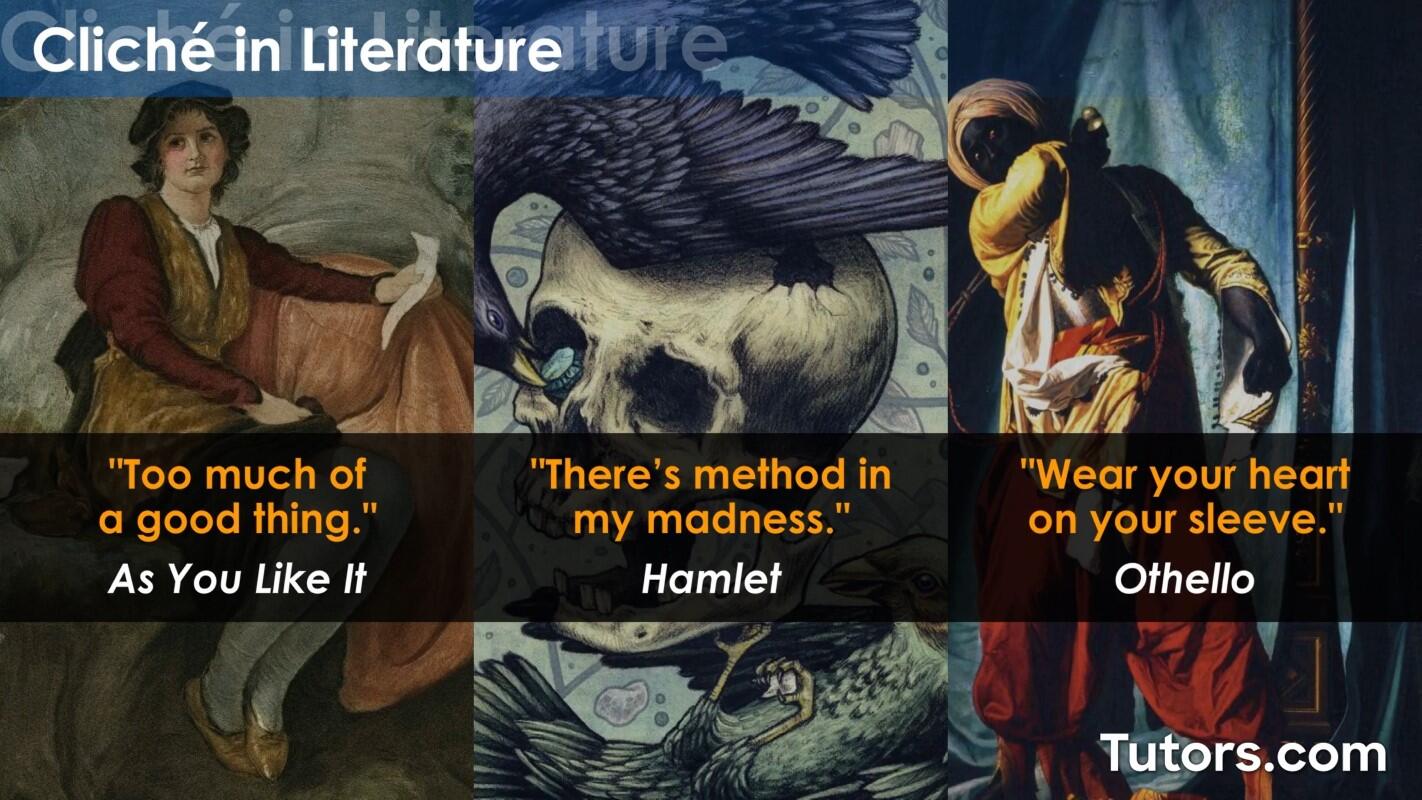
William Shakespeare: One of the most recognized writers, Shakespeare coined multiple expressions that eventually became clichés.
“Too much of a good thing.” As You Like It
“There’s method in my madness.” Hamlet
“Wear your heart on your sleeve.” Othello
1984 by George Orwell: “Big Brother is watching you.”
Don Quixote by Miguel de Cervantes: “You are like what is said that the frying-pan said to the kettle, ‘Avant, black-browes.’” Cervantes and his readers would know that pots and kettles were made out of cast iron, which would turn black with soot in kitchens. Therefore, his quote evolved into the cliché “pot calling the kettle black.”
Clichés in writing
Most contemporary writers try to avoid the use of clichés when composing both fictional and nonfictional texts for the following reasons:
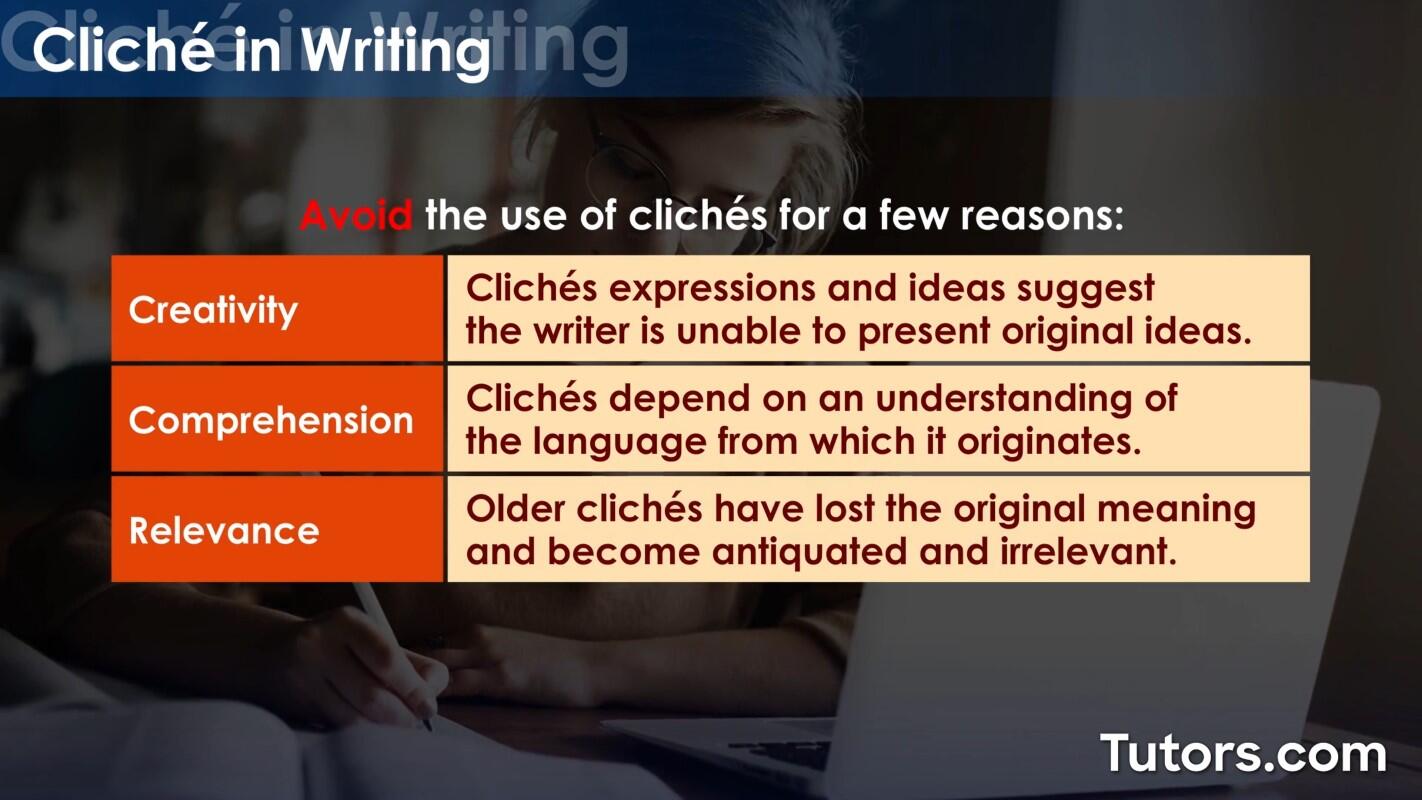
Creativity: Incorporating cliché expressions and ideas suggest the writer is unable to present original or unique ideas. Consequently, readers may lose interest due to “old clichés.’
Comprehension: Many clichés depend on an understanding of the language from which it originates. Therefore, language barriers can result in a lack of comprehension.
Relevance: Some older clichés have been repeated for so long that the original meaning has become antiquated and irrelevant.
However, there are some instances when writers consider using clichés acceptable:
Audiences: Authors may use certain clichés that speak to a particular audience, making the text more relatable. As long as they are not overused, incorporating a small number can create a more personal connection for the reader.
Simplification: Writers can use clichés to simplify a complex idea or subject.
Characterization: Writers may develop specific characters who utilize clichés as a method of characterization. Those characters would then be viewed as unoriginal and lacking depth, which can influence the plot.
Summarize with AI:
Did you like this article? Rate it!

 Loading...