


What is an interjection?
An interjection is a part of speech that indicates a short expression of sudden strong emotions, moods, or feelings. There are three types of interjections: cognitive, emotive, and volitive.
Cognitive: Cognitive interjections are used in an exclamatory way and typically convey feelings individuals have through their understanding of an experience.
Examples: Aha, bingo, gosh, huh, and oh
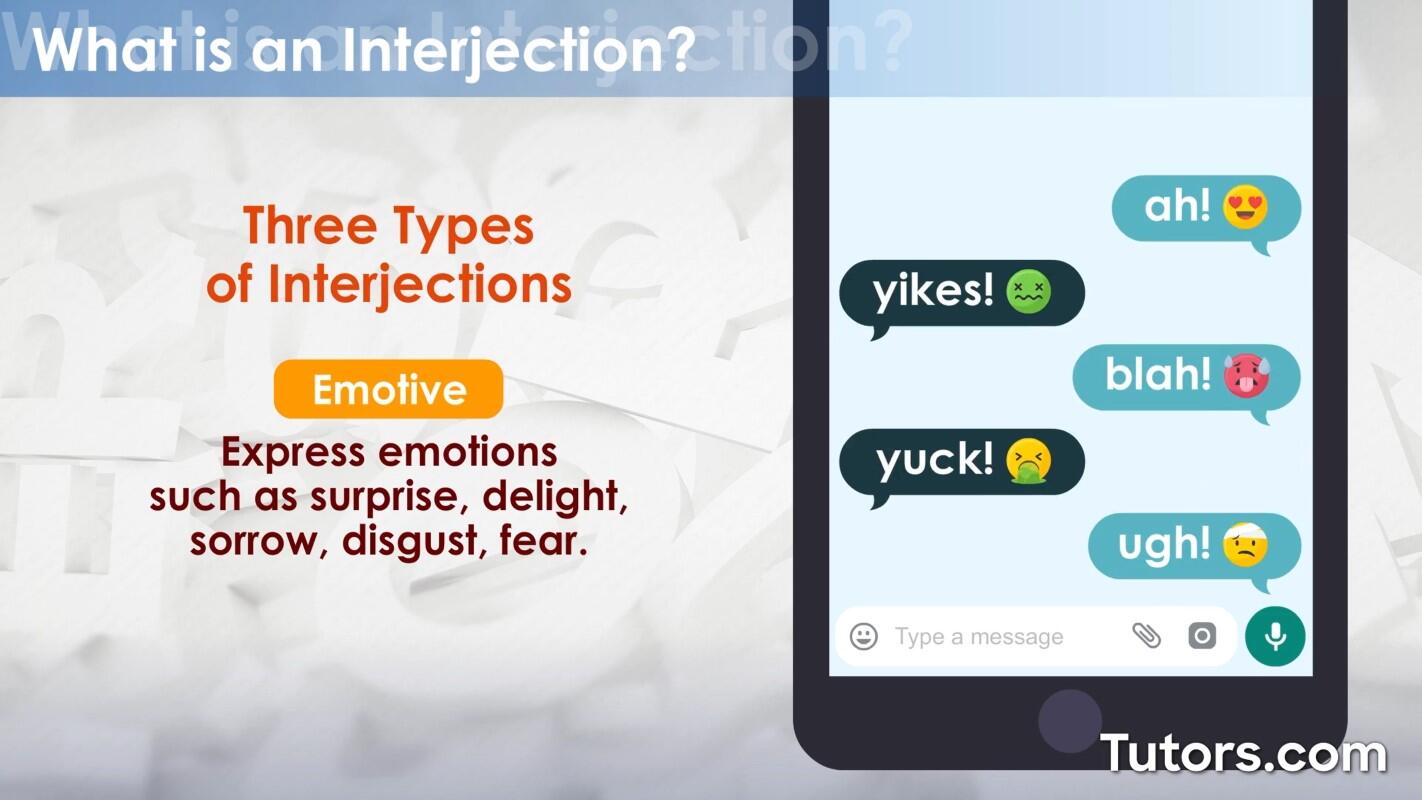
Emotive: Emotive interjections express emotions, such as surprise, delight, sorrow, disgust, and fear.
Examples: Ah, yikes, blah, yuck, and ugh
Volitive: Volitive interjections consist of commands, requests, and wishes.
Examples: Ahem, hey, psst, and shh
Interjection grammar
When using interjections, the following English grammar rules apply:
Rule 1: Standalone
Interjections can work as standalone sentences.
Hey!
Wow!
Rule 2: Placement
Writers typically include interjections at either the beginning or the end of a sentence. However, it is grammatically correct to place them in many parts of the sentence.
Rule 3: Punctuation
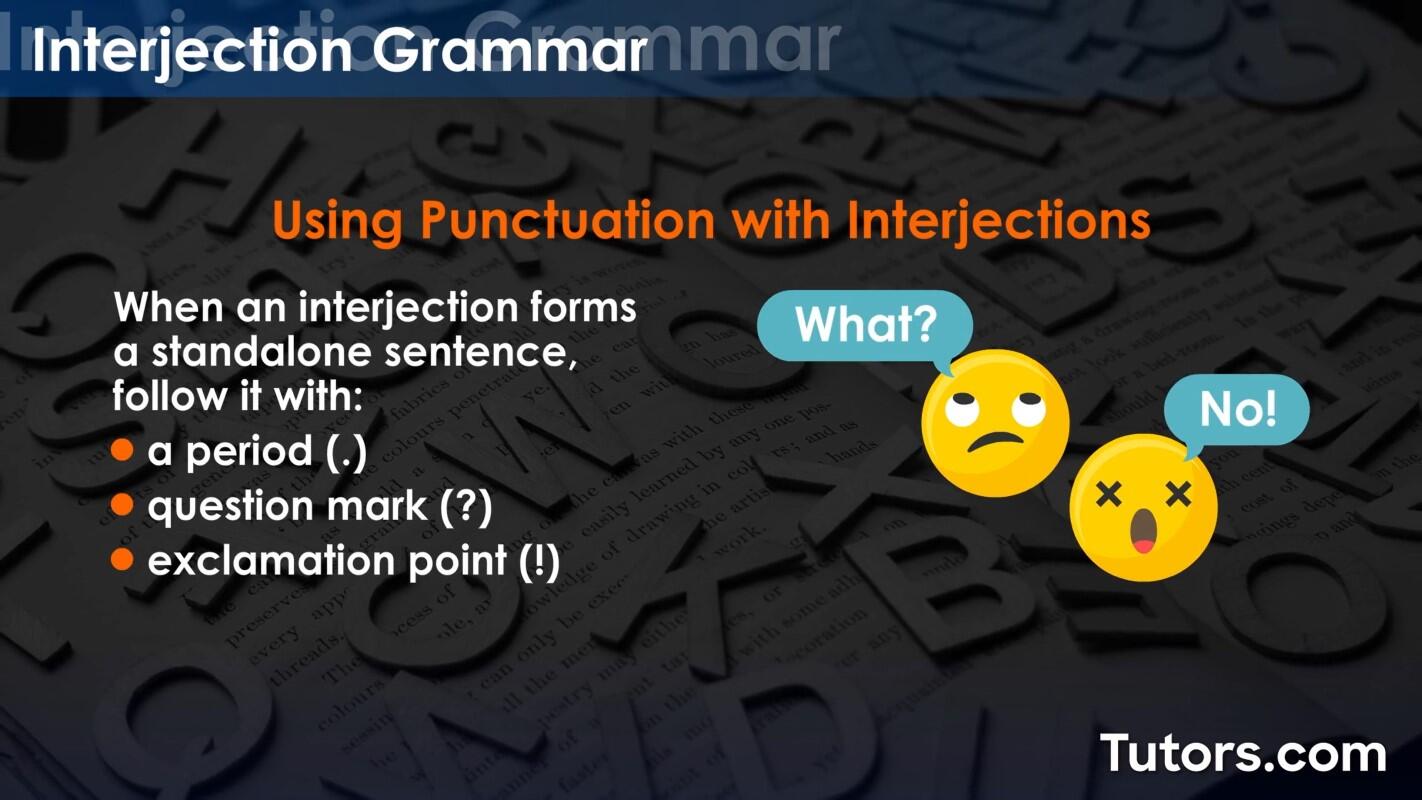
When an interjection forms a standalone sentence, follow it with a period, question mark, or exclamation point.
What? No!
Follow interjections at the beginning of a sentence with a comma or hyphen.
Hey, can you direct me to the main office?
Surround interjections in the middle of a sentence with commas or hyphens.
Your presentation was, um, informative.
Precede interjections at the end of a sentence with a comma or hyphen.
So, you're coming back to school tomorrow, huh?
Rule 4: Informal vs. Formal Writing
Avoid interjections in academic and professional writing.
Interjection examples
The following chart contains the most common examples of interjections broken down into seven emotional categories:
| Category | Interjections |
|---|---|
| Approval | bravo, brilliant, great work, splendid, well done |
| Attentions | ahem, hey, hush, look, listen, psst, shh |
| Doubt/Hesitation | hmm, err, uh, um |
| Greetings/Departures | bye, goodbye, hello, hey, hi, see ya |
| Joy | good, great, wow, woohoo, yes, yay |
| Sorrow/Grief/Pain | ah, aww, oops, ow, ouch |
| Surprise | ah, ha, oh, what, wow, gee, phew |
The following sentences incorporate the use of interjections:
Approval: Positively agreeing to something that has happened
You tested at the top of the class. Well done!
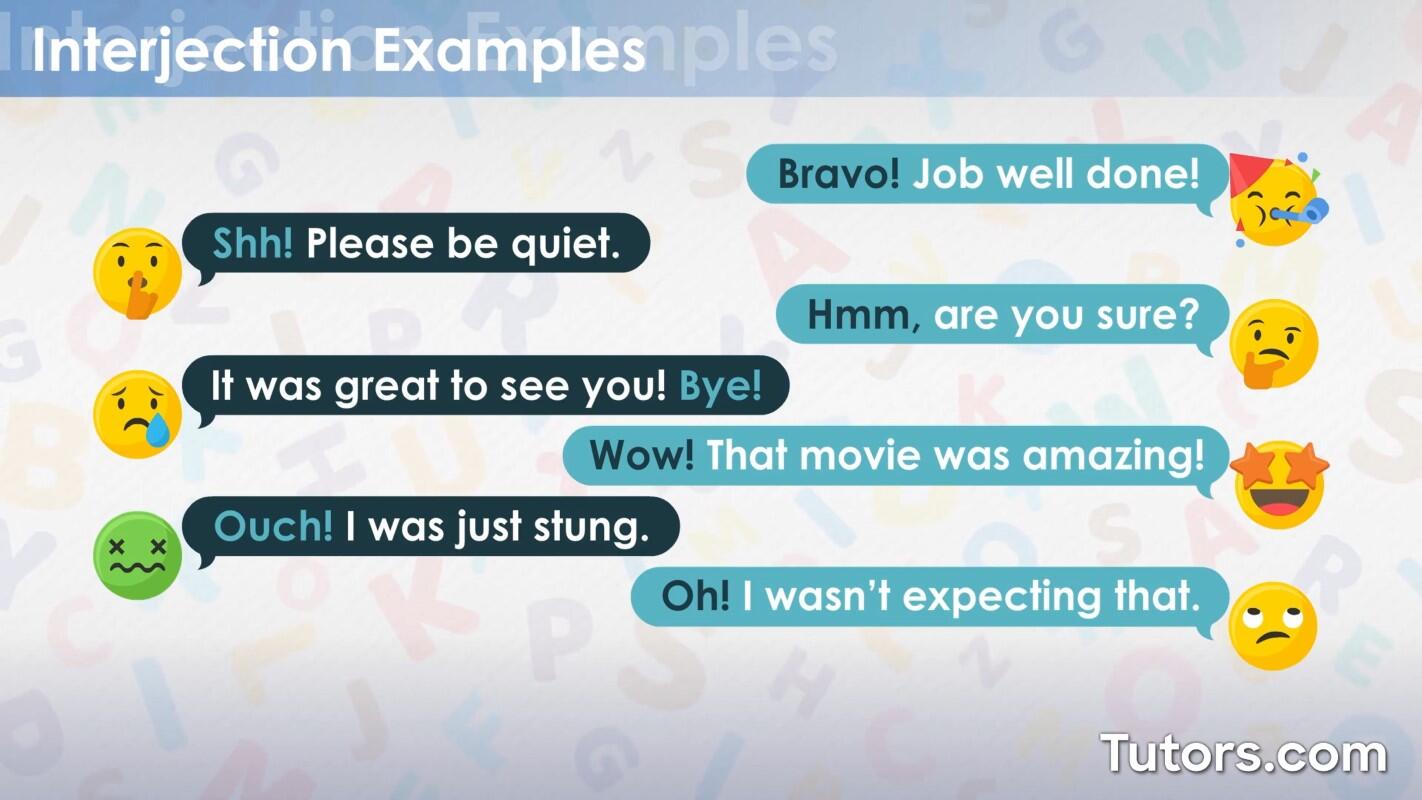
Bravo! Job well done!
You broke the school record. Great work!
Attention: Drawing attention to someone or something
Ahem! Can I have your attention, please?
Shh! Please be quiet in the library.
Psst, do you know the answer to number three?
Doubt/Hesitation: Conveying uncertainty
Um, I'm sorry, but I don't think I know the answer to that.
Does he remember, uh, who I am?
Hmm, are you sure it was him?
Greetings/Departures: Welcoming someone or bidding them farewell
Hey! It's great to see you!
Hello, my name is Grace.
It was great to meet you. Bye!
Joy: Feeling of immediate happiness
Wow! That movie was amazing!
Great! Now we can head to the beach.
Yahoo! I was accepted into MIT!
Sorrow/Grief/Pain: Communicating sadness about something unfortunate
Ouch! I think I was just stung by a jellyfish.
Oh! That movie was incredibly sad.
Aww, I can't believe their dog ran away.
Surprise: Expressing a strong sense of amazement
What! We're going to Disney World?
Wow! I never thought I'd win the lottery.
Oh! I really wasn’t expecting that.
Summarize with AI:
Did you like this article? Rate it!

 Loading...