


What is a contraction?
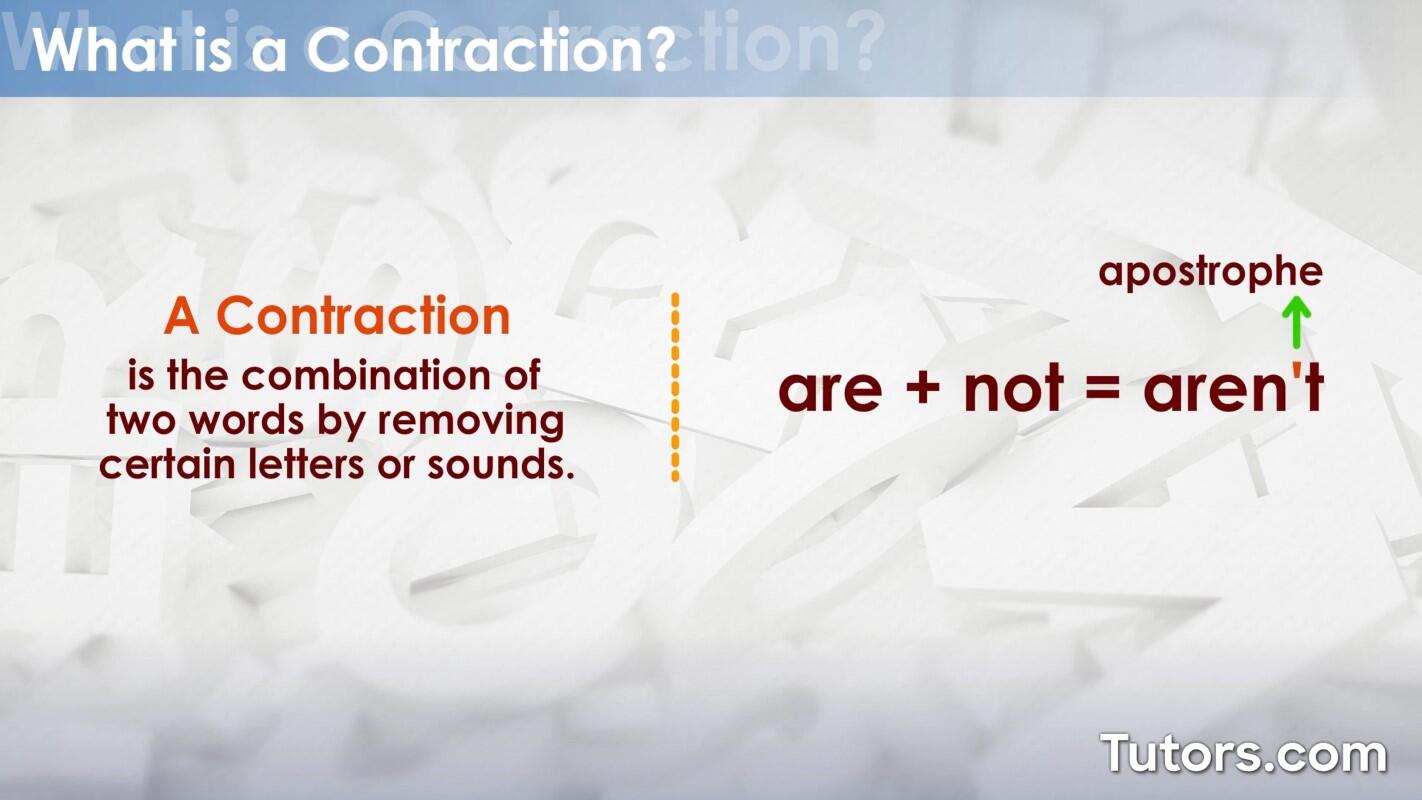
A contraction is the combination of two words by removing certain letters or sounds. Most contractions include an apostrophe in place of the missing letter(s) when the two words are combined.
Consider the following: are + not = aren't. The apostrophe in "aren't" replaces the removed "o" through the combination of "are" and "not."
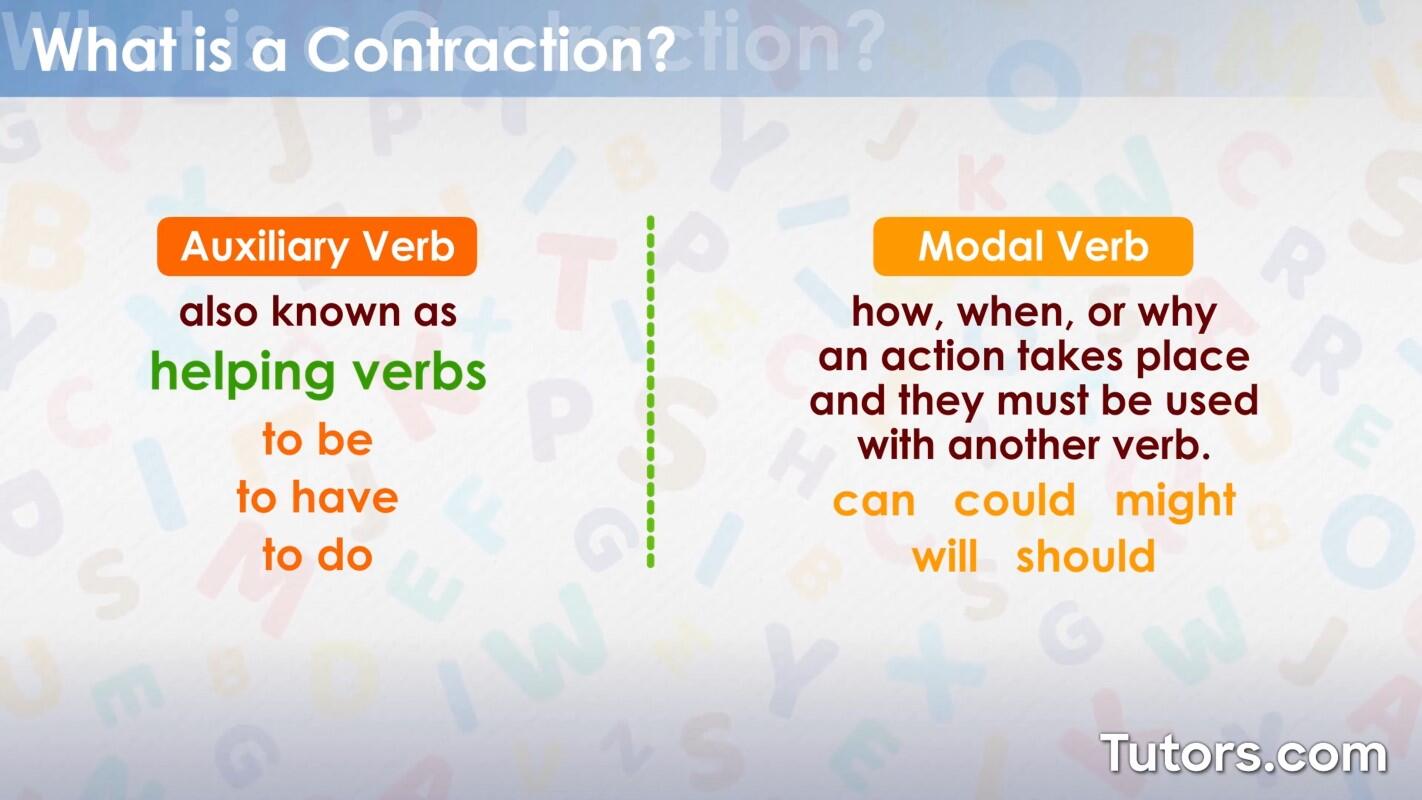
The most commonly used contractions typically include auxiliary and modal verbs attached to other words.
Auxiliary Verbs: Also known as helping verbs, auxiliary verbs express the tense, mood, or voice of a sentence's main verb. The main auxiliary verbs include to be (am, is, are), to have (has, have, had), and to do (does, do, did).
Modal Verbs: These types of verbs indicate how, when, or why an action takes place, and they cannot stand alone – they must be used with another verb. The ten modal verbs include the following:
can
could
may
might
must
ought to
shall
should
will
would
Contraction grammar
The use of contractions is generally avoided when speaking or writing formally. They are typically found in informal writing and everyday speech. When it is appropriate to use a contraction, most standard contractions are formed based on the following combinations:
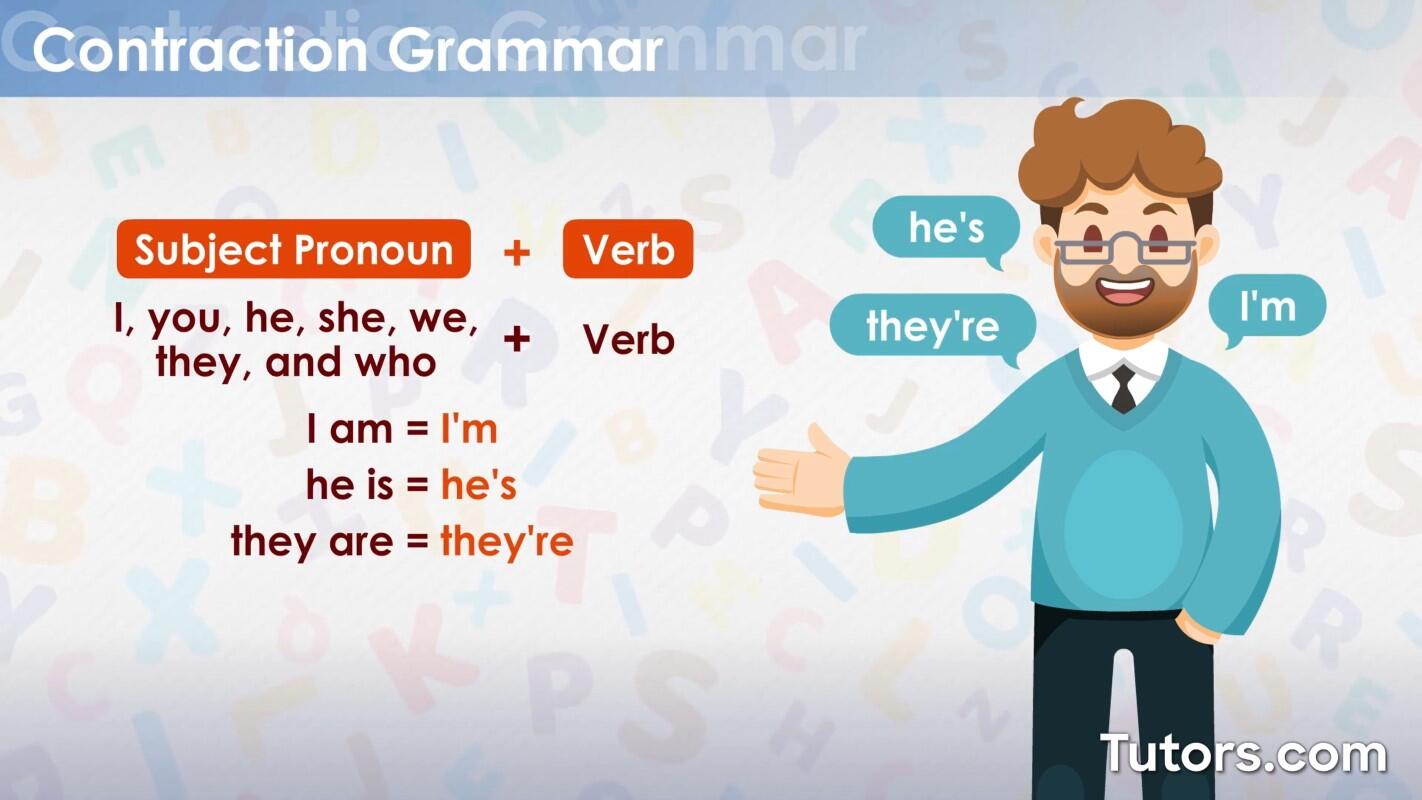
Subject Pronoun + Verb: The most common type, these contractions combine a subject pronoun (I, you, he, she, we, they, and who) with a verb.
I am = I'm
he is = he's
they are = they're
Interrogative Adverbs: When writing a sentence that asks a question, contractions are used by combining an interrogative adverb (how, when, where, and why) with a verb.
how is = how's
what are = what're
why did = why'd
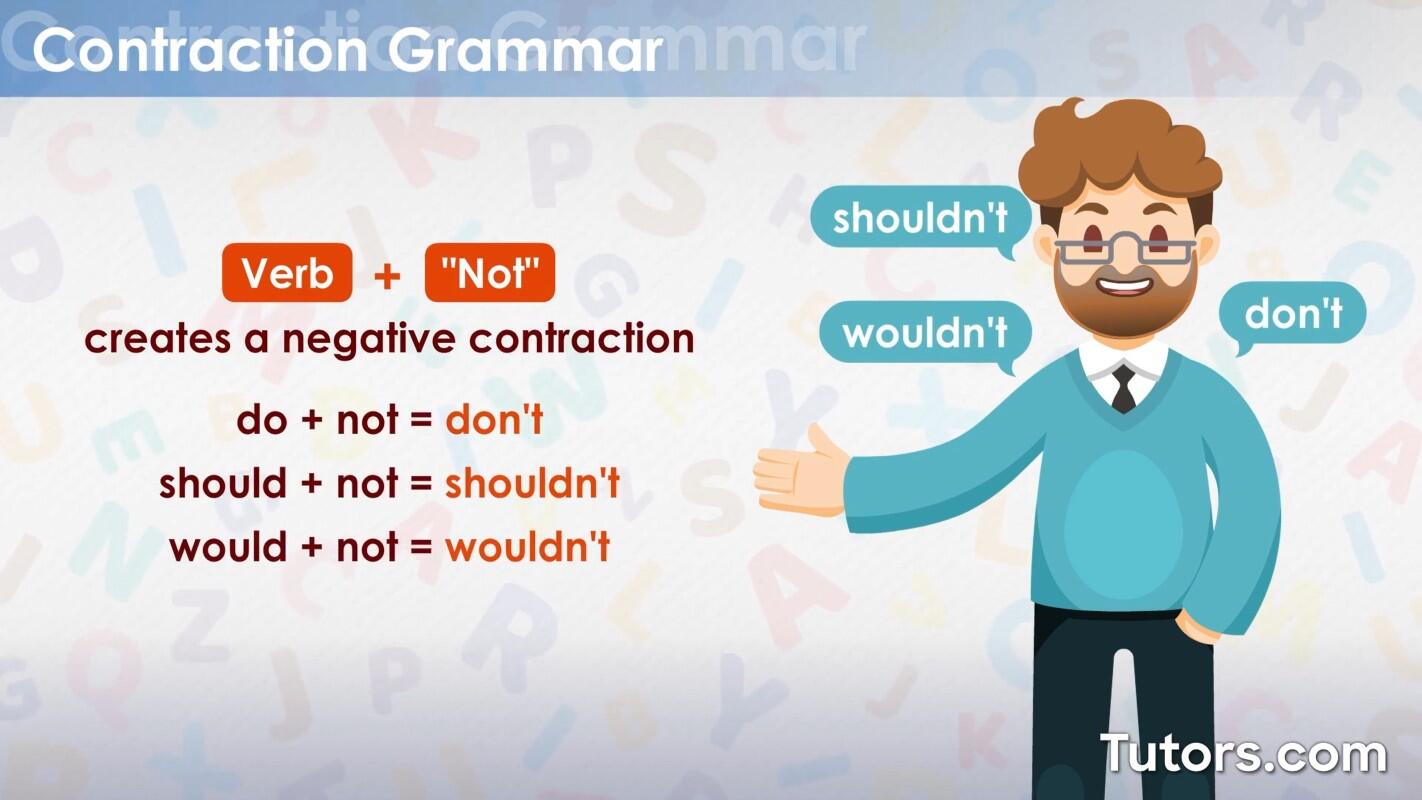
Verb + "Not": Combining a verb with the word "not" creates a negative contraction.
do + not = don't
should + not = shouldn't
would + not = wouldn't
Informal: Informal contractions in the English language are typically used colloquially and are not considered grammatically correct. Although some incorporate the use of an apostrophe, the majority do not. While people use them in everyday speech, avoid contractions in formal writing, such as academic papers.
going + to = gonna
go to = gotta
kind of = kinda
want to = wanna
you all = y'all
moving = movin'
One contracted form accepted in formal writing is “o’clock” since the shortened form is more well-known than the initial uncontracted phrase “of the clock.”
Contraction examples
The following chart contains some of the most common contractions:
| Full Words | Contraction | Sentence |
|---|---|---|
| are not | aren’t | We aren't allowed out past dark. |
| cannot | can't | Jamie can't attend the concert next week. |
| could not | couldn't | George's parents couldn’t believe he was already graduating college. |
| did not | didn't | Polly and Sam didn't want to leave town for the summer. |
| does not | doesn't | He doesn’t like being home alone for too long. |
| do not | don't | Please don't ask me to work over the weekend. |
| had not | hadn't | If she hadn't stopped by, I would've forgotten to lock the door. |
| has not | hasn't | Hasn't Joanne already left for the beach? |
| have not | haven't | I haven't been too impressed with the band's new music. |
| is not | isn't | Isn't he going to major in engineering? |
| should not | shouldn't | Jesse shouldn't be gone too long. |
| was not | wasn't | Why wasn't Tim at the game today? |
| were not | weren't | Weren't Leo and Grace supposed to be here already? |
| will not | won't | I won't know how to fix the car until I see it. |
| would not | wouldn't | She wouldn't have guessed Steve wanted to study literature. |
Summarize with AI:
Did you like this article? Rate it!

 Loading...